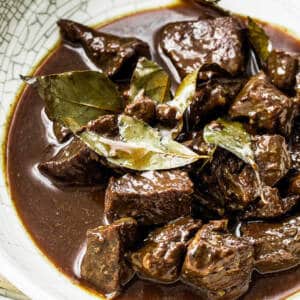
Beef Adobo
Beef adobo is tender beef slow-cooked in a rich, tangy sauce made with soy sauce, vinegar, garlic, and spices. It's a flavorful, easy-to-make Filipino classic that's perfect for meal prep or serving over rice.
Servings 3 portions
Ingredients
For the meat
- 1 kg (4 ¼ cups) beef blade - or stewing beef like chuck
For the marinade(adobo)
- 300 g (1 ¼ cups) water - or beef stock
- 70 g (3/7 cups) coconut sap vinegar - red wine or apple cider also works
- 150 g (⅔ cups) soy sauce - gluten free for allergies
- 40 g (3 ⅓ tablespoon) brown sugar
- 30 g (3 ¾ tablespoon) garlic - chopped
- 2 g (⅛ cups) bay leaf
- 2 g (½ teaspoon) black peppercorns
Slurry to thicken the suace(optional)
- 5 g (⅝ tablespoon) cornstarch
- 10 g (⅔ tablespoon) water

Instructions
- First, let's make the marinade and cut our beef into chunks. You could easily use beef short rib or beef cheeks.
- Mix the beef and the marinade together and let it sit in the fridge overnight or for about 8 hours.
- The next morning, remove the beef from the marinade.
- Next, we will pat the beef dry with a kitchen cloth and sear it in a heavy-bottomed cast-iron skillet. Make sure it's dry otherwise it won't sear.
- When the meat is seared, you add the marinade straight to the pan and let it come to a boil.
- The sauce will come to the boil and look split. Don't worry. This is just albumin from the meat juices, and it coagulates on the surface. Just strain it through a sieve and put the meat and the strained liquid in an oven-safe dish.
- Wrap up with tin foil or close with a lid. Place in the oven at 150 °C or 300 °F for 3 hours or until the beef is soft and tender.
- We are braising this adobo. Until it's rich, soft and succulent. Once you have checked it and you think it's done. Your dish is technically ready.
- To thicken the adobo sauce. Pour the sauce into a small pot. Next, mix a bit of cornstarch with water to make a slurry.
- Bring the sauce to the boil and add the slurry while whisking. The sauce will thicken up slightly but should not be overly thick.
- When done, add back the beef and serve with your side of choice.
Notes
- Adobo can be made with many other things, as I mentioned in this post. My favourite being pork neck or belly.
- Remember that all types of meat and vegetables have different cooking times, and it's best to test often for doneness.
- Don't use lean beef, as it will result in dry meat.
- If your meat needs longer to become tender, turn down the oven temperature a touch and let it cook longer until it's soft. See tips for success section.
- To make this beef adobo gluten-free be sure to use a gluten-free soy sauce.
- Although not a spicy dish, you could easily add some heat by adding some chopped chili.
- Refrigeration: Store leftover Beef Adobo in an airtight container in the fridge for up to 3-4 days. Reheat in the microwave or on the stovetop. To reheat on the stovetop, warm it gently over low heat, adding a bit of water or broth if needed to maintain the sauce consistency.
- Freezing: Beef Adobo can be frozen for up to 2-3 months. Let it cool completely before transferring to a freezer-safe container or bag. When ready to serve, thaw it overnight in the fridge, then reheat on the stovetop or in the microwave, adding a splash of water or broth to rehydrate the sauce.
Nutrition
Serving: 250g Calories: 703kcal Carbohydrates: 22g Protein: 101g Fat: 21g Saturated Fat: 9g Trans Fat: 1g Cholesterol: 270mg Sodium: 3031mg Potassium: 1417mg Fiber: 1g Sugar: 14g Vitamin A: 59IU Vitamin C: 3mg Calcium: 92mg Iron: 12mg
Keywords:adobo, asian beef stew, beef adobo, street food
Did you make this?Tag @pantsdownapronson or hashtag #pantsdownapronson so I can see your hot skills!