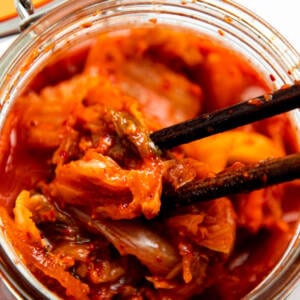
Easy Korean Kimchi Recipe (Video)
Kimchi is a delicious Korean ferment anyone can easily make at home. It is the backbone of many Korean dishes and pairs well with many other Asian foods like fried rice, chicken or grilled meats.
Servings 15 portions
Ingredients
Cabbage
- 900 g (2 lb) Napa cabbage - note 1
- 60 g (3 ⅓ tablespoon) salt - note 2
Slurry
- 16 g (2 tablespoon) glutinous rice flour - note 3
- 240 ml (1 cups) water
- 24 g (2 tablespoon) sugar
Chili paste
- 40 g (2 tablespoon) ginger - peeled
- 40 g (¼ cups) onion - peeled and roughly diced
- 50 g (½ cups) garlic cloves - peeled
- 25 g (1 ½ tablespoon) shrimp paste - note 4
- 30 ml (2 tablespoon) fish sauce - note 5
- 60 g (1 cups) chilli flakes - gochugaru (note 6)
- 100 g (¾ cups) asian pear - optional
Vegetables
- 50 g (1 cups) scallions
- 80 g (¾ cups) carrot
- 100 g (1 cups) daikon

Instructions
Prepare the cabbage
- Wash the cabbage under cold running tap water, then cut it into 5-centimeter or 2-inch strips across. Rub the salt into the cabbage. Gently press it but do not bruise or break the cabbage. Let it sit at room temperature for 30 minutes.
Cook the slurry
- Meanwhile, you cook the slurry. Combine the water, sugar and glutinous rice flour in a saucepan. Whisk and heat on medium until it simmers and thickens. Set aside to cool slightly.
Make the chili paste
- While the slurry cools and the cabbage salts, you make the chili paste. Combine peeled garlic, peeled ginger, roughly diced onion, fish sauce, shrimp paste, pear, and chili flakes into a blender into a blender.
- Blend until you have a smooth paste with no visible bits of garlic, ginger or other large chunks of ingredients.
Cut the vegetables
- Peel and then cut the carrot and daikon radish into thin strips about 5 centimeters long. Cut the cilantro at a slight angle into roughly the same size pieces and add to the rest of the veggies.
Mix and ferment
- By now, your cabbage will be ready. It should have released quite a bit of water and will be sitting in a brine. Wash it off briefly to get rid of the excess brine and salt. Gently squeeze it dry, taking care not to break or bruise it too much.
- Combine the chili paste, fresh vegetables and cabbage into a bowl. Use latex food-grade gloves to mix it very well. Kimchi is full of spicy chili, and if you have sensitive skin, it could react and cause some discomfort.
- Prepare a clean sterilized glass jar or fermentation crock. Fill the vessel 80% to the top. Allow the extra headspace for expanding gas production during fermentation. Close with a rubber glove or loosely fitting lid. Put a date onto it to keep track of when you started it. Ferment at room temperature for up to 5 days. Place a tray or container underneath the fermentation vessel in case it spills out. Release the gas buildup and taste it daily to track the progress. Once you are happy with it, store it in the fridge for up to 3 months.
Video
Notes
- Napa cabbage or Chinese cabbage is traditionally used, but you can use regular cabbage or even substitute the cabbage for other vegetables like pumpkin, courgette, or cucumber. Whatever you choose, use the freshest produce possible, as fermentation can not bring bad vegetables back to life.
- Use non-iodized medium coarse sea salt or rock salt for best results.
- Glutinous rice flour is also called sweet rice flour. As mentioned in the substitutions section, you can leave it out if you want. If you can't find it, you can also use corn starch or tapioca starch as an alternative.
- Shrimp paste varies wildly from one supplier or country to the next. Some are smooth, some are sweeter, and some even come in hard bricks. It doesn't matter which one you use. They are all equally smelly in a good way and add the necessary funky taste for classic kimchi.
- Fish sauce serves the same purpose as shrimp paste. You can substitute the one for the other or, if you're vegan, use soy sauce instead. If you are gluten intolerant, use tamari or miso paste.
- Korean red chili flakes are called gochugaru, and it's essential for the most authentic kimchi possible. I've tried making it with other chilies, and it simply doesn't work. Neither the color nor the flavor is right. So, unfortunately, there is no substitute for gochugaru. However, I have mentioned in the substitutions section, how you can use the Korean fermented chili and bean paste called gochujang, to great effect.
Nutrition
Serving: 50grams Calories: 54kcal Carbohydrates: 10g Protein: 3g Fat: 1g Saturated Fat: 0.1g Polyunsaturated Fat: 0.4g Monounsaturated Fat: 0.2g Cholesterol: 19mg Sodium: 1841mg Potassium: 304mg Fiber: 3g Sugar: 4g Vitamin A: 2303IU Vitamin C: 20mg Calcium: 82mg Iron: 1mg
Keywords:kimchi, korean fermented cabbage
Did you make this?Tag @pantsdownapronson or hashtag #pantsdownapronson so I can see your hot skills!