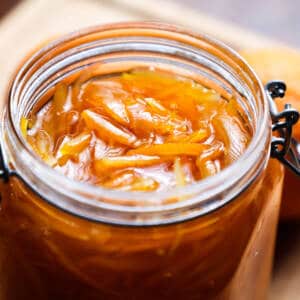
Homemade Orange Marmalade With Pectin
Homemade orange marmalade using regular oranges and apple pectin — a clean, predictable set with bright color, balanced bitterness, and tender peel.
Servings 30 portions
Ingredients

Instructions
- Cut the oranges and lemons in half. Juice them and set the juice aside while removing the pith from the lemons and the oranges with a spoon.
- Cut the orange and lemon rind into smaller petals, then carefully remove the rest of the pith attached to the peel until only a thin layer is left.
- Chop the peel into thin strips, then bring to a boil in plain water. Let it sit in the water for a few minutes, then discard the water.
- Mix the sugar and the pectin well and place into a pot with the citrus peel and juice. Bring to a slow boil, then simmer gently until the temperature reaches 105° C or 221° F.
- Check the set by placing a bit on a cold plate and into the freezer for 10 minutes.
- Store your marmalade in Mason jars in the fridge or as instructed in the storage chapter.
Video
Notes
1. Choosing oranges — Any sound, sweet orange works. Look for firm fruit with thin skin and good weight in the hand. Avoid thick-skinned or dry-looking fruit, which produces a duller marmalade no matter how careful the technique. Blood oranges make excellent marmalade when fully ripe — the finished jar comes out deep ruby and the flavor carries a faint raspberry note. Seville oranges produce the traditional British flavor profile, but they are not required with this method.
2. About the pectin — Apple pectin (powdered HM) is sold in the baking section of most supermarkets, sometimes labeled "jam sugar pectin" or "fruit pectin." Commercial liquid pectin works but produces a softer set. The two are not interchangeable in this recipe — quantities and timing differ. If using liquid pectin, follow the manufacturer's instructions on the packet instead of this method.
3. Mix the pectin dry, off the heat — Combine the pectin and sugar together in a bowl before they go anywhere near the pot. Pectin added directly to hot liquid clumps on contact and never dissolves, which is the single most common cause of a failed set. Mix dry, add to cold fruit and juice, then warm slowly.
4. Equipment — A heavy-bottomed pot (3–4 liter capacity minimum) prevents scorching during the cook. A kitchen thermometer is the single most useful tool — setting temperature is 105°C / 221°F and guessing by eye is the second most common cause of a failed batch. Sterilize jars by running them through a hot dishwasher cycle or boiling for 10 minutes. Fill the jars while still warm and the marmalade is still hot.
5. Doneness cues without a thermometer — Drop a teaspoon of marmalade onto a plate that has been in the freezer for 10 minutes. Wait 30 seconds, then push the marmalade with a fingertip. If the surface wrinkles and the marmalade holds its shape rather than running back, the set is right. If it runs back, return the pot to the heat and cook for another 3–4 minutes before testing again.
6. Common pitfalls and recovery
- Runny set: re-boil with a fresh teaspoon of pectin mixed dry into a little sugar, bring back to 105°C, retest on a cold plate.
- Tough or rubbery peel: no recovery — the cell walls have tightened. Drop the heat next time.
- Too bitter: trim more pith next time and blanch the strips longer (up to a minute) before discarding the water.
- Dark or muddy color: use white sugar, never brown or muscovado, and cook to temperature rather than chasing a set through reduction.
Nutrition
Serving: 30g Calories: 116kcal Carbohydrates: 30g Protein: 1g Fat: 1g Polyunsaturated Fat: 1g Sodium: 1mg Potassium: 1mg Fiber: 1g Sugar: 30g Vitamin A: 1IU Vitamin C: 1mg Calcium: 1mg Iron: 1mg
Keywords:homemade marmalade, orange marmalade, orange marmalade with pectin
Did you make this?Tag @pantsdownapronson or hashtag #pantsdownapronson so I can see your hot skills!