The Ultimate Hainanese Chicken Rice Recipe
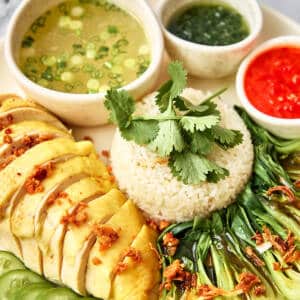
Hainense chicken and rice is the ultimate chicken and rice dish to ever exist. It's not just a delicious dish but a whole eating experience. Starting with the special, twice poached chicken and world-famous chicken fat rice, and ending with all the delicious condiments like green onion oil and ginger chili sambal. It's a showstopper yet so easy to make and perfect any day of the week.
Servings 6 people
Ingredients
Chicken And Broth
- 1300 g (3 lb) whole chicken - note 1
- 900 g (2 lb) chicken thighs - bone on skin on - note 2
- 100 g (½ cups) white onion - peeled and sliced
- 100 g (1 cups) scallions - white and middle parts only
- 100 g (6 cloves) Garlic - peeled and crushed
- 200 g (2 cups) Ginger - sliced, skin on
- 12 g (2 teaspoon) salt
- 6 g (1 teaspoon) Msg - note 3
- 12 g (1 tablespoon) sesame oil - note 4
Green onion oil
- 15 g (2 tablespoon) ginger - peeled, finely grated
- 20 g (3 tablespoon) scallions - green only, finely chopped
- 50 g (¼ cups) chicken fat - note 5
Ginger chili sauce
Rice
- 300 g (1 ⅝ cups) Jasmine rice - note 7
- 450 g (1 ⅞ cups) chicken broth
- 50 g (¼ cups) chicken fat
- 30 g (⅓ cups) ginger - sliced skin on
- 20 g (2 ½ tablespoon) garlic - crushed and peeled
- 6 g (1 teaspoon) salt
Soy gravy
- 240 ml (1 cups) chicken broth
- 60 ml (4 tablespoon) soy sauce
- 10 g (1 ¼ tablespoon) cornstarch - Not the same as corn flour
Greens
- 100 g (⅕ lb) bok choy - note 8
To serve
- 4 g (2 sprigs) cilantro - optional or substitute with mint or Thai basil
- 4 g (½ tablespoon) crispy shallots - optional

Instructions
For the chicken and broth
- Brining (Optional) - This is, in my professional opinion, a very necessary step if you want the most succulent and flavorful poached chicken. It requires some planning, as you have to do it the day before or first thing in the morning if you plan on making this for dinner.
- Remove any excess bits of fat from around the cavity. Make a 2 % salt brine, then keep the chicken refrigerated in the brine for 12 to 20 hours.
- Chicken fat - One chicken does not have enough excess chicken fat nor enough flavor to flavor the broth. We use extra chicken bone-in, skin-on thighs for this reason.
- Harvest the skins, then bake them in the oven at 160 °C or 320 °F for about an hour to render out the fat from the skins. Remove, pour the fat into a container and squeeze out the chicken skins once cool enough to handle as there will still be plenty of fat inside. Do not throw them away, though.
- Once your chicken fat is done, you will chop up the leftover skins and slowly roast them in a dry pan. Move them around often to avoid burning, Drain on a paper towel and store in a cool dry place. We will use these to sprinkle on top of our chicken later on. Of course, you can skip this step if you are pressed for time.
- Dip the chicken 3 to 5 times into boiling water. This Will help keep the skin from tearing and provide the authentic texture of Hainanese chicken. If you are not making this with a whole chicken, you still do the same with chicken pieces. The skinless thighs also get a dip in the hot water to remove impurities that may make the broth cloudy.
- Shock the chicken in ice water after dipping it in the boiling water for this method to be most effective. The extra thighs don't need chilling down, they go straight into the pot.
- Slice, washed, unpeeled ginger into fine strips then bash them up a bit to release their flavor better, crush the garlic cloves and slice the onion finely, as well as the bottom parts of the green onion. Add it to a pot along with the chicken thighs.
- Place your whole chicken into the pot and add just enough water to cover. Bring this up to 90 °C or 194 °F. THE BROTH SHOULD NEVER BOIL. If you have a kitchen thermometer, then that's great. If not, then don't worry. The internal temperature of the chicken measured at the thickest part should read 68 °C or 154 °F. It takes around 45 minutes depending on the size of your chicken.
- While poaching, you want to make sure the hot water gets distributed throughout the cavity to make sure it cooks evenly. This can be done with meat hooks attached under the wings, or carefully with chopsticks to move the chicken and displace the broth. Once the chicken is poached, repeat the ice bath step. Keep the chicken in the ice water for a few minutes, then remove it and let it rest.You don't want to cool it down fully. It's just to shock the skin to get the correct texture.
- Remove from the water, then pat dry with a paper towel. The extra thighs can be used for other dishes or frozen for later use. Rub the chicken with a touch of sesame oil or rendered chicken fat while it's resting and waiting to be carved.
Green onion oil
- Chop up the green parts of the onion finely. Grate some peeled ginger and add hot chicken fast or neutral oil to the mix while stirring.
- Set aside to cool. This green oil is also delicious on other dishes and can be stored for weeks in the fridge.
Chili ginger sauce
- Ginger garlic sauce - The dipping sauce for Hainanese chicken is often simply this mildly spicy sambal.
- Pound or blend the garlic, grated ginger, chopped chilli and a touch of salt in a small blender or pestle and mortar until you have a paste. Add chicken broth and season with lime juice and a touch of sugar for balance. Store until needed.
Aromatic rice
- The most important part apart from the chicken. Heat the chicken fat, then add crushed garlic and sliced ginger.
- Toast it until starting to brown, then add your rice and give that a good stir through. Add the chicken broth, reduce the heat to a minimum and cook for 15 minutes lid-on. You can also do this in a rice cooker. Keep your rice warm once cooked.
Soy gravy
- Make a cornstarch and chicken broth slurry, then whisk into the chicken broth and soy sauce.
- Heat on medium and keep whisking until it thickens.
Steamed greens
- Steam the greens in a steamer basket for 3 minutes, or use any other method you normally use for cooking fresh green vegetables. I have a guide to cook spinach, bok choy and broccoli if you need help.
To serve
- Remove the legs, breasts, and wings. The legs can be deboned if you want, but it's not necessary.Slice the breasts across and at least separate the thighs from the drumsticks. The wings can be left as is.
- Plate up by adding a generous portion of chicken fat rice. Add some steamed greens and sliced chicken. Follow that up with a steaming bowl of hot chicken broth sprinkled with more fresh green onion.
- Slice the cucumber and add a few sprigs of your preferred green herb like cilantro or mint.
- Add the green sauce and ginger chili sauce.
- Ladle over some soy chicken broth and sprinkle with crispy shallot and chicken skin crackling.
Video
Notes
- It's best to use a whole chicken for the most authentic Hainanese chicken experience. However, if you can't find good quality whole chicken, then you can use already portioned chicken. Frozen is ok, but fresh will have a much better texture.
- We use extra thighs because we can use the fat to render down, and it makes the broth more intense. You could also use wings or legs.
- MSG often gets a bad name. It's in actual fact, produced with a natural fermentation process and a key part of the authentic recipe. However, if you are convinced that it's bad for you then simply leave it out. I've included plenty of ingredients like garlic, ginger, onion and extra chicken that has its own natural glutamate and will eventually give us a nice umami flavor.
- You can use sesame oil or rendered chicken fat, or mix the two. This is up to you and your liking for sesame oil.
- If you do not have enough chicken fat or can't be bothered rendering it out of the excess fat, simply use a neutral oil.
- Use any chili you like that works with your tolerance for spiciness.
- You can use another long grain rice like basmati if you prefer. Short grain or sticky rice won't work.
- Steamed greens are a must, even if you don't like them). You can use spinach or broccoli as a substitute if you can't find bok choi.
Nutrition
Serving: 250g Calories: 1052kcal Carbohydrates: 67g Protein: 55g Fat: 62g Saturated Fat: 17g Polyunsaturated Fat: 13g Monounsaturated Fat: 26g Trans Fat: 0.2g Cholesterol: 243mg Sodium: 2301mg Potassium: 1147mg Fiber: 3g Sugar: 6g Vitamin A: 1354IU Vitamin C: 39mg Calcium: 131mg Iron: 4mg
Keywords:hainanese chicken, singapore chicken rice, tian tian chicken recipe
Did you make this?Tag @pantsdownapronson or hashtag #pantsdownapronson so I can see your hot skills!