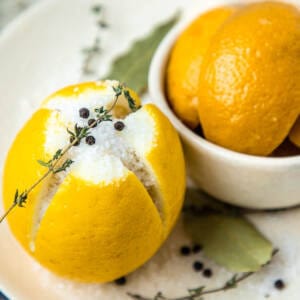
Moroccan Preserved Lemons
Moroccan preserved lemons are a delicious condiment that transforms any dish. Made with just lemons and salt, they’re easy to prepare and only need time to cure. Once ready, their soft peel and intense lemony flavor, are perfect for adding to tagines, stews, sauces, salads, or even cocktails.
Servings 8 lemons
Equipment
Ingredients
- 1.6 kg (3 ½ lb) lemons - 8 large regular lemons - note 1
- 150 grams (1 cups) coarse salt - kosher - note 2
- 100 grams (½ cups) sugar - or honey (optional)
- 2 tablespoons (2 tablespoons) peppercorns - optional
- 6 leaves (6 leaves) bay leaves - optional
- 4 sprigs (4 sprigs) thyme - optional

Instructions
- Rinse and cut the lemons into quarter segments. Remove the center white bits and any visible seeds. If using smaller Moroccan lemons do not cut the lemons through completely, as they preserve better when kept intact at the base.
- Add salt and sugar. If using herbs and pepper, do not add at this stage.
- Squeeze and bruise the lemons to release all the juice. Squeeze a few extra lemons separately if there's not enough juice to cover the lemons in the next step.
- Pack the lemons tightly into a glass jar with any aromatics. Press them down to cover in juice, adding extra if needed. Weigh them down with a fermentation weight or a sealed water-filled bag. Close with a lid. Keep the lemons fully submerged and ferment at room temperature for at least 1 month.
Video
Notes
1. Which lemons to use
- Beldi/ Bergamot orange - This is the variety used in classic Morrocan salted lemons. They are sweet, small, and have a very thin skin. Their shape is quite flat with a distinctive little nose/nipple at the end.
- Meyer lemons - The next best lemon outside Morocco. Thin-skinned and sweeter than regular lemons, making them ideal for preserving. They soften quickly, making the process faster. They yield a large amount of juice too which is important for the process to work.
- Eureka lemons - These are your everyday lemons and are available in nearly every store and grocer. They have thicker skin resulting in longer fermentation time.
- Sterilize Your Jars — Wash jars with hot, soapy water, then sterilize them in the oven at 250°F (120°C) for 10-15 minutes, or boil them for 10 minutes. Let them cool before use.
- Keep Everything Clean — Wash your hands, utensils, and surfaces thoroughly to avoid contamination.
- Check for Spoilage — Inspect for mold or off smells once a week. If anything seems wrong, discard the whole batch.
Nutrition
Serving: 10grams Calories: 115kcal Carbohydrates: 33g Protein: 3g Fat: 1g Saturated Fat: 0.1g Polyunsaturated Fat: 0.2g Monounsaturated Fat: 0.1g Sodium: 772mg Potassium: 318mg Fiber: 7g Sugar: 17g Vitamin A: 128IU Vitamin C: 107mg Calcium: 76mg Iron: 2mg
Keywords:moroccan lemons, preserved lemons, salted lemons
Did you make this?Tag @pantsdownapronson or hashtag #pantsdownapronson so I can see your hot skills!