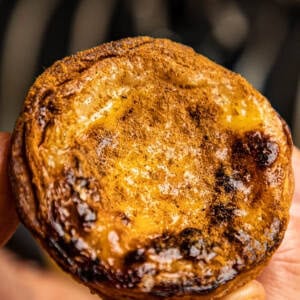
Pastéis De Nata - Authentic Portuguese Custard Tarts (Video)
Pastéis de Nata, also known as Portuguese custard tarts, are a beloved treat made with a crispy, flaky pastry shell and a smooth, rich custard filling. Originating from Lisbon, these tarts are best known for their blistered, golden tops. Perfect for breakfast, as a mid-morning snack with coffee, or as a dessert, Pastéis de Nata offer the perfect balance of flaky crust and creamy custard.
Servings 24 tarts
Ingredients
For the Custard
- 225 grams (1 ¼ cups) sugar
- 110 grams (½ cups) water
- ½ (½) lemon - peel only
- 2 (2) cinnamon sticks
- 2 grams (½ teaspoon) vanilla extract
- 165 grams (⅔ cups) double cream
- 400 grams (1 ⅔ cups) whole milk
- 25 grams (3 tablespoon) cornstarch - known as cornflour in the UK
- 120 grams (6 each) egg yolks - from 6 eggs

Instructions
Making The Custard
- Make the syrup — In a saucepan, combine sugar, water, vanilla, cinnamon sticks, and lemon peel. Bring to a boil over medium heat, stirring occasionally. Once the syrup reaches 106 °C or 223 °F, remove it from the heat and set aside to cool.225 grams sugar, 110 grams water, ½ lemon, 2 cinnamon sticks, 2 grams vanilla extract
- Cook the starch — In a separate saucepan, combine milk, double cream, and cornstarch. Whisk the mixture continuously over medium heat until it starts to bubble and thicken, ensuring there are no lumps. Once it begins to thicken, remove it from the heat.165 grams double cream, 400 grams whole milk, 25 grams cornstarch
- Mix with egg — Separate the egg yolks into a bowl and whisk them lightly. Gradually pour the hot starch mixture into the egg yolks while continuously whisking to temper the eggs and avoid curdling. Add the syrup and whisk to combine.120 grams egg yolks
- Chill and infuse — Cover the custard with plastic wrap, ensuring the wrap touches the surface of the custard to prevent a skin from forming. Allow the custard to chill in the fridge overnight to let the flavors infuse and the texture set. If you are short on time strain through a sieve straight away.
Making The Pastry
- Soften butter — Place the butter in a warm place to soften it. It should be pliable but not melted, which will make it easier to laminate the dough later.280 grams butter
- Prep dough — n a mixing bowl, combine the flour, salt, and water to form a dough. Mix until smooth, then cover the dough with a damp cloth and let it rest for about 30 minutes. This step helps hydrate the dough, making it easier to work with.310 grams flour, 3 grams salt, 200 grams water
- Roll out — After the dough has rested, roll it out on a lightly floured surface into a 40 cm x 50 cm (16-inch x 17-inch) rectangle. Focus on making it thin but not too fragile, about 3 credit card thickness.
- Spread with butter —Spread ⅕th of the softened butter evenly over two-thirds of the dough. Leave the top third unbuttered.
- Letter fold — Fold the unbuttered third of the dough over the buttered portion, then fold the other third on top to form a letter fold. This step creates the layers of butter and dough that will turn into the signature flaky texture.
- Repeat — Roll the dough out again and repeat the buttering and folding process. Roll it out, spread the butter, and letter fold it. If your kitchen is hot move the pastry to the fridge for 10 minutes between steps so that the butter does not melt out.
- Long roll — Once the dough has been folded twice, roll it out into a 20cm x 45cm (8 by 18 inches) rectangle. Spread another layer of butter over two-thirds of the dough.
- Fold and chill — Fold the dough into thirds just like the previous times, making sure each layer is well-buttered. Then, cover it with plastic wrap and chill in the fridge for at least 30 minutes to firm up.
- Roll out and butter — After chilling, roll the dough out again into a 40cm x 50cm (16-inch x 17-inch) rectangle and spread the remaining butter evenly over the surface. This step gives the dough its final butter layer.
- Trim edges — Trim the edges of the dough to create a clean, even rectangle. Save the trim in the freezer for other uses.
- Roll into a log — Once the dough is rolled and trimmed, tightly roll it up into a log shape. Pay special close attention to the first part of the roll that will form the bottom of the tarts. This log will be sliced into rounds that will form the tart shells.
- Chill down — Wrap the log in plastic wrap and chill it in the fridge for at least 3 hours, or better, overnight. This resting period ensures the dough firms up and makes it easier to slice into rounds.
Baking The Tarts
- Preheat oven and strain custard — Preheat your oven to 250°C / 482°F. While the oven heats up, strain the custard through a fine mesh sieve to remove any bits of egg or cinnamon, ensuring a smooth filling.
- Cut pastry — Slice the chilled pastry log into 1.5 cm (0.6 inch) rounds, ready for the tart molds.
- Press down — Wet your thumbs with cold water and gently press the dough down into the center of the molds. Be careful not to make the bottom too thin.
- Press out — Dip your thumbs into cold water again and work the pastry up the sides to form the tart shell in a smearing motion, taking care not to fuse the edges together.
- Chill pastry — Place the tart shells into the fridge or freezer for a few minutes to cool down and firm up.
- Fill tarts and bake — Fill each tart shell with custard, about 85% full. Bake for 15 - 20 minutes or until the pastry is golden brown and the custard is blistered and shiny. Let it cool down for a few minutes before eating.
Video
Notes
The most important things to remember
- Syrup Temperature — It’s important to reach the correct temperature of 106°C (223°F). A kitchen thermometer is your best tool here.
- Cooking the Starch — When cooking the starch mixture, whisk constantly to prevent lumps.
- Pastry Temperature — Make sure the pastry is cold when working with it, especially during the laminating process. This helps the butter remain solid, which is key for achieving that flaky texture. The butter should be soft but not melted when spreading onto the dough.
- Tight Rolling of Logs — When rolling the dough into a log, make sure to roll tightly from the start. This ensures even layering, leading to a consistent flaky texture when baked.
- Straining the Custard — Always strain the custard before filling the pastry shells. This removes any bits of egg or spice, ensuring your custard is smooth and creamy.
- Using Cold Water When Forming the Shells — When shaping the tart shells, wet your thumbs with cold water. This will prevent the dough from sticking to your fingers and help you form a clean, smooth shell without tearing.
- Don’t Overfill — Overfilling can cause the custard to spill over during baking.
- High-Temperature Baking — For the best result, bake at the highest temperature possible (around 250°C / 482°F). This allows the pastry to crisp up quickly and ensures the custard develops a beautiful, caramelized blistered top.
- Cooling Down Before Eating — Let the tarts cool for a few minutes before eating. They come out of the oven extremely hot and can burn your mouth. After about 10 minutes, they will be perfect.
- Storage — Store your custard tarts at room temperature for up to 2 days in an airtight container to keep the pastry crisp. If you need to store them longer, refrigerate them for up to 5 days. The custard will remain smooth and creamy, but the pastry may soften a bit.
- Freezing — You can freeze these, but the pastry may lose some of its crispness. To freeze, wrap the cooled tarts tightly in plastic wrap or place them in a freezer-safe container. They can be stored in the freezer for up to 1 month. When ready to eat, thaw at room temperature or gently reheat in the oven directly from the freezer.
- Reheating — To restore the crispiness of the pastry, reheat in a preheated oven at 350°F (175°C) for about 5 minutes. This will help crisp up the pastry while keeping the custard smooth and creamy. Do not microwave them.
Nutrition
Serving: 50grams Calories: 222kcal Carbohydrates: 22g Protein: 3g Fat: 14g Saturated Fat: 8g Polyunsaturated Fat: 1g Monounsaturated Fat: 4g Trans Fat: 0.4g Cholesterol: 89mg Sodium: 135mg Potassium: 58mg Fiber: 1g Sugar: 11g Vitamin A: 493IU Vitamin C: 1mg Calcium: 40mg Iron: 1mg
Keywords:custard tarts, pasteis de nata, pastel de nata
Did you make this?Tag @pantsdownapronson or hashtag #pantsdownapronson so I can see your hot skills!