

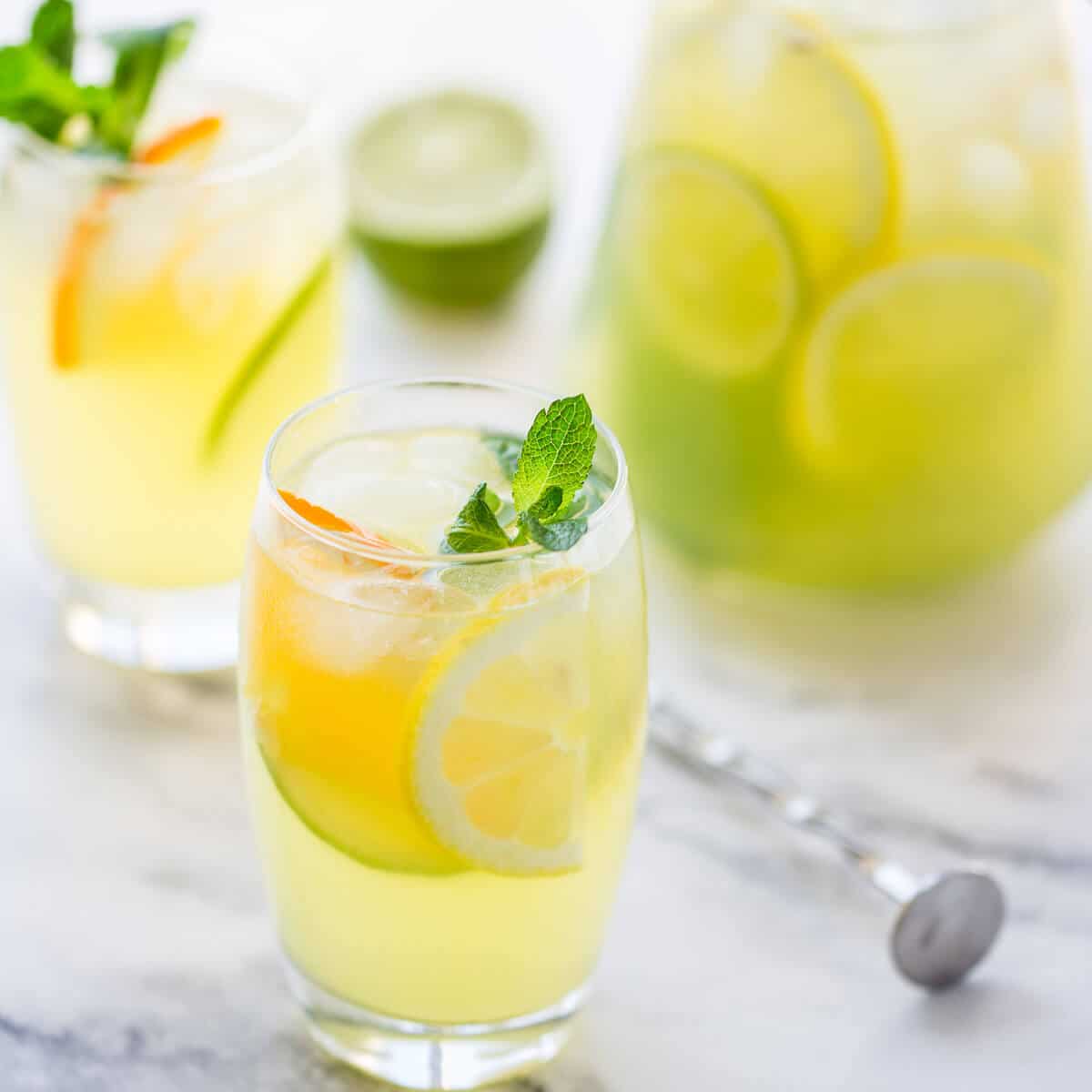
We sell liters of this lemonade at events, and the question we hear every single time is: what makes it taste so different from other homemade lemonade? The answer is one step that almost every recipe skips - infusing the citrus zest in the syrup before a drop of juice goes in. This post covers two versions: a fast three-ingredient base lemonade ready in 15 minutes, and the triple-citrus chef method we use professionally, with the flavor science explained so you understand why each step matters.
If you really want to impress your guests, add a touch of preserved lemon, and simply serve it as a mocktail with quick lemon marinated olives.
Jump to:
- Why most homemade lemonade tastes flat
- Quick base lemonade - 15 minutes
- The chef method - triple-citrus lemonade with zest infusion
- Why three citrus, not one
- Ingredients for the triple-citrus lemonade
- How to make homemade lemonade
- Substitutes and variations
- Storage and make-ahead
- Troubleshooting your lemonade
- What to do with lemon juice
- Frequently asked questions
- More drinks
- More recipes using lemon
- Recipe
- Comments
Why most homemade lemonade tastes flat
Most lemonade recipes are a ratio problem: how much sugar, how much juice, how much water. The result is fine - sweet, sour, recognizable as lemonade. But it rarely tastes as good as it should. That distinction matters more than it sounds, and it comes down to one piece of food chemistry that everyone ignores.
- The flavor is in the peel - Citrus essential oils, the compounds responsible for the bright, fragrant, unmistakably lemon aroma - are concentrated in the oil glands of the zest. The juice carries tartness and water, but almost no aromatic character. When you squeeze a lemon and discard the peel, you discard the most flavor-active part of the fruit while keeping the acid. That is why standard homemade lemonade tastes sharp and one-dimensional rather than genuinely citrusy.
- Simple syrup upgrade - Every top-ranking lemonade recipe uses a simple syrup: sugar dissolved in hot water. That step is correct. The upgrade is what happens to the syrup before the juice goes in: infuse the citrus zest in the warm liquid for an hour. Heat opens the oil glands in the peel, drawing the aromatic compounds into the syrup. The resulting base smells and tastes of lemon in a way that lemon juice alone cannot give.
- Balance - A well-balanced lemonade will taste flat after sitting in ice for 10 minutes. Ice dilutes. The correct approach is to make the drink brighter and more intensely flavored than feels right, then let the ice do its job at the table.
Quick base lemonade - 15 minutes
If you need lemonade today with lemons already in the house and no time for an infusion, this is the version to make. Three ingredients, no waiting, genuinely good. It is not the same as the chef method below, but it is considerably better than anything from a carton.
Ingredients (serves 8 glasses):
- 250 g (1 cup) white granulated sugar
- 250 ml (1 cup) water, for the syrup
- 240 ml (1 cup) fresh lemon juice, from about 5 to 6 lemons
- 1 liter (4 cups) cold water
- Ice, lemon slices, and fresh mint to serve
Method:
- Make the simple syrup. Combine the sugar and 250 ml (1 cup) of water in a small saucepan over medium heat. Stir until the sugar is fully dissolved and the liquid is clear, about 3 to 4 minutes. Remove from the heat and cool completely before using. To speed this up, set the pan in a bowl of cold water and stir.
- Juice the lemons. Roll each lemon firmly on the counter before cutting - this breaks the internal membranes and yields noticeably more juice per fruit. You need about 240 ml (1 cup). Bottled lemon juice is not a useful substitute here: it has been heat-treated, and the flavor is flat by comparison.
- Combine and taste. Add the cooled syrup, fresh lemon juice, and 1 liter (4 cups) of cold water to a large jug. Stir well and taste. It should be brighter and sharper than you think it needs to be, because the ice will dilute it. Add a splash more lemon juice for tartness, and a little more syrup for sweetness.
- Chill and serve. Refrigerate for at least 20 minutes before serving. Serve over ice with lemon slices and fresh mint.
The chef method - triple-citrus lemonade with zest infusion
This is the version we sell at events. It takes about an hour of mostly passive time while the infusion gets made, and the result is categorically different from the base version above. If you have the time, make this one. The base recipe is good lemonade, but this is what lemonade is actually capable of.
Why three citrus, not one
Every recipe uses lemon only. That is not wrong - it produces recognizable lemonade. But lemon alone has zero depth. Adding two more citrus fruits builds the flavor in layers.
- Lemon - The backbone. Provides the tartness and the sharp, familiar citrus note that defines the drink. The primary acid here is citric acid. The zest contains the highest concentration of limonene, the compound responsible for that lemony flavor.
- Lime - Lime juice has a slightly different acid profile from lemon - it carries more of the floral, almost herbal notes that make the lemonade smell interesting before you even taste it. And even though lime is technically more sour than lemon, it adds a much deeper layer of freshness.
- Orange - The sweetness and body. Orange contributes natural fruit sugars that soften the sharpness of lemon and lime without requiring additional sugar from the syrup. It also adds a certain roundness that perfectly softens the acidity. Use a sweet, juicy variety.
Ingredients for the triple-citrus lemonade
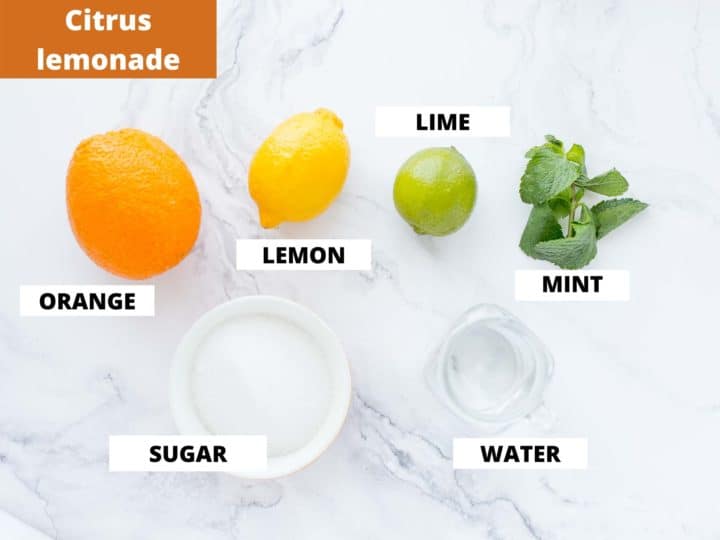
The ingredients are simple. Buy the best quality citrus you can find - this is a drink built on citrus flavor, and the fruit is the difference between good and exceptional.
- Lemons - Unwaxed lemons are essential because you are using the zest, and wax creates a barrier between the oil glands and the syrup. Waxed lemons can be scrubbed with hot water and a brush, but unwaxed ones are cleaner. Choose firm lemons with bright yellow skin and no soft spots - these will yield the most juice.
- Limes - The same logic applies: unwaxed for zesting. Look for limes that are fully green with no yellow patches. A lime that has started turning yellow is past its peak aroma - the essential oils in the zest begin to degrade as the fruit ages.
- Oranges - Navel oranges work well here. Valencia oranges are excellent when in season and have a thinner skin that zests easily. Avoid blood oranges unless you want a noticeably different color and a slightly more berry-forward flavor.
- Mint - Standard garden mint (peppermint or common mint) is what you want. Spearmint has a sharper, more medicinal menthol note that overpowers the citrus. If you are not sure which you have, taste a leaf: spearmint is noticeably sharper and cooler.
- White granulated sugar - Standard granulated sugar dissolves cleanly and leaves no flavor of its own. Honey, agave syrup, and maple syrup all work as substitutes, but each brings its own flavor note and a different level of sweetness - see the substitutes section below for specifics.
See the recipe card for quantities.
How to make homemade lemonade
These are the seven steps we follow at events and in our kitchen. Each step has a purpose - skipping or rushing one of them produces a noticeably less flavorful result.
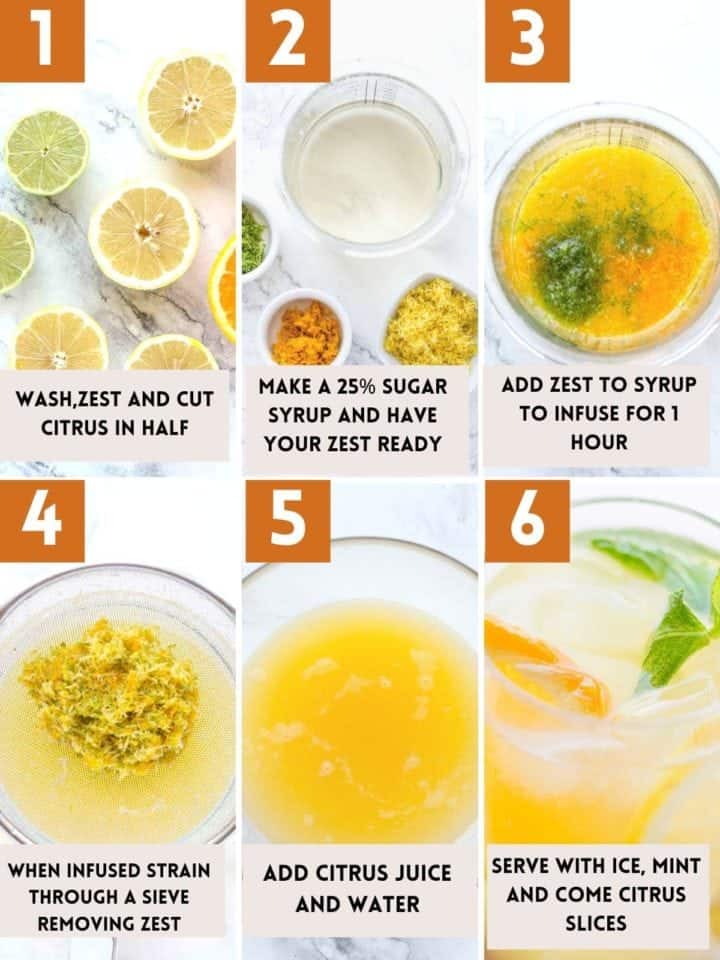
- Wash the citrus thoroughly. Rinse all the fruit under cold running water. Even unwaxed citrus has surface residue. You are about to use the skin in the drink - wash it properly. Pat dry before zesting so the zester grips cleanly.
- Zest the citrus, then halve it for juicing. Zest the lemons, limes, and oranges according to the quantities in the recipe card. Use a fine microplane or box grater - you want fine, light zest, not thick curls of peel. Stay in the colored layer only. The white pith underneath is bitter, and even a small amount will make the finished drink taste off. Once zested, cut the fruit in half and set it aside for juicing and garnishing in step 5.
- Make the sugar syrup. Combine the sugar and 250 g (1 cup) of water in a saucepan. Bring to a gentle boil, stirring until the sugar is fully dissolved and the liquid is clear. Add 750 g (3 cups) of cold water - or the equivalent weight in ice - to cool the syrup. You are diluting the syrup to about 20% sugar concentration, which is the working base for the infusion.
- Infuse the zest in the warm syrup for one hour. Add all the citrus zest to the warm (not hot) syrup and stir it in. Leave it to infuse at room temperature for one hour. Do not rush this step by boiling the zest in the syrup - high heat damages the aromatic compounds. The goal is gentle extraction, not cooking. The syrup will take on a noticeably more fragrant, rounded citrus character as it infuses. After 45 minutes, it will smell like the best lemonade you have had.
- Strain out the zest and juice the citrus. Pour the infused syrup through a fine sieve into a large jug or container, discarding the spent zest. Then juice the halved citrus and add the juice directly to the strained syrup. The juice adds the tartness and the acid - the syrup already has the aroma.
- Add the water and taste for balance. Add 1 liter (4 cups) of cold water to the jug. Stir well, then taste. The drink should be bright, fragrant, and noticeably sharper than you want to serve it - you will add ice, which will dilute it. If it tastes flat or too mild, add a squeeze of additional lemon juice. If it tastes bitter, the pith got into the zest - balance it with a small addition of extra syrup.
- Chill, assemble, and serve. Refrigerate until well chilled. To assemble: slice a few rounds of fresh citrus and pick a few sprigs of mint. Fill a large jug with ice, add the citrus slices and mint, pour the lemonade over, and give it one stir. Serve in chilled glasses filled with more ice, citrus, and mint. The drink should be very cold - room-temperature lemonade loses most of what makes this version worth making.
Substitutes and variations
- Single citrus - You can make the chef method with lemons alone, and it is still considerably better than a standard lemonade. Use the same infusion technique with lemon zest only, and replace the lime with additional lemon juice. Omit the orange.
- Sugar substitute - Replace the granulated sugar with an equal weight of mild honey (acacia or clover, not a strong varietal that will overpower the citrus). Honey adds a floral undertone that pairs well with lemon and mint. Dissolve it in the hot water the same way as sugar.
- Sugar substitute - Agave syrup is about 1.5 times sweeter than sugar by weight, so reduce the quantity accordingly - use about 170 g (roughly half a cup) where the recipe calls for 250 g sugar. Maple syrup adds a noticeable caramel undertone that works well in an autumn version, with a cinnamon stick added to the infusion. It is a different drink, but an intentional one.
- Sugar substitute - Stevia is intensely sweet. Use only a few grams where the recipe calls for 250 g of sugar, and add it to taste rather than by ratio. Make the syrup with water only and stir in the stevia off the heat. The infusion step works the same way.
- Sparkling version - Replace the final 1 liter of cold still water with chilled sparkling water. Add the sparkling water at the very last moment, after everything else is combined and chilled, to preserve the carbonation. Do not stir aggressively once the sparkling water is in.
- Herb infusion swap - Replace the mint with fresh lavender (use it sparingly - lavender is assertive) or fresh basil. Basil-lemon is a well-established pairing in professional kitchens and works particularly well in the cocktail application below. Thyme or rosemary can be added as a secondary aromatic, especially for a version served with gin.
- Exotic citrus additions - Japanese yuzu or bergamot can be added to the zest infusion for a more complex aromatic profile. Both have intensely bitter pith, so zest carefully. Yuzu brings a fragrant, almost floral quality. Bergamot reads very similarly to the citrus note in Earl Grey tea. It is striking in small amounts and overwhelming in large ones.
- Strawberry and basil lemonade - The base recipe from this post is the starting point for the strawberry version. Add fresh strawberries to the infusion step or muddle them into the finished lemonade. The fermented strawberry soda version starts the same way and then ferments the base into a naturally carbonated drink.
- Green tea lemonade - Replace the 1 liter of final cold water with cooled, unsweetened green tea. Brew the tea at around 70 to 80 degrees Celsius (160 to 175 degrees Fahrenheit). Boiling water makes green tea bitter. Let it cool fully before adding. The result is a lemonade-iced-tea hybrid with a grassy, slightly savory depth behind the citrus.
Storage and make-ahead
Refrigerator: The finished lemonade keeps well in the fridge for up to 5 days when sealed in a container. After 5 days, the flavor starts to dull - the aromatic compounds in the citrus oils are volatile and diminish over time. Give it a stir before serving, as the lemonade can stratify slightly in the fridge.
Make-ahead for a party: Make the infused syrup up to 3 days ahead and refrigerate it sealed. On the day, juice the citrus, combine with the syrup and cold water, and chill for at least 30 minutes. The assembled drink is ready. If you want to reduce the sugar for a lighter drink, reduce the syrup by 20 to 30 percent and balance with additional lemon juice at the end.
Troubleshooting your lemonade
- The lemonade is too sweet - Add more fresh lemon juice directly to the jug and stir. Do not add water - it dilutes both the sweetness and the flavor. If you want to reduce the sweetness for next time, use 180 to 200 g of sugar instead of 250 g in the syrup step, and balance the finished drink with extra citrus juice at the end. The right calibration depends on how sweet your oranges are, which varies with season and variety.
- The lemonade is too tart or sour - Add a small amount of the reserved syrup (if you kept any back) or dissolve a tablespoon of sugar in a splash of hot water and stir it in. Go slowly - it is easy to over-correct from sour to sweet. If you do not have reserved syrup, a small amount of fresh orange juice softens the sharpness without adding the artificial sweetness of extra sugar.
- The lemonade tastes flat - The most common cause is that the zest did not infuse long enough, or not enough zest was used. If you are at the tasting stage and the drink is too mild, the fix is to add a squeeze of fresh lemon juice and a small pinch of fine salt - salt suppresses bitterness and brings forward other flavors, including the citrus, in a way that adding more juice alone does not. For next time, be generous with the zest and allow the full hour of infusion.
- The lemonade tastes bitter - This comes from pith in the zest. If the zester cut too deeply and took white pith along with the colored skin, the bitterness infused into the syrup. There is no complete fix at this stage, but balancing with additional sugar syrup and fresh orange juice softens it considerably. For next time, use a fine microplane and zest lightly - two or three passes per surface is enough. If you are seeing white material mixed in with the zest, it has too much pith.
What to do with lemon juice
This lemonade base is more versatile than a glass of cold drink. Here is how we use it and how lemon juice generally extends through a kitchen.
Drinks and cocktails
- Serve it cold as a soft drink - The original use and the best one. Well chilled, over ice, with a round of lemon and a sprig of mint. Make sure the glass is cold, too.
- Build it into a cocktail - Gin is the natural pairing - use the lemonade in place of the tonic for a citrus-forward gin and lemonade. Vodka works in the same way. For a whisky sour, shake 60 ml (2 oz) whisky or bourbon with 30 ml (1 oz) of the lemonade base (syrup only, pre-water) and a small amount of pasteurized egg white over ice until cold and frothy. Serve over crushed ice.
- Serve it as a non-alcoholic spritz or mocktail - Top with sparkling water and serve in a tall glass with long ribbons of cucumber and a few mint leaves. This is the version we serve at events as the non-alcoholic option alongside the cocktail versions.
- Naturally fermented lemonade soda - Leave the finished lemonade (without added ice) to ferment at room temperature for about 4 days, the same way you would start a kombucha. Transfer to sealed bottles and allow to carbonate for another 4 days at room temperature. Refrigerate and make sure it is thoroughly chilled before opening - it will be under pressure. The result is a naturally sparkling, lightly fermented citrus soda. See the fermented strawberry soda post for the technique in detail.
In the kitchen
- Drizzle over freshly baked cakes - Use the lemonade base (before the final water is added, so it is more concentrated) as a drizzle for lemon cake, pound cake, or cupcakes. Poke holes in the warm cake with a skewer and spoon the warm syrup over - it soaks into the crumb and adds moisture and citrus flavor. The carrot and walnut cake works particularly well with a lemon drizzle.
- Add to salad dressings - A tablespoon of this lemonade base in place of fresh lemon juice in a vinaigrette adds a rounder, more aromatic lemon note than straight juice. Works well with olive oil and mustard over bitter greens - the same idea as a lemon and mint salad dressing.
- Freeze as popsicles or flavored ice cubes - Pour the finished lemonade into popsicle molds for a summer ice lolly. Or freeze it in ice cube trays and use the cubes in plain water - they flavor the water as they melt without the dilution problem of regular ice. Particularly good in still or sparkling water as a flavor addition.
Frequently asked questions
Up to 5 days in a sealed container. After that the aromatic compounds in the citrus oils start to degrade and the flavor flattens. The infused syrup base (before adding the final water) keeps for up to a week refrigerated, or 3 months frozen.
Freeze the syrup base rather than the finished lemonade. Water and syrup separate when frozen together and the drink needs vigorous stirring to recombine on thawing. The concentrated syrup (before you add the final liter of cold water) freezes cleanly for up to 3 months. Defrost overnight in the fridge, then add the juice and cold water to finish.
For the chef method (triple-citrus, serves 8), plan on 3 to 4 lemons, 2 limes, and 1 large orange. For the quick base recipe (lemon only, serves 8), you need about 5 to 6 lemons to get 240 ml (1 cup) of juice. Lemon yield varies with size and freshness - roll each one firmly on the counter before juicing to maximize output.
No. Bottled lemon juice is heat-treated during processing, which destroys most of the volatile aromatic compounds that make fresh lemon juice taste like a lemon. The result is a drink that is sour but not citrusy. Fresh juice is the non-negotiable in this recipe.
Too sweet: add more fresh lemon juice, not water - water dilutes the flavor along with the sweetness. Too tart: stir in a small amount of reserved syrup dissolved in a splash of hot water, or add a squeeze of fresh orange juice, which softens sharpness without adding a synthetic sweetness. Always taste before adding ice, and remember that ice will dilute the drink further as it melts.
Yes - that is what the quick base recipe at the top of this post is for. Skip the infusion and you get a good, standard lemonade ready in 15 minutes. The infusion is what separates the chef method from every other recipe in this space. It is not a step you can rush, but it is mostly passive time.
Yes. Replace the granulated sugar with an equal weight of mild honey (acacia works well) and dissolve it in the hot water the same way. Agave syrup is about 1.5 times sweeter than sugar by weight, so use about 170 g where the recipe calls for 250 g. Maple syrup works at a 1:1 swap and adds a light caramel background note that pairs well with the citrus in autumn.
Yes. Use the same infusion method with lemon zest and lemon juice only. The drink will be sharper and less rounded than the triple-citrus version, but the zest infusion still produces a noticeably more flavorful result than a standard lemon-juice-only recipe. Increase the sugar slightly to compensate for the lost sweetness that the orange usually provides.
More drinks
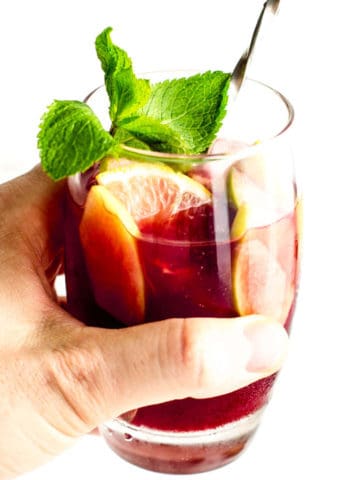
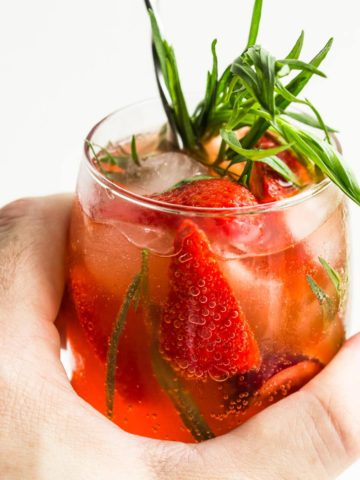
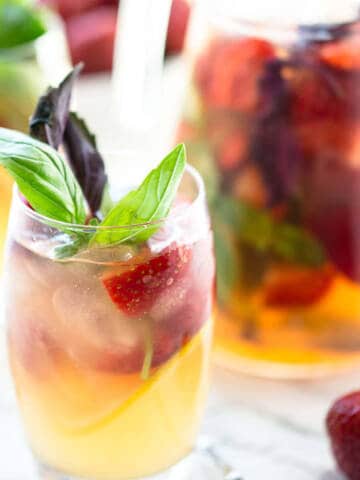
More recipes using lemon
If you found this post helpful or have learned something, please comment, subscribe, and follow me on social media for more delicious recipes.
Recipe
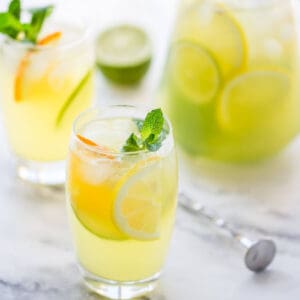
Triple-Citrus Lemonade
Ingredients
For the citrus syrup base
- 250 g (1 ¼ cups) sugar
- 1 L (4 ¼ cups) water
- 15 g (2 ½ tablespoon) lemon zest
- 15 g (2 ½ tablespoon) orange zest
- 10 g (1 ⅔ tablespoon) lime zest
To add to the base
- 1 L (4 ¼ cups) water
- 180 g (¾ cups) lemon juice
- 60 g (¼ cups) lime juice
- 160 g (⅔ cups) orange juice
For serving
- ½ (½) bunch fresh mint
- 1 kg (4 ¼ cups) Ice cubes
- Orange, lime and lemon - for fresh slices

Instructions
For the syrup base
- Wash the citrus well and pat dry - you're using the skin.
- Zest the lemons, limes and oranges, taking only the colored layer, not the bitter white pith. Halve the fruit and set aside to juice.
- Boil 250 g water with 250 g sugar until dissolved, then add 750 g cold water (or the same weight in ice) to make a warm 20% syrup.
- Stir the zest into the warm - not hot - syrup and infuse 1 hour. Don't boil it; high heat drives off the citrus oils.
- Strain, discard the zest, keep the syrup.
Finishing the lemonade
- Juice the citrus and stir the juice into the syrup.
- Add 1 liter of water.
- Taste - make it brighter and sharper than you'd serve it, since the ice dilutes as it melts.
- Chill well in the fridge.
To serve
- Slice some citrus and pick a few sprigs of fresh mint.
- Add to a jug with ice and stir.
- Serve in chilled glasses with more citrus, mint and ice.
Notes
- Stir in extra fruit pieces just before serving.
- Top the base syrup with sparkling water for a citrus spritzer.
- Add gin, vodka, or whisky for a cocktail.
- Use the base syrup as a drizzle over cakes.
- Freeze the finished lemonade in popsicle molds.
- Swap the sugar for honey, weight for weight.
- For a sugar-free version, use a sugar replacement - go by taste, not the measurements here, as replacements are much sweeter.
- In sealed bottles, the lemonade keeps up to 5 days in the fridge. To store longer, freeze the syrup base (before the final water) for up to 3 months - thawed, finished lemonade separates, so freeze it only as popsicles.
Nutrition
This recipe, and 109 others.
Everything I actually cook, organized in one book, with the exclusives that never made the blog and an online edition that behaves with flour on your hands. No ads. $19.99, yours for life.
Get the cookbook →This site contains affiliate links. I may earn a tiny commission on qualifying purchases at no extra cost to you. By bookmarking these links you help support the upkeep of this site.
Comments
No Comments