
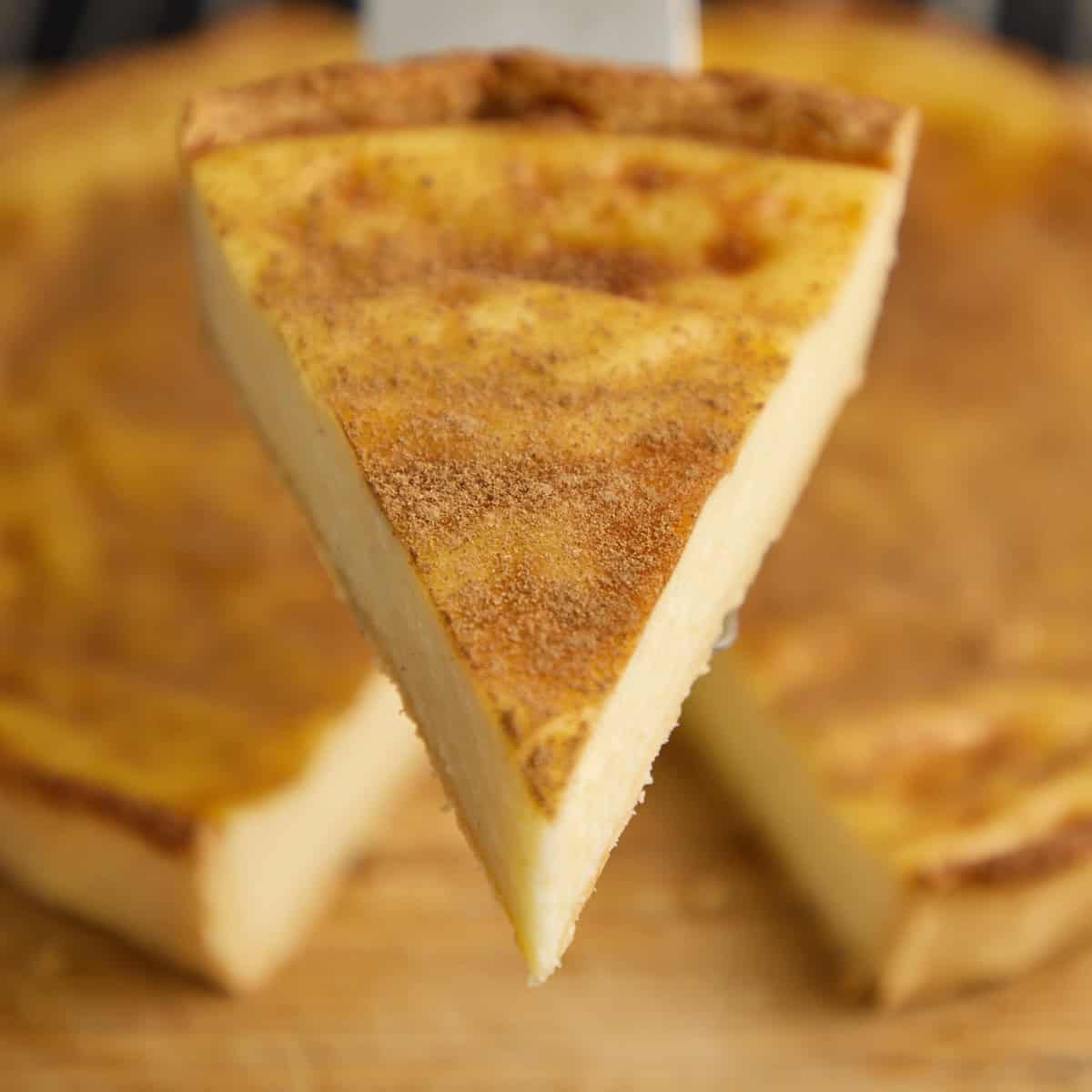
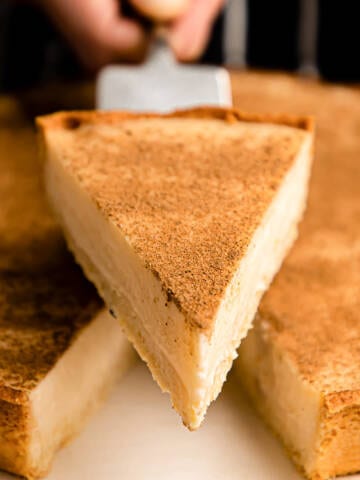
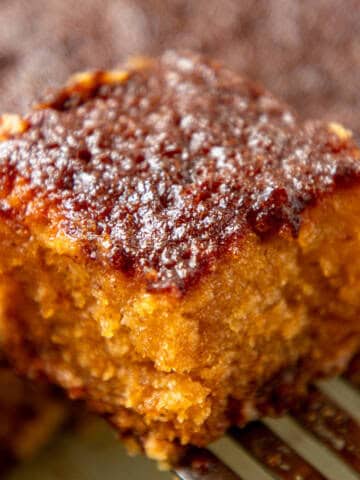
Baked milk tart - gebakte melktert - is the old-school version of South Africa's best-loved dessert, the one every granny baked long before the fridge milk tart was invented. The custard sets creamier than its Portuguese cousin, pastéis de nata, and the cinnamon on top is non-negotiable.
I have a quicker fridge milk tart on the site too, but this is the one I come back to. I have baked more of these in professional kitchens than I can count, and every fix in this recipe is one I learned the hard way - mostly from tarts that wept, cracked, or slid out of the dish in pieces.
Jump to:
A short history of milk tart
Milk tart traces back to the Dutch settlers at the Cape in the 1600s, and it is usually linked to the Dutch mattentaart, an older curd-and-pastry tart it seems to have grown out of. It settled deep into Cape Dutch home cooking alongside classics like malva pudding, and Cape Malay cooks are often credited with leaning it toward the warm cinnamon spicing it still carries today.
The baked version here is the older, more labor-heavy one - the fridge-set milk tart came much later as the shortcut. It is woven deep enough into the culture that South Africa marks a National Milk Tart Day every year, and just about every family guards its own slightly different version.
Ingredients
Short crust pastry
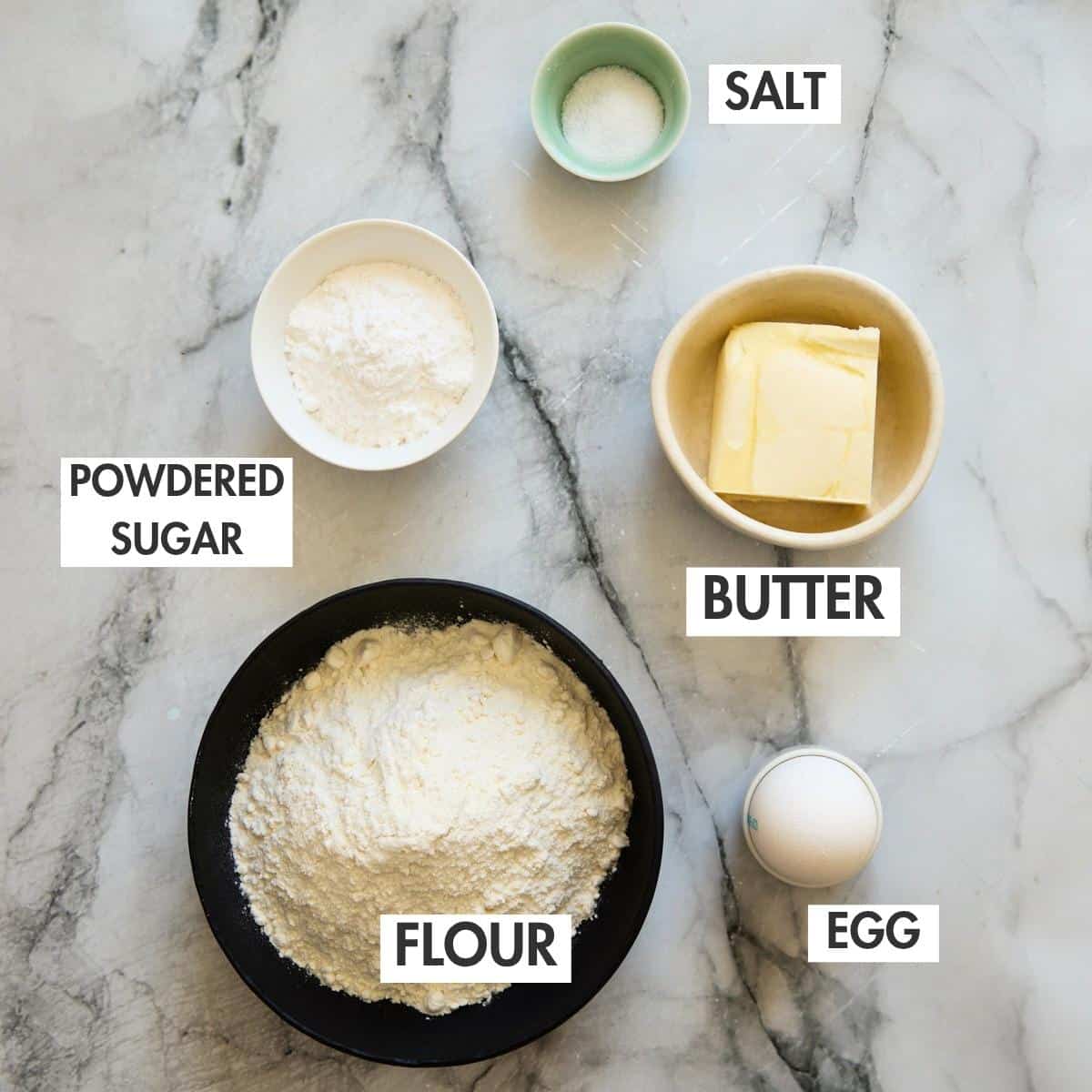
- Flour - All-purpose flour or cake flour makes the best pastry because of the lower gluten content.
- Butter - 82% fat content butter. I use unsalted but also use salt, so you can use salted butter and leave out the salt if you wish.
- Sugar - Powdered sugar is best because it blends in fully.
Custard filling
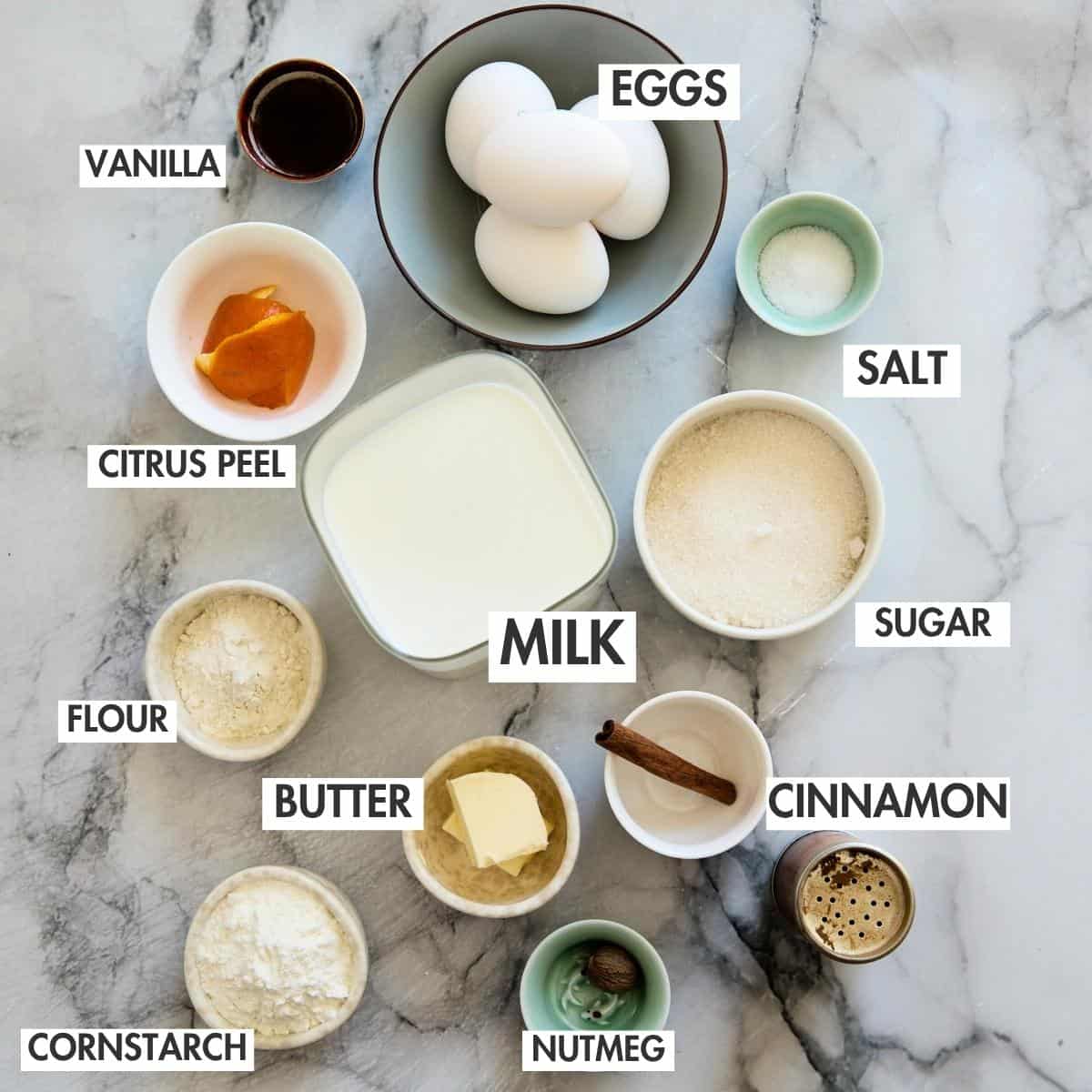
- Milk - Whole milk only. The custard is mostly milk, so the higher the milk fat, the better the flavor and texture.
- Naartjie peel - South Africa's small, loose-skinned tangerine, used here as dried strips. Tangerine, mandarin, or orange peel all work if you can't get naartjies.
- Cinnamon - A whole stick in the milk infusion, ground only on top of the baked tart.
- Eggs - Large eggs. If using small eggs, use one extra.
- Cornstarch - Sold as Maizena in South Africa and cornflour in the UK.
- Butter - Unsalted.
See recipe card for quantities.
Instructions
One batch makes one 23 cm (9 inch) tart that cuts into 8 slices. The dough and the infusion both want at least an hour, so start them first - or the night before.
Pastry and tart shell
Use this section for process shots, alternating between the step and image showing the step. Users don't like seeing process shots cluttering up the recipe card, so include your process shots here.
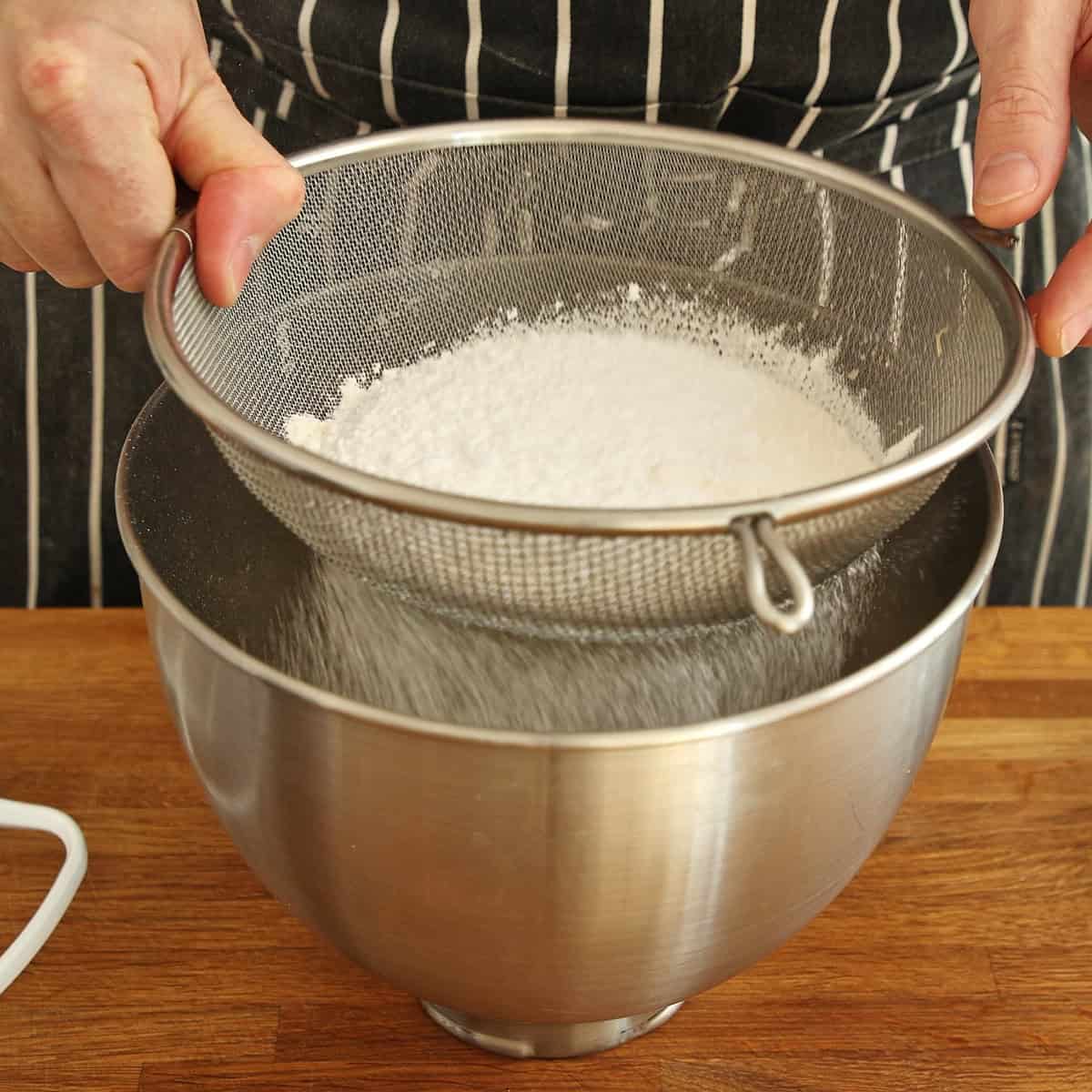
- Sift the dry mix - Flour and powdered sugar through the sieve, then add the salt.
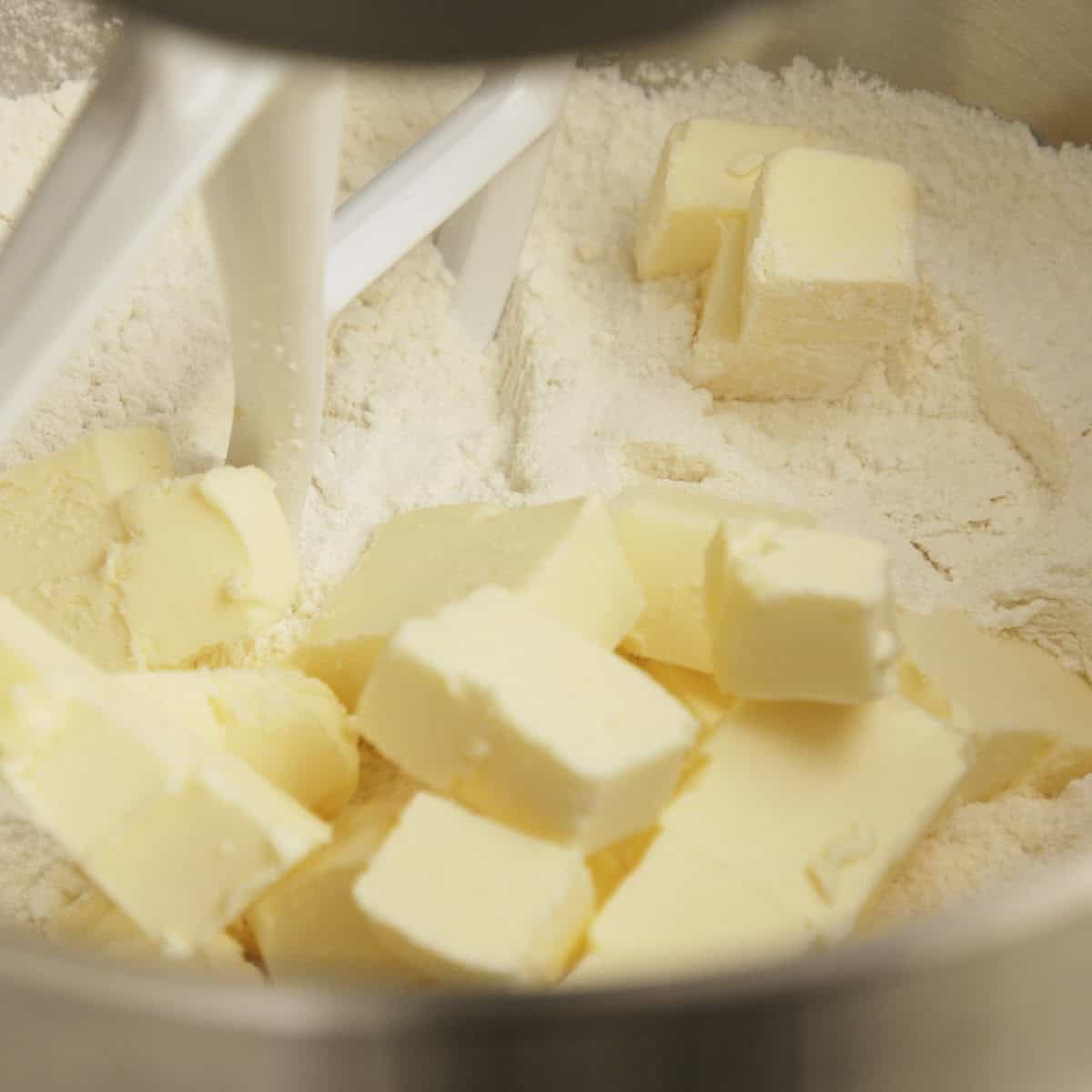
- Rub in the cold butter - Paddle attachment on low or simply by hand until it looks like coarse sand with a few small butter bits left.
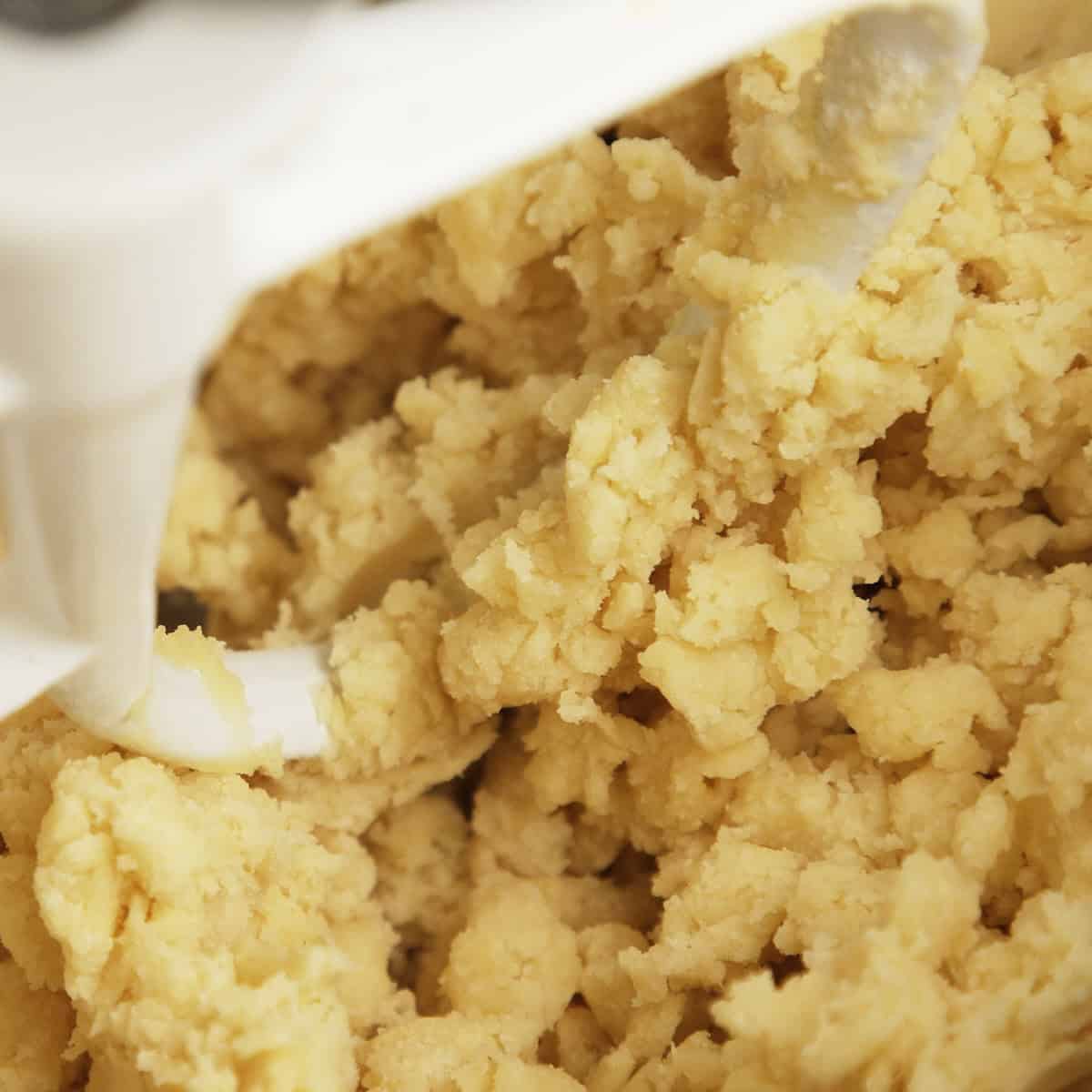
- Add the sieved egg - Mix just until the dough starts to clump, then press it together without kneading.
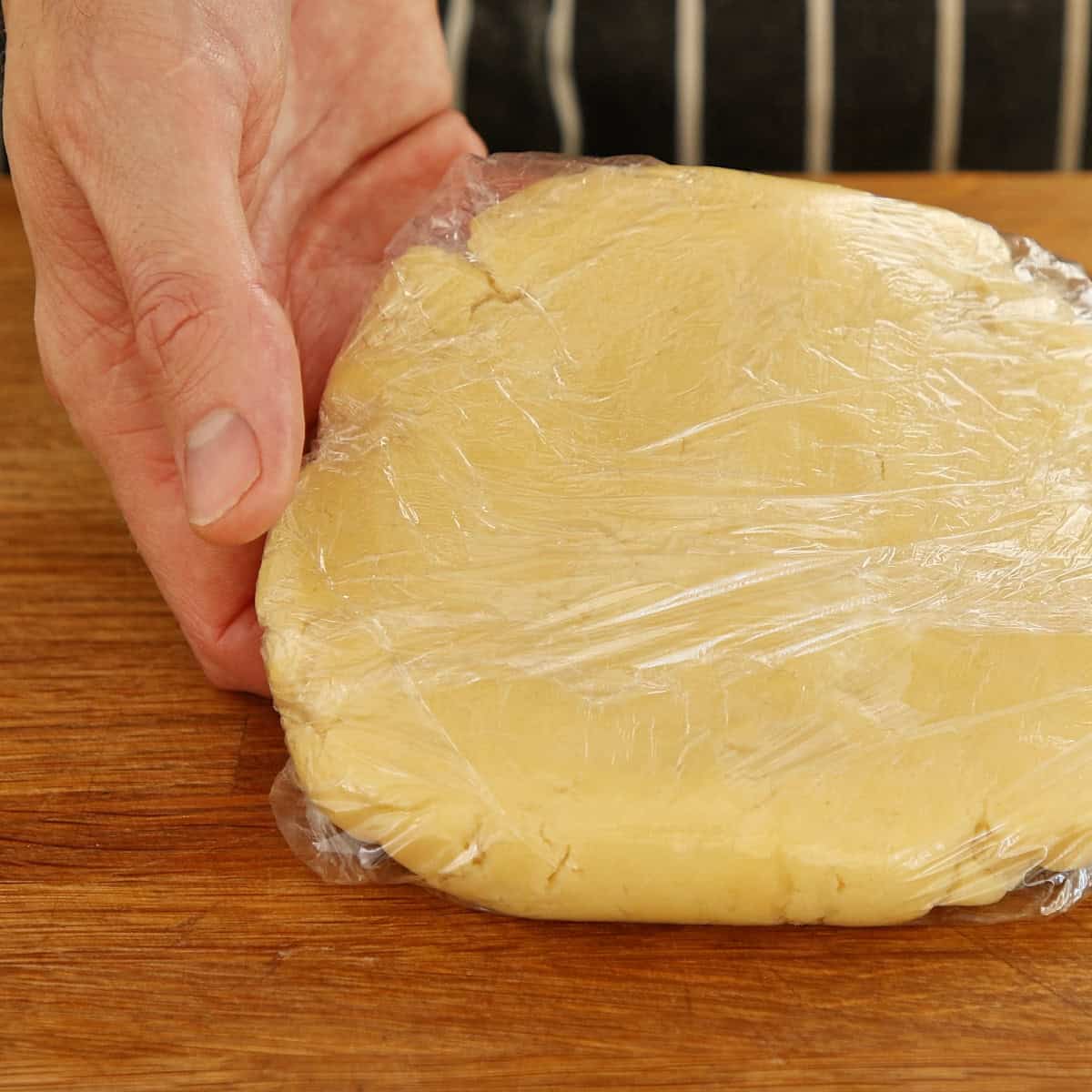
- Wrap and rest - Press into a flat disc and chill for at least 1 hour, or overnight.
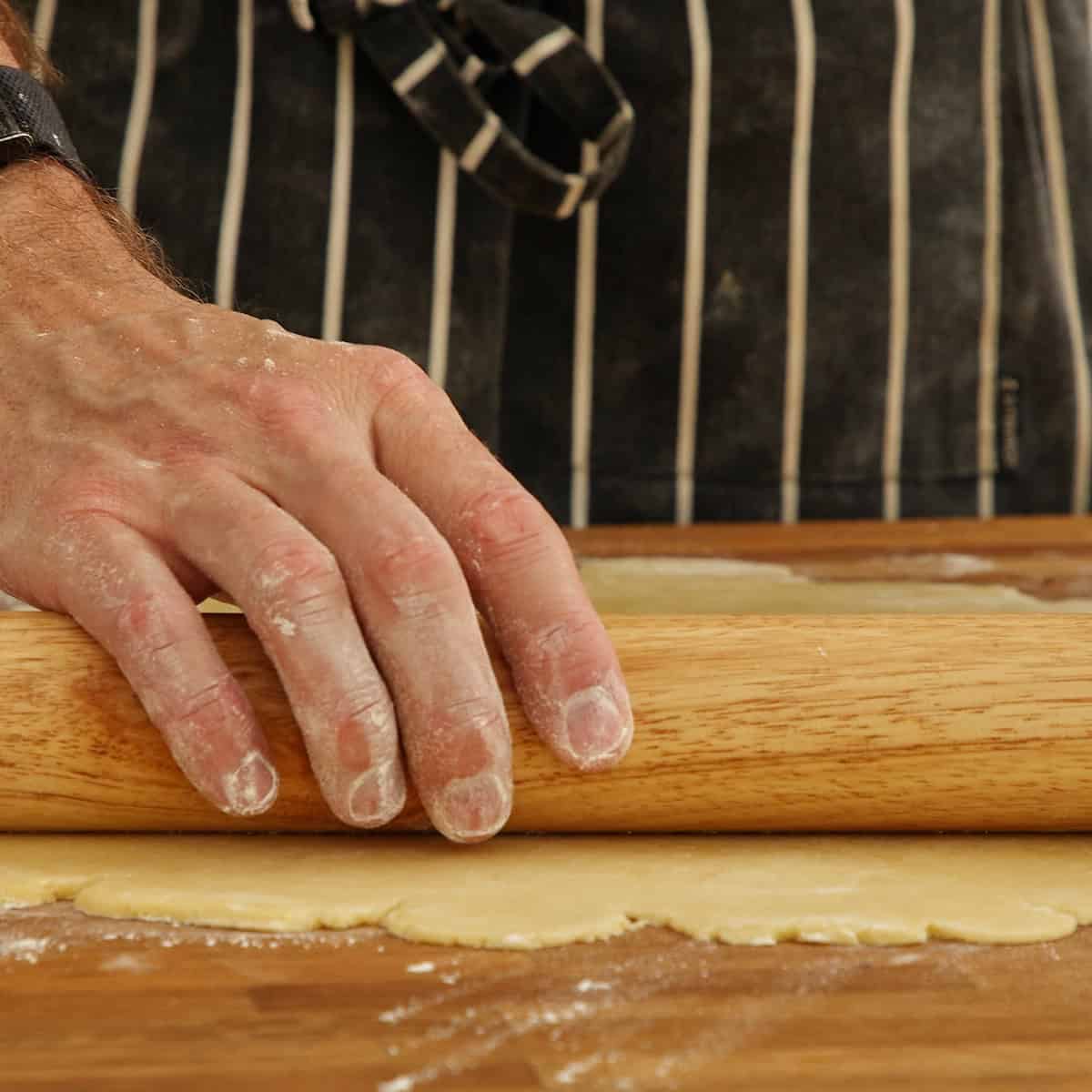
- Roll it thin - About 3 mm (⅛ inch), once it has lost its fridge chill. Straight from cold it will crack - pinch any tears back together if they happen.
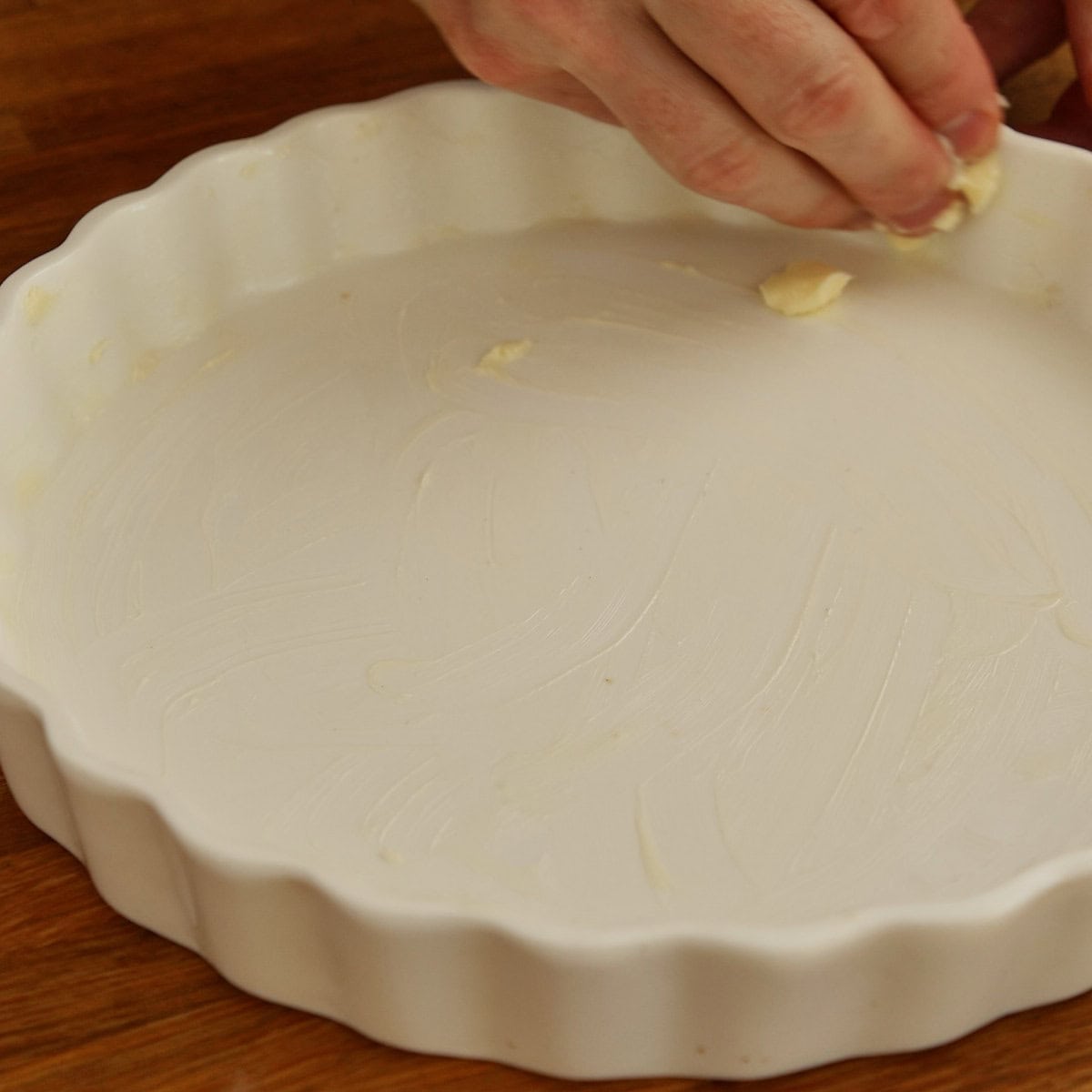
- Butter and chill the dish - Pastry handles better against a cold, buttered surface. Heat the oven to 170°C (340°F).
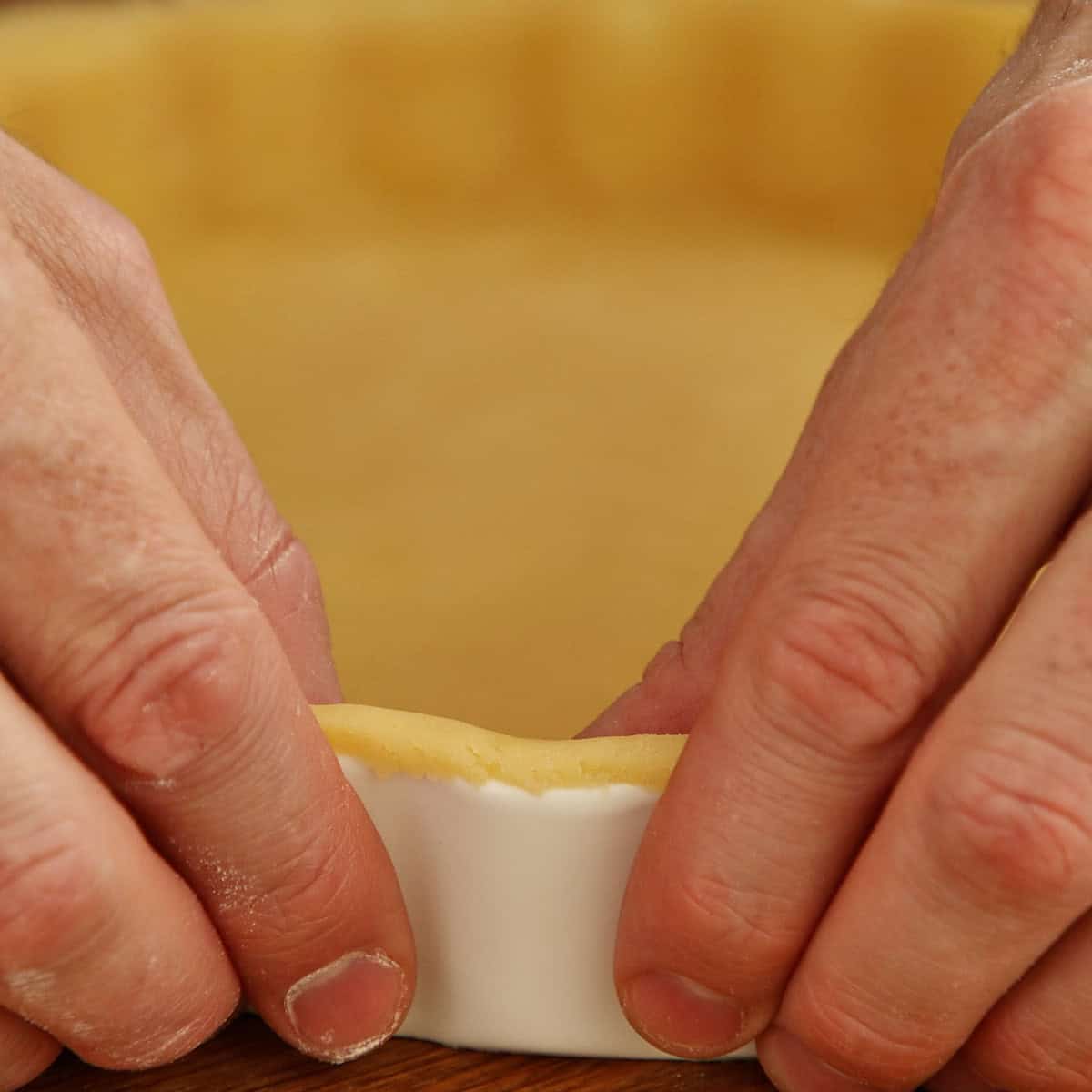
- Line, press and trim - Place the pastry gently into the tart tin. Press into the flutes, trim, and leave a little pastry above the rim to allow for shrinkage.
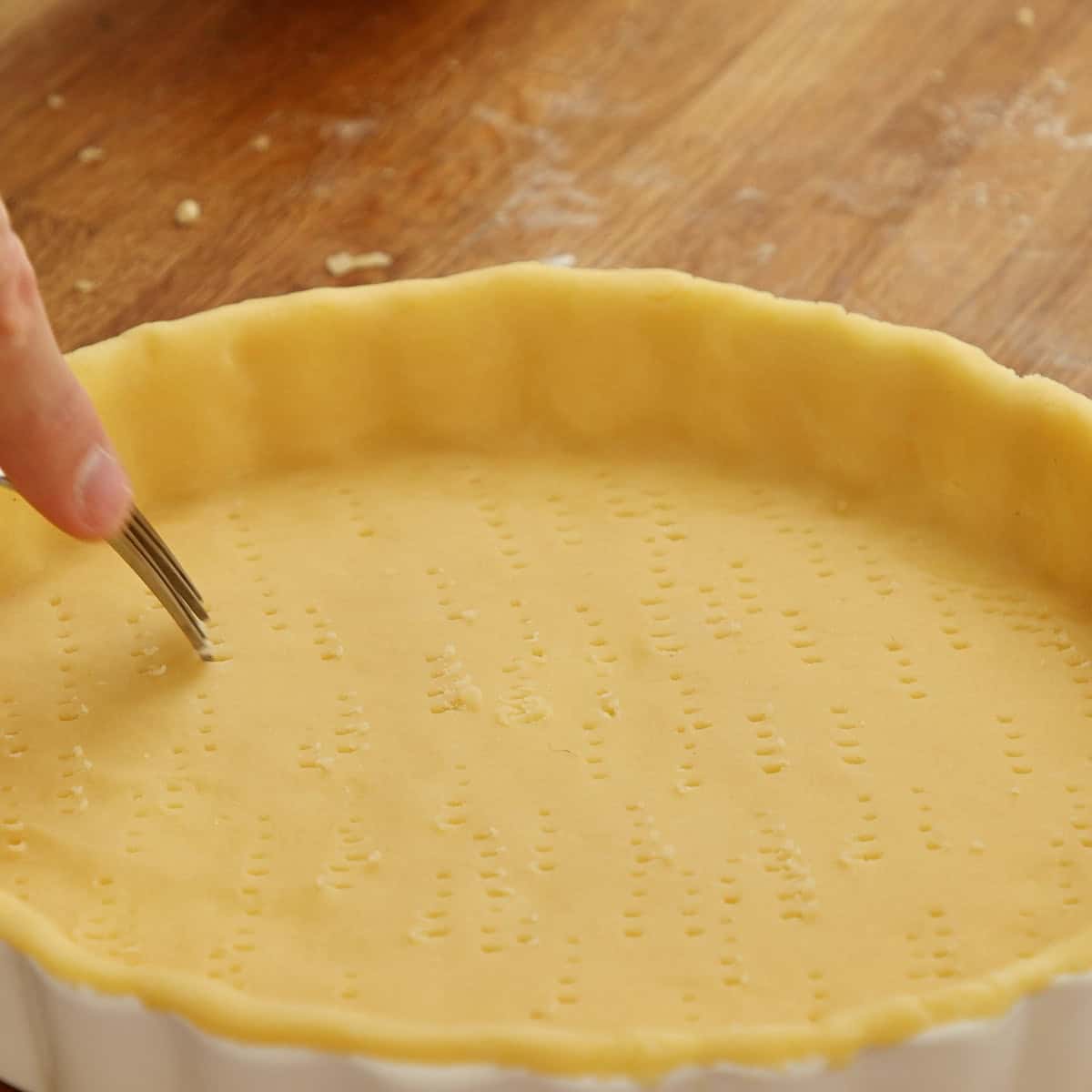
- Dock and chill - Prick the base all over with a fork and chill the shell for 10 to 15 minutes.
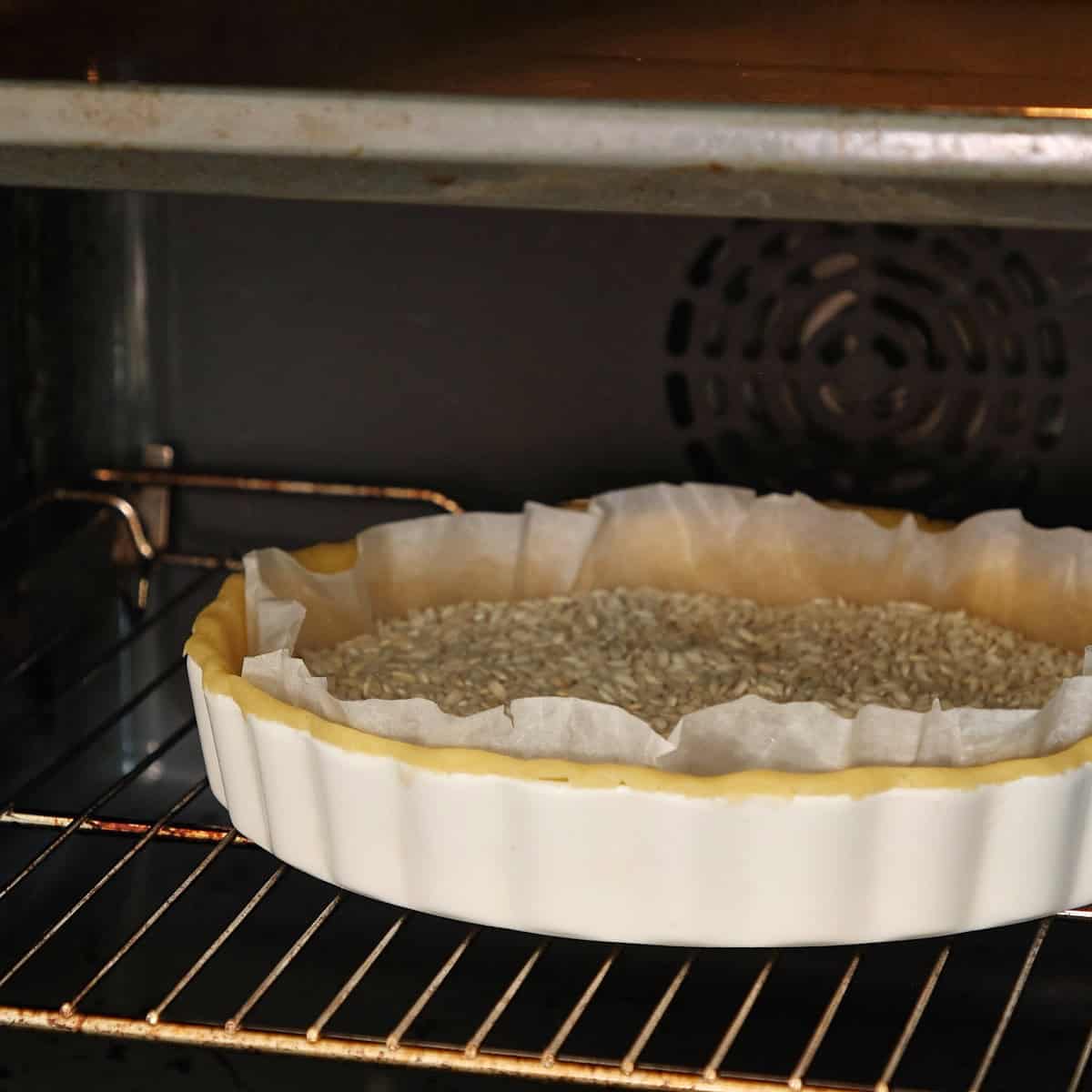
- Blind bake with rice - Line the base with parchment plus a thin layer of rice. Bake for 12 minutes, until set and starting to color around the rim.
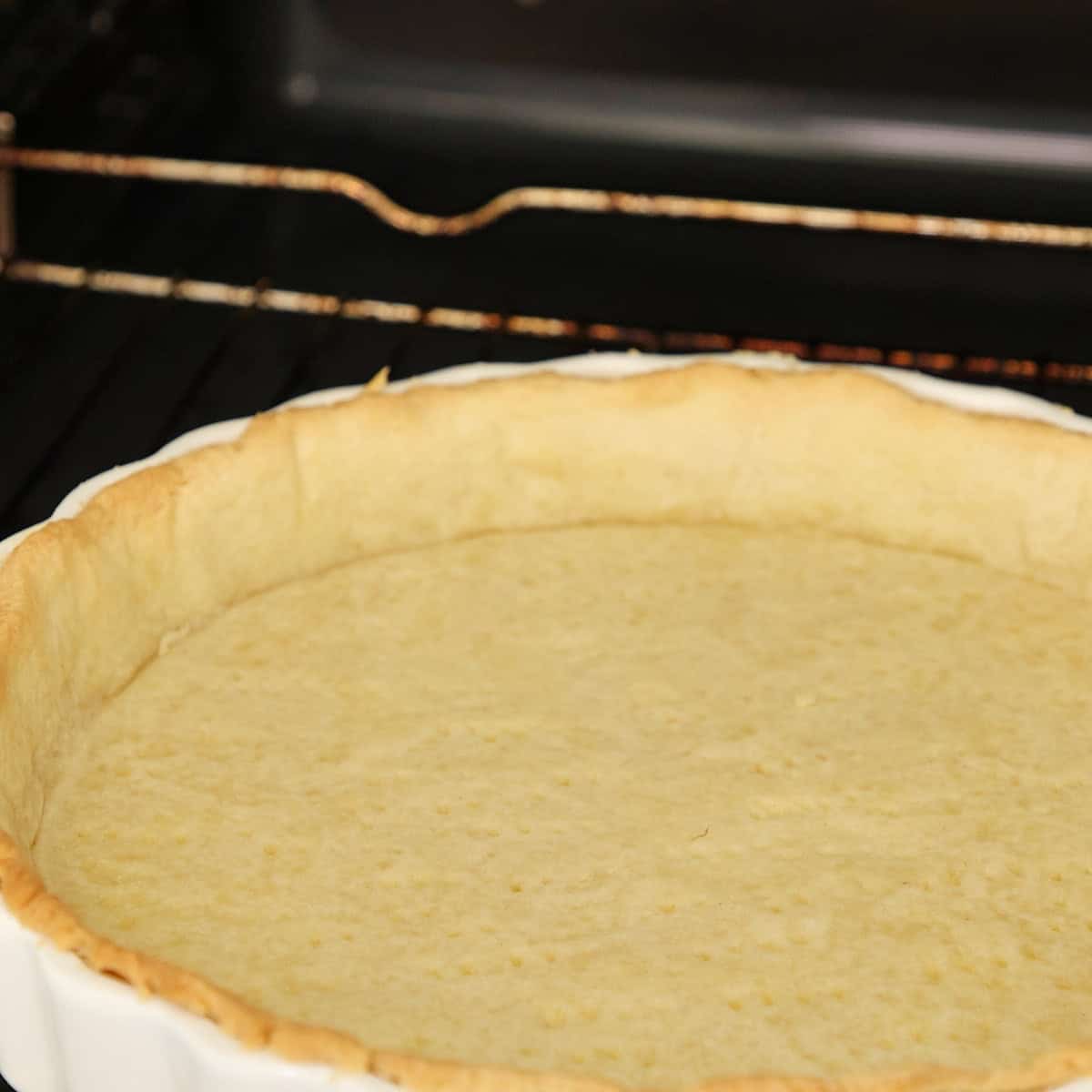
- Bake bare - Cook for 6 more minutes without the weights until the base is golden and fully cooked. Leave it in the dish at room temp while you make the filling.
Filling and baking
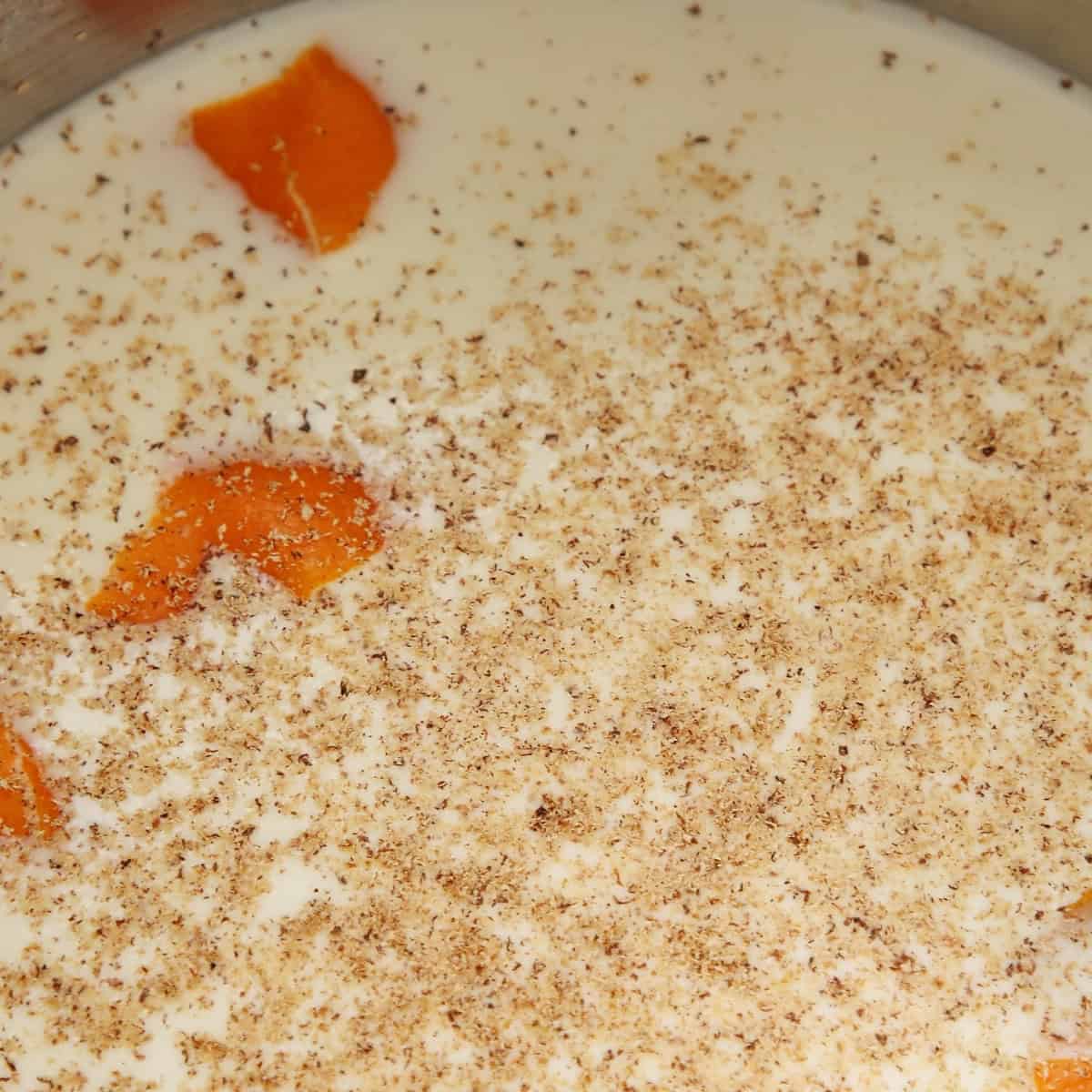
- Infuse the milk - Cinnamon stick, naartjie peel, and grated nutmeg, warmed to just below a simmer, then covered off the heat for at least an hour. Overnight is better.
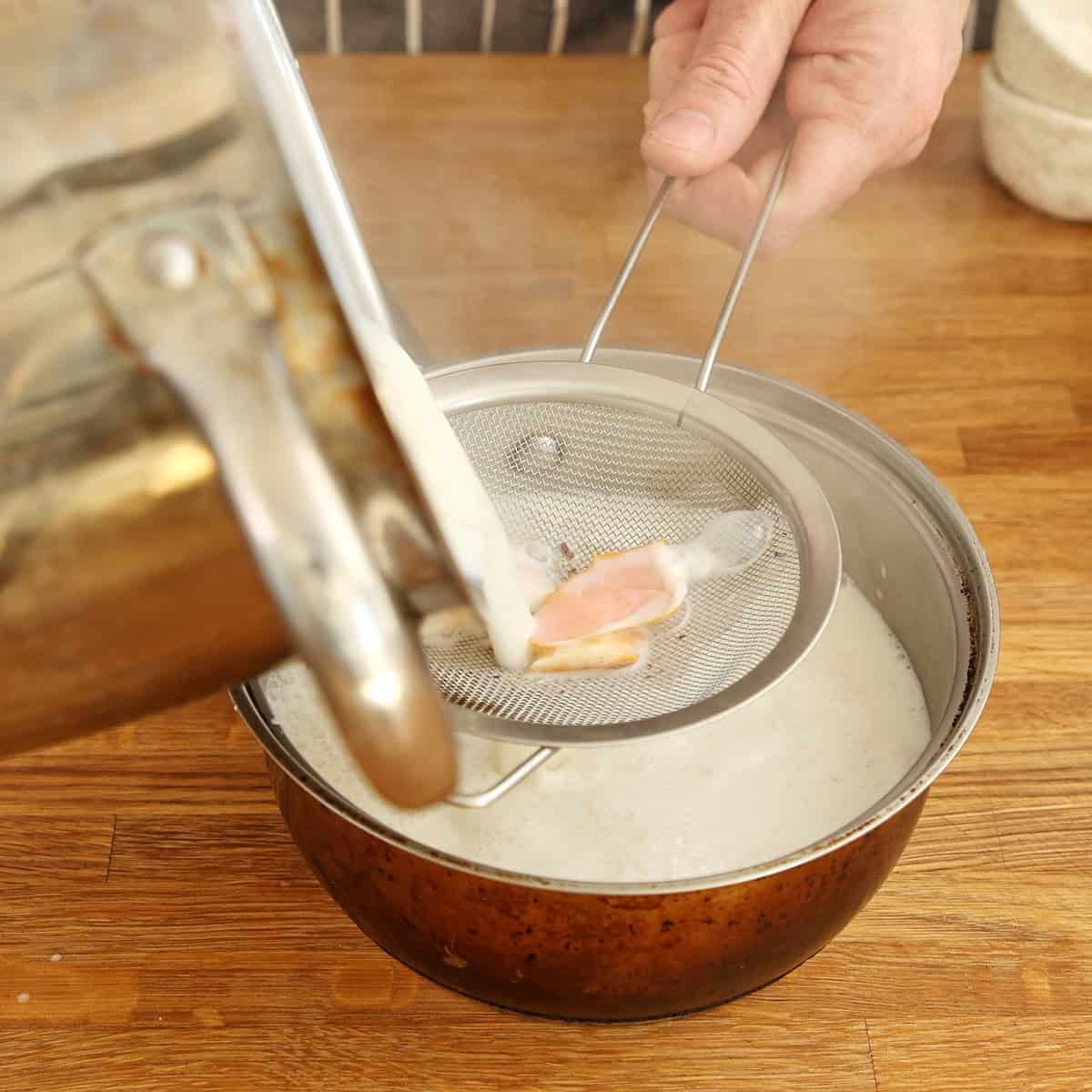
- Strain - Lift out the cinnamon and peel, and bring the milk back to just below a simmer.
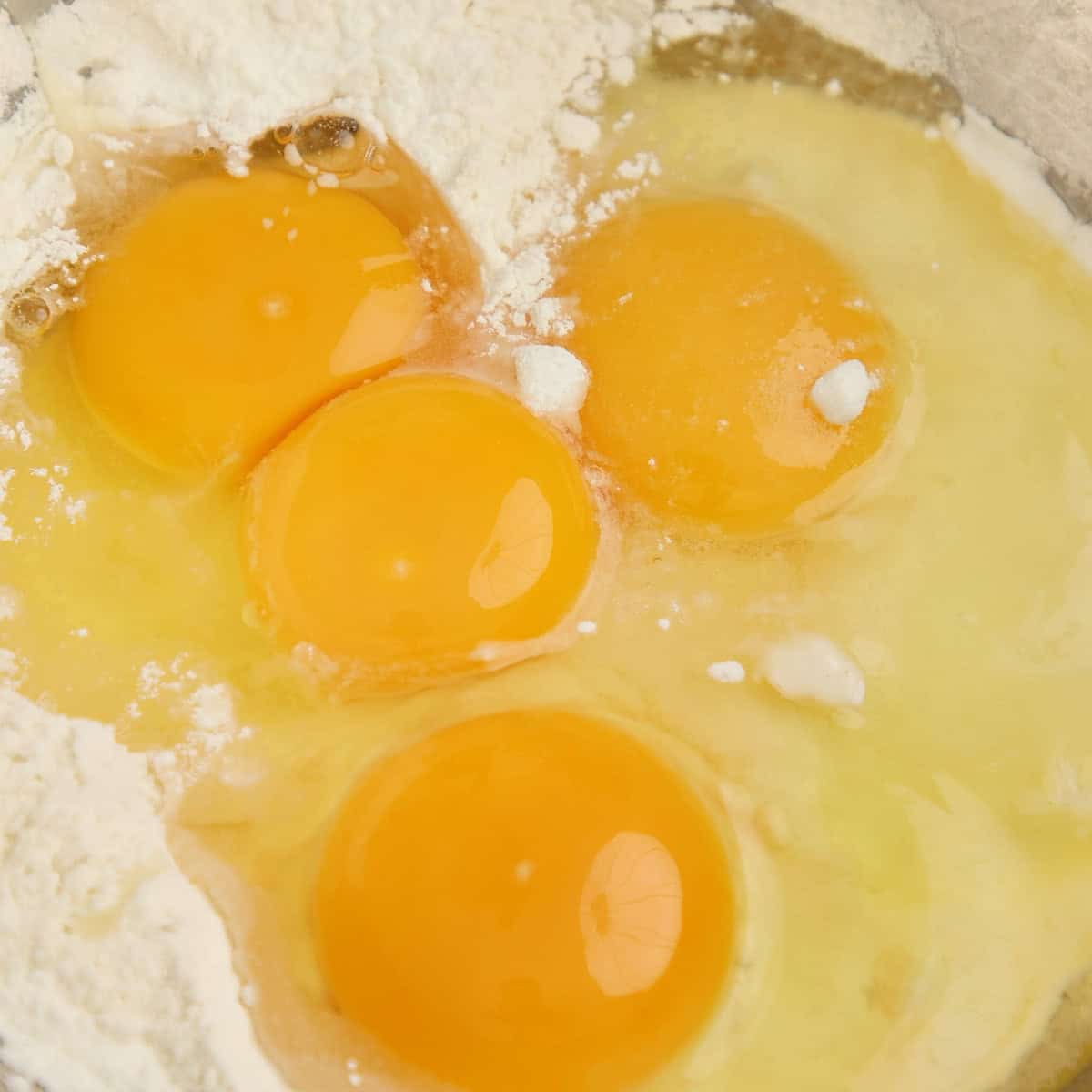
- Eggs, sugar and starch - Sugar, whole eggs, yolk, cornstarch, flour, vanilla, and salt into a bowl.
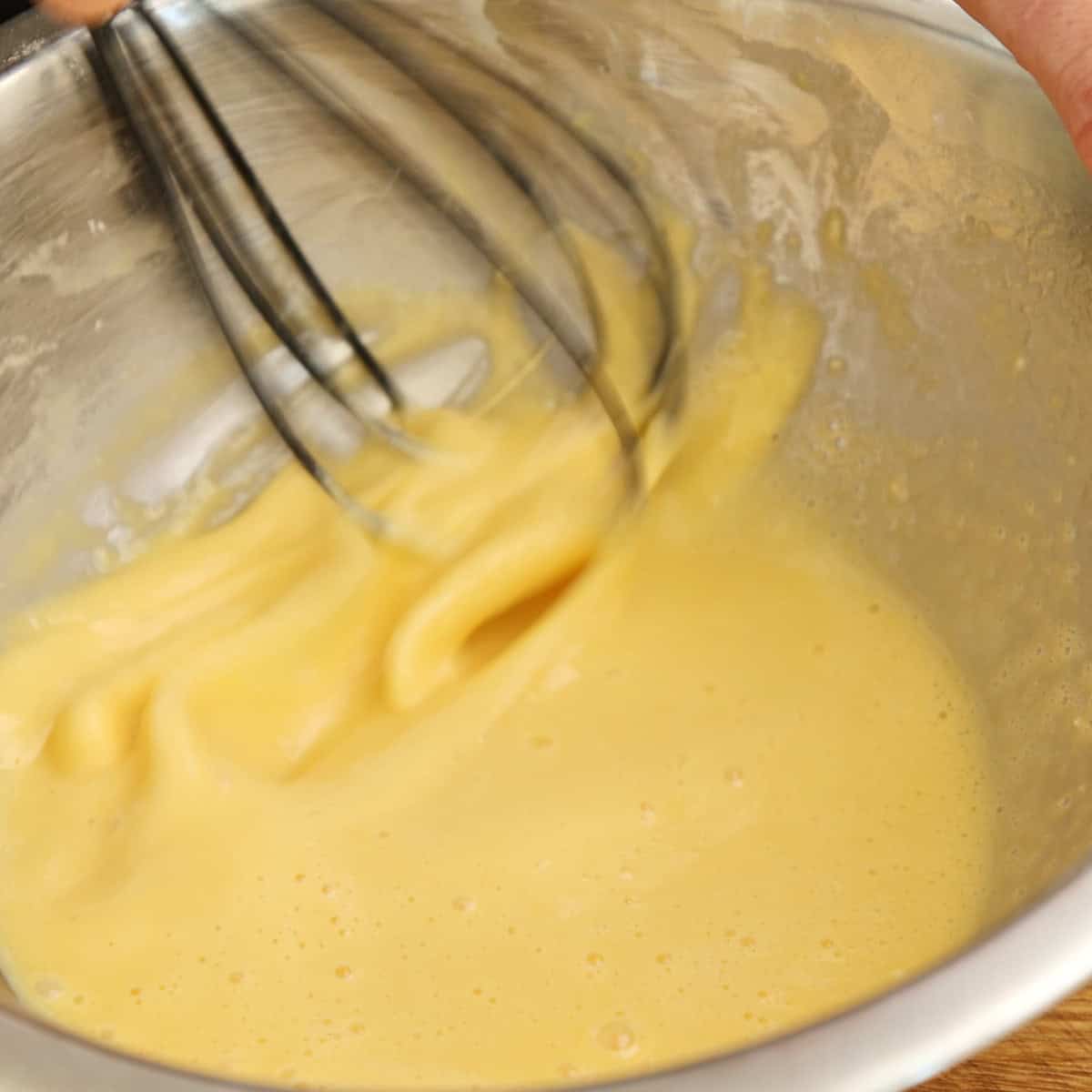
- Whisk to a paste - Smooth and lump-free before any milk goes near it.
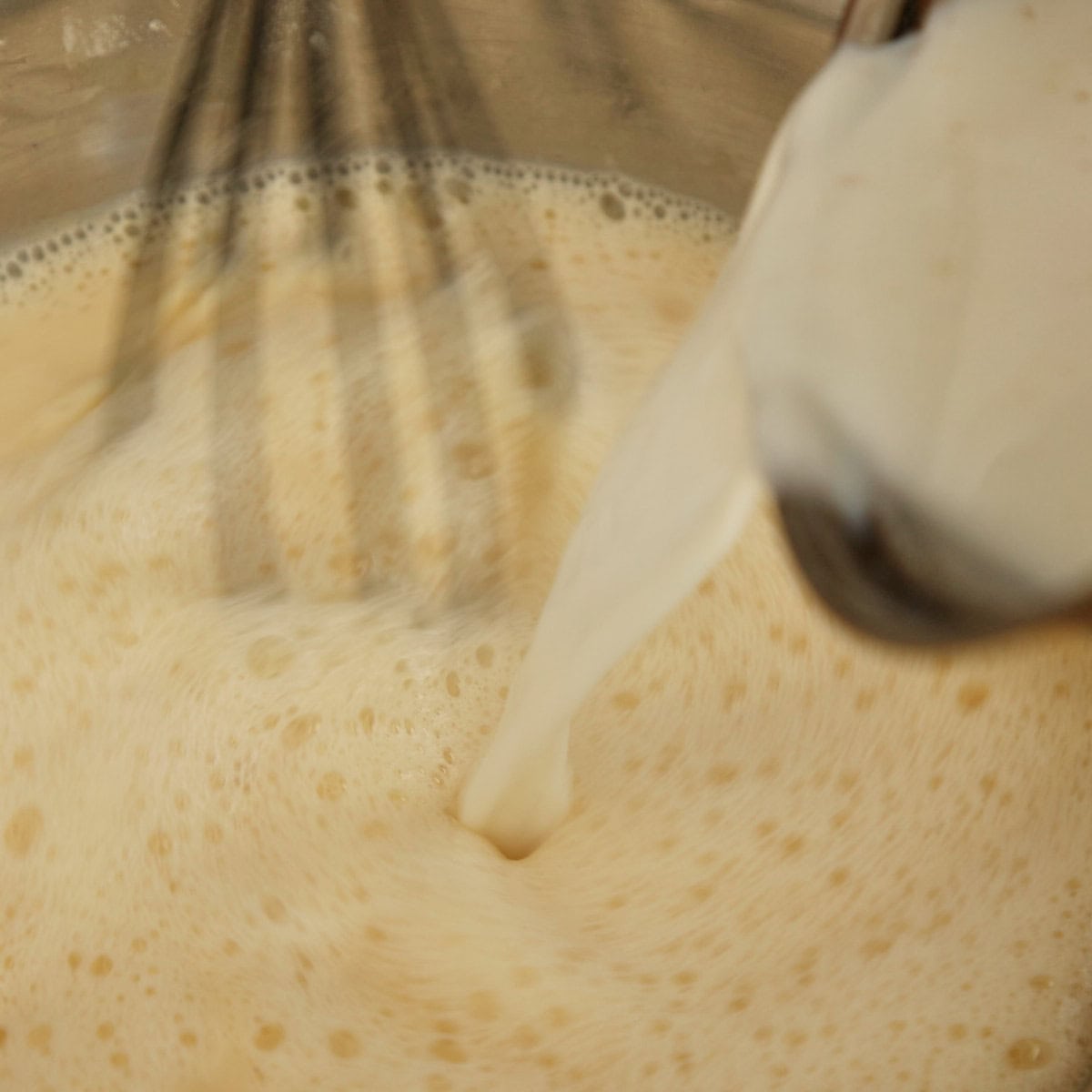
- Temper - Pour the hot milk on in a slow stream, whisking hard the whole time. Dump it in at once and the eggs cook into threads.
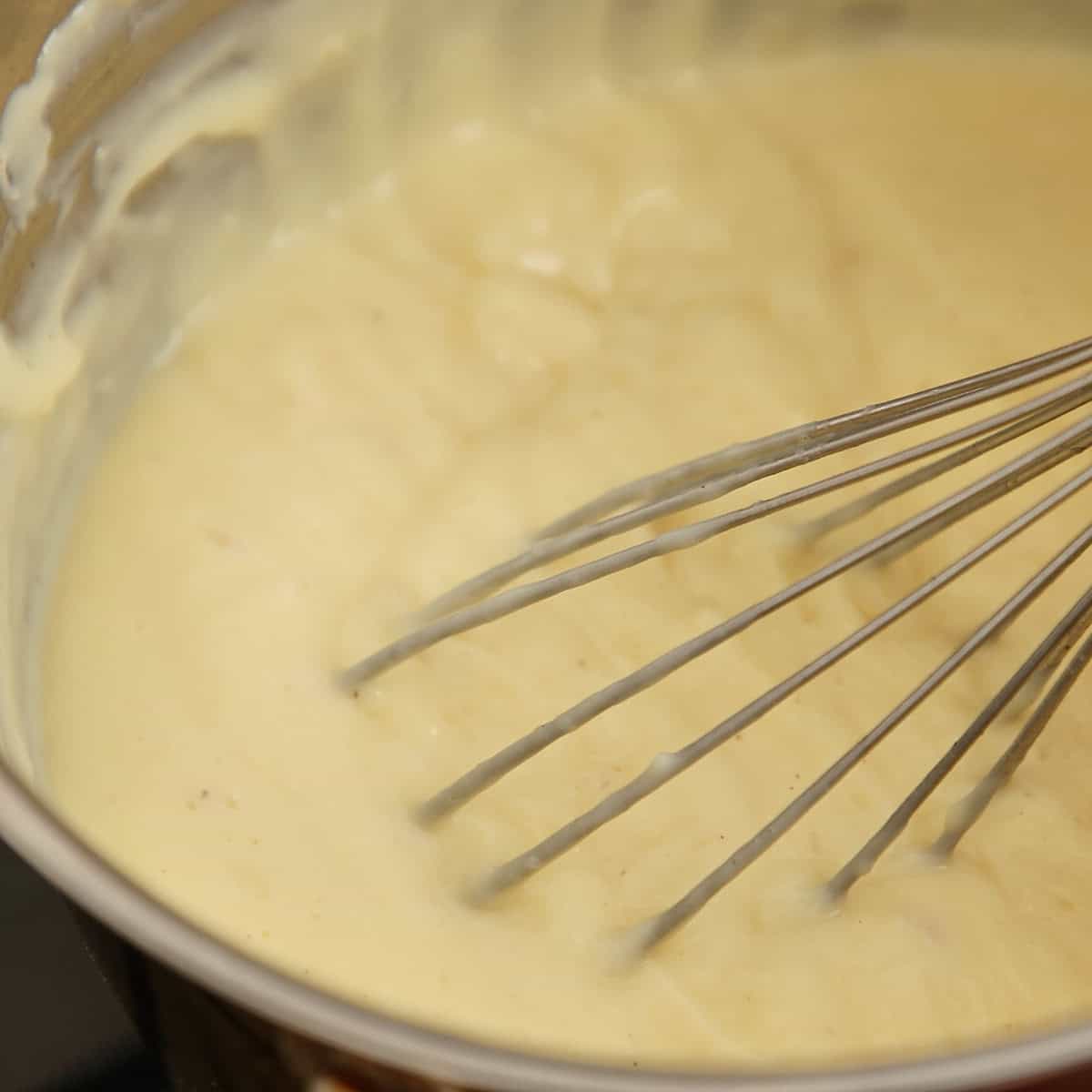
- Cook to a full boil - Whisking constantly over medium-low until it's thick with big slow bubbles, then boil for about 10 seconds. Cut this short and the baked slice weeps.
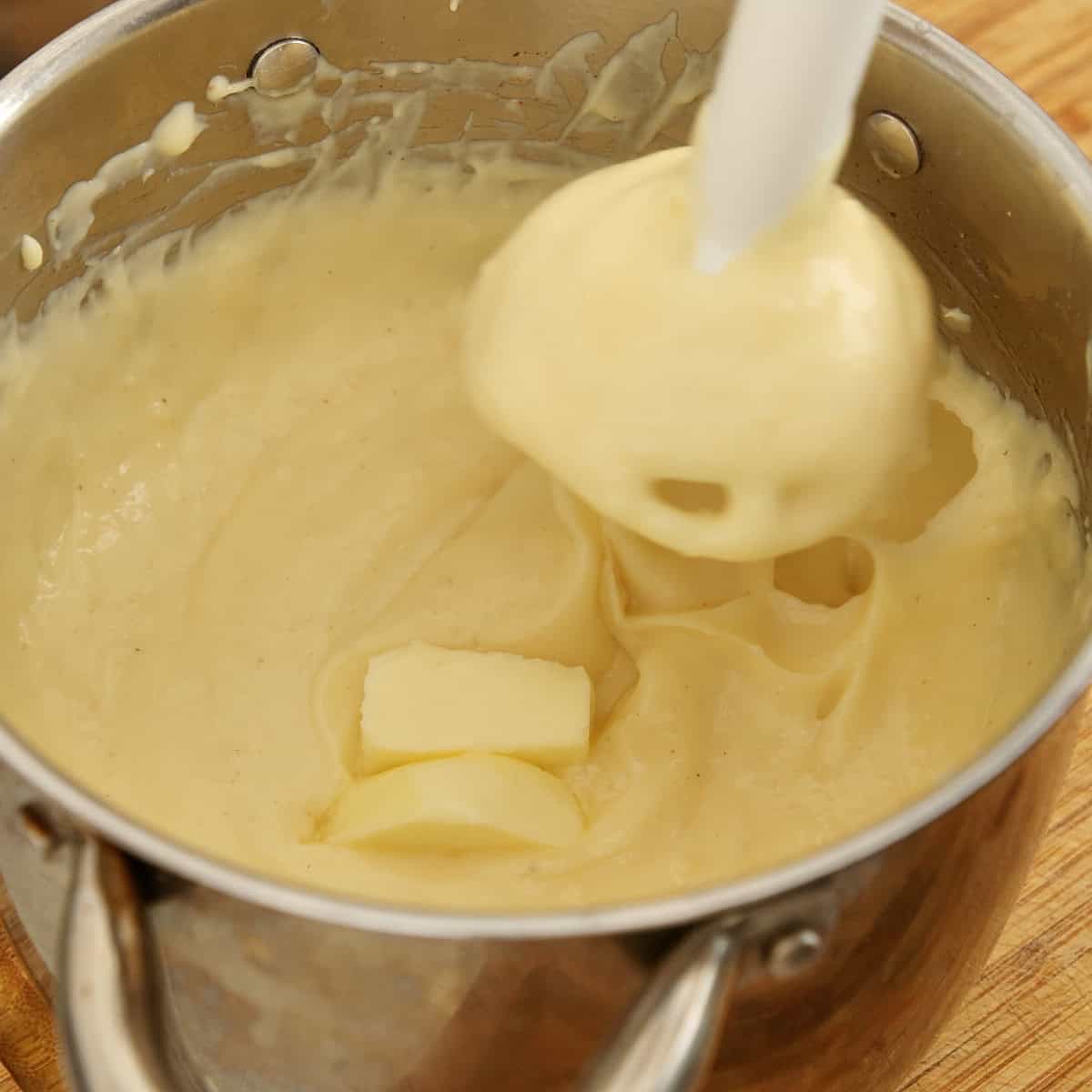
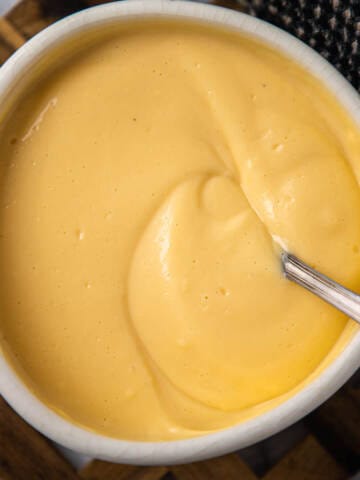
- Blend the butter in - Off the heat, stick blender, 30 to 60 seconds until glossy.
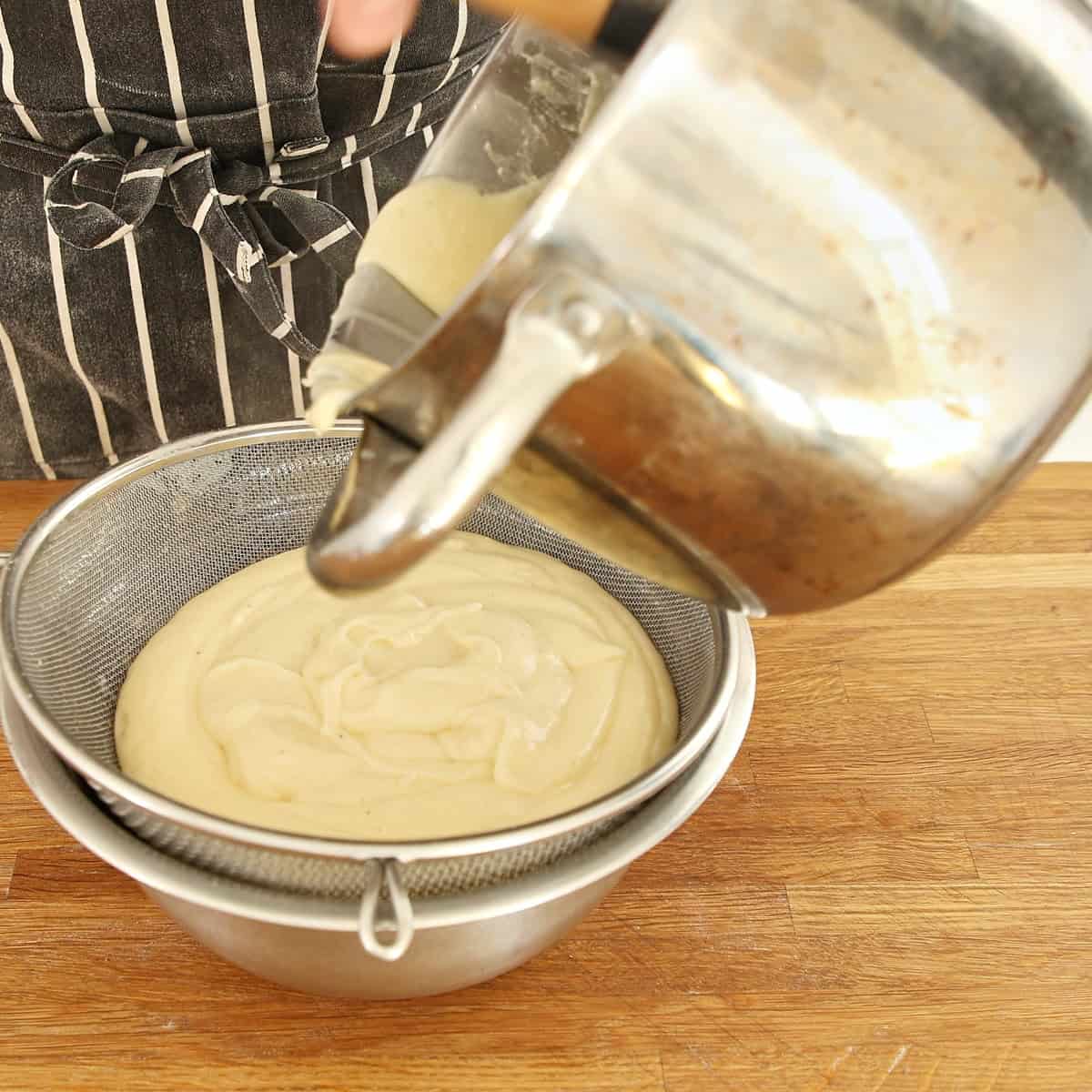
- Strain again - Through the sieve for a glassy-smooth custard.
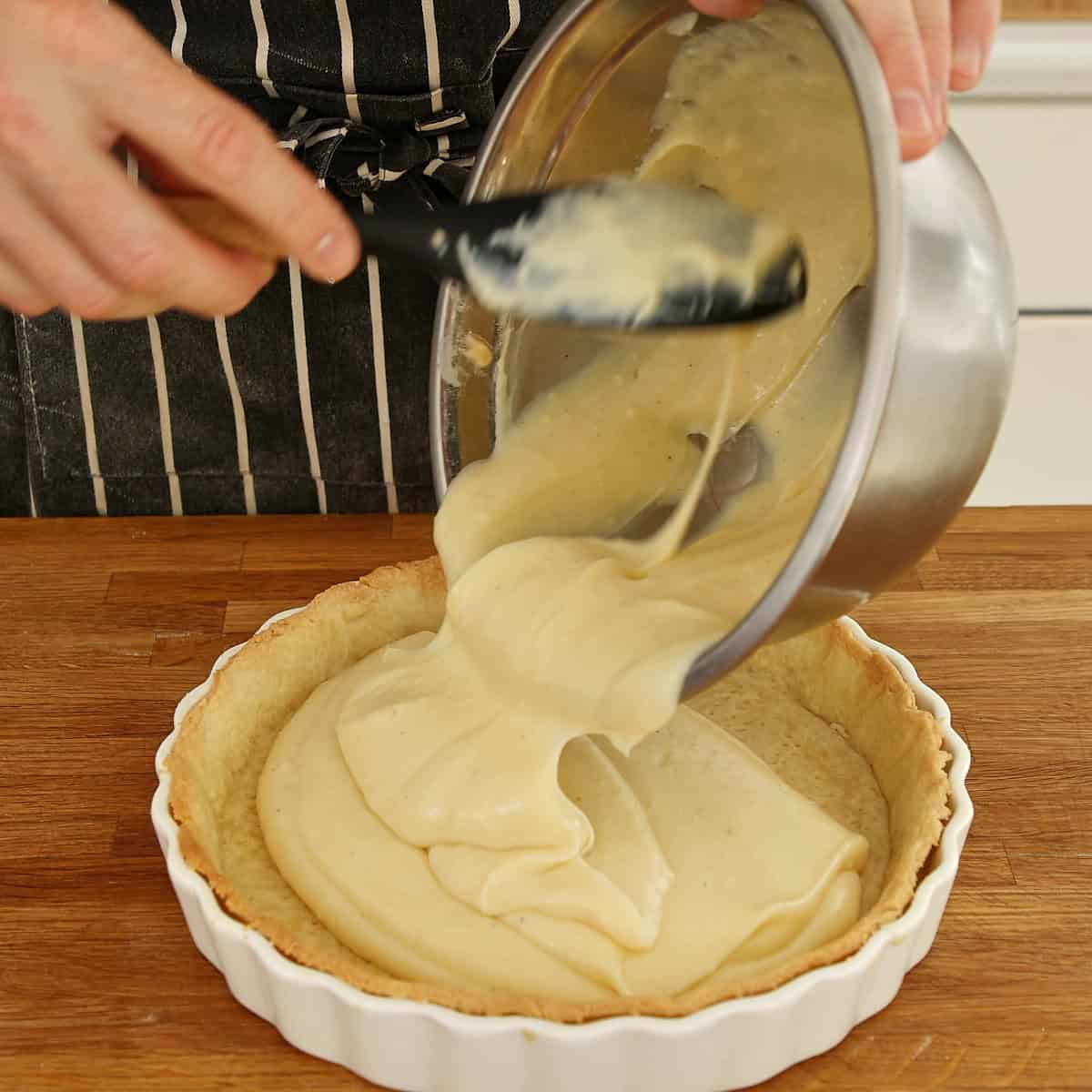
- Fill the shell - Pour the hot custard straight into the baked shell. Oven up to 180°C (350°F).
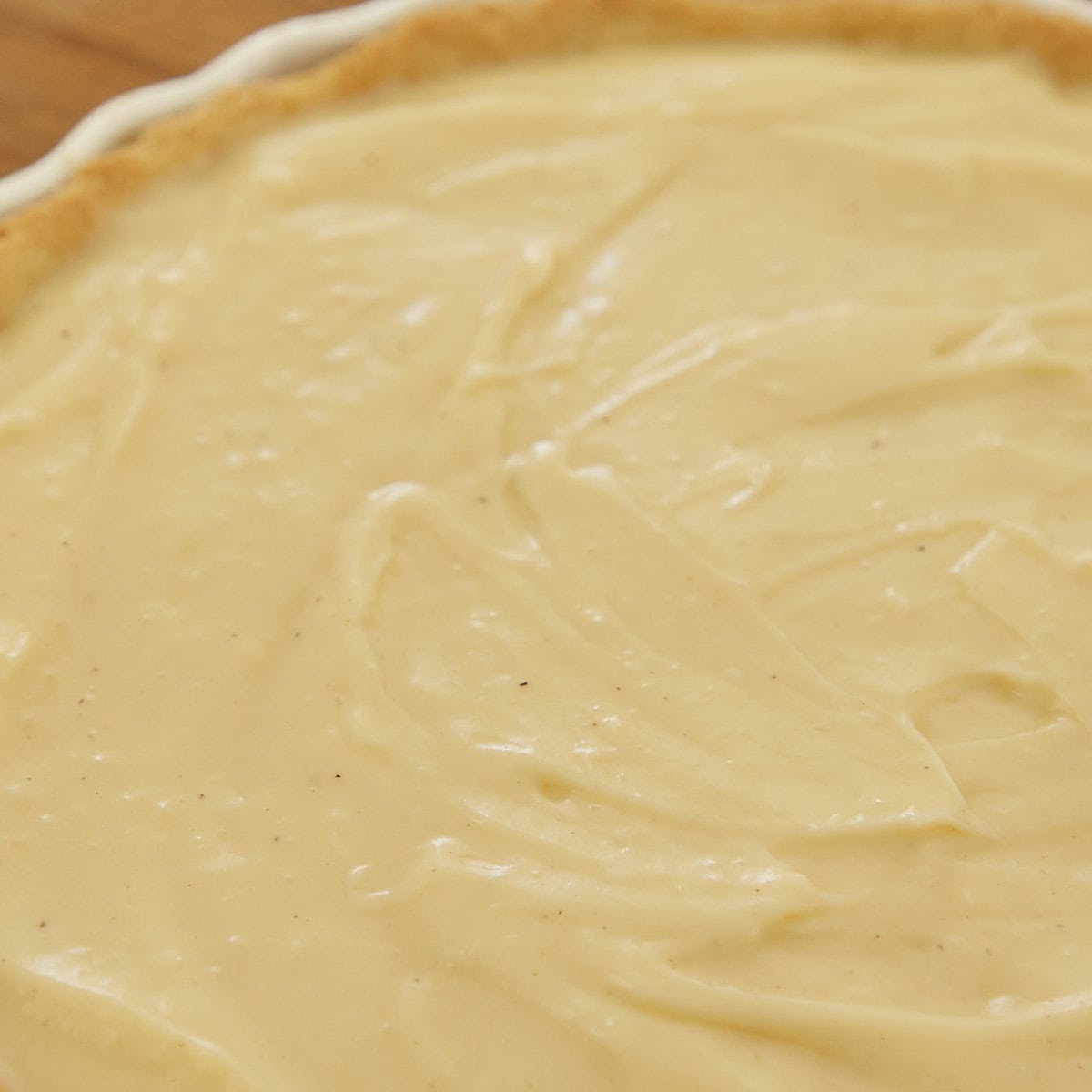
- Even out the top - Roughly level is enough.
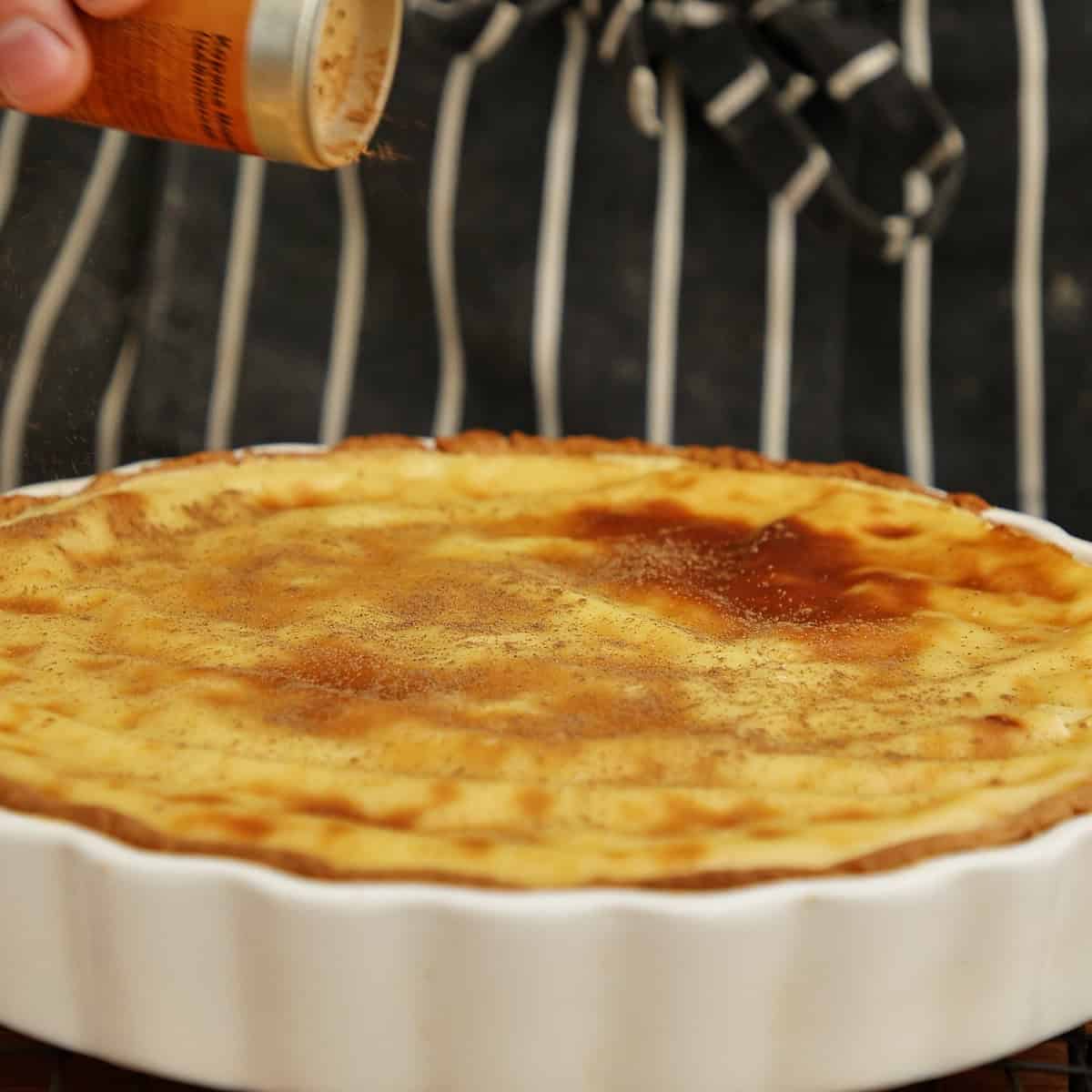
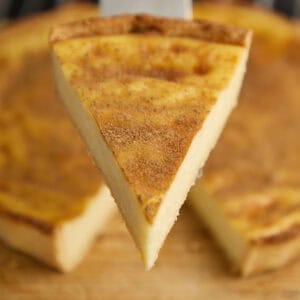
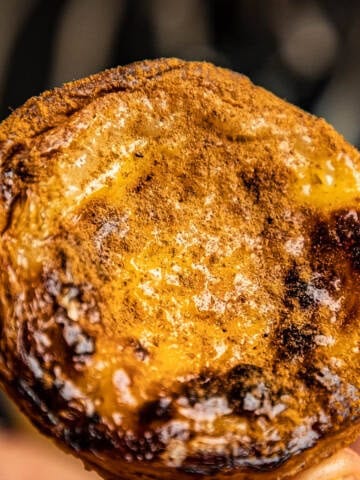
- Bake, cool, dust - About 25 minutes until the surface sets into a skin and browns in patches, then cool fully in the dish while the puffed top sinks and wrinkles. Only once cool, dust with cinnamon, generous but light.
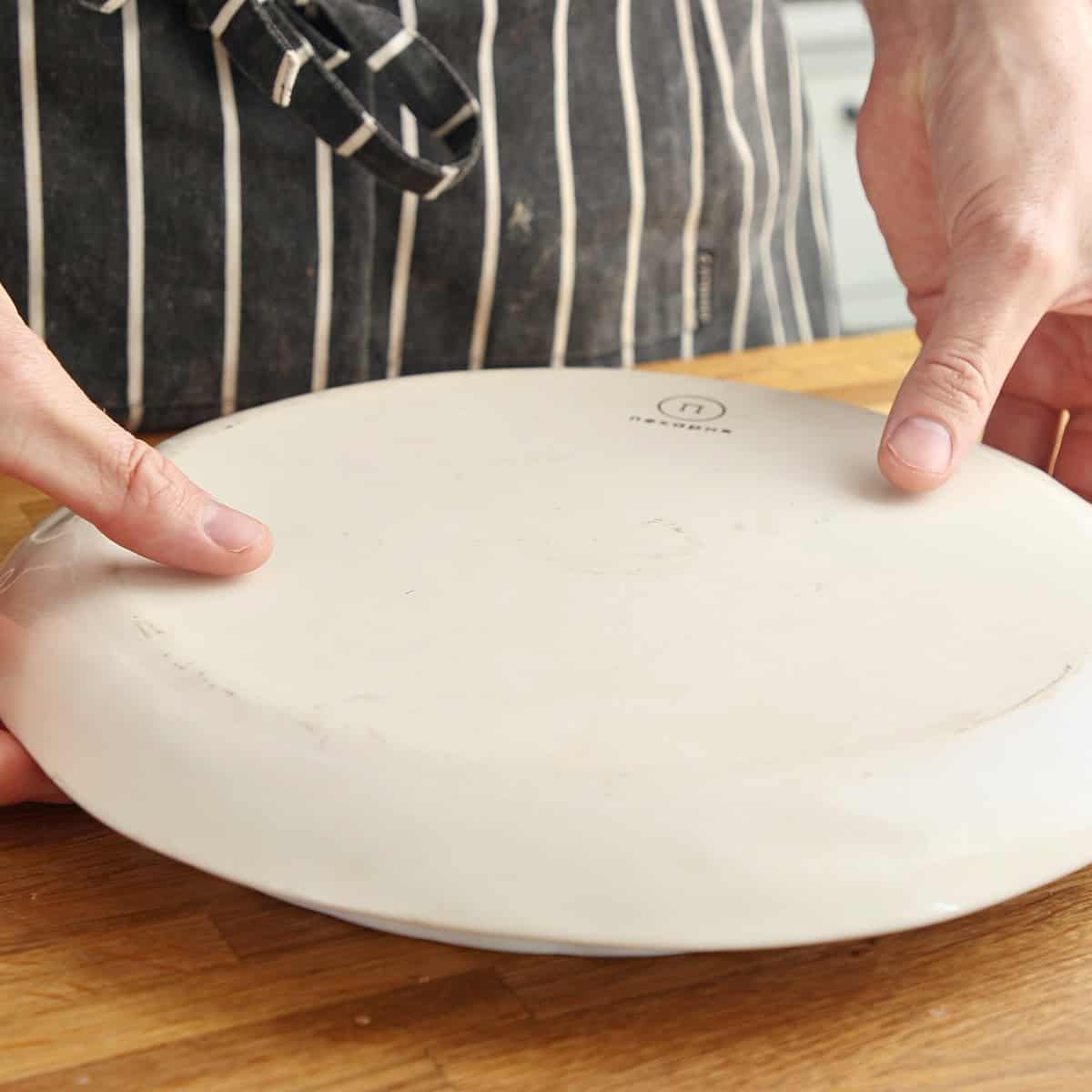
- Plate over the dish - Lay a flat plate upside down over the tart.
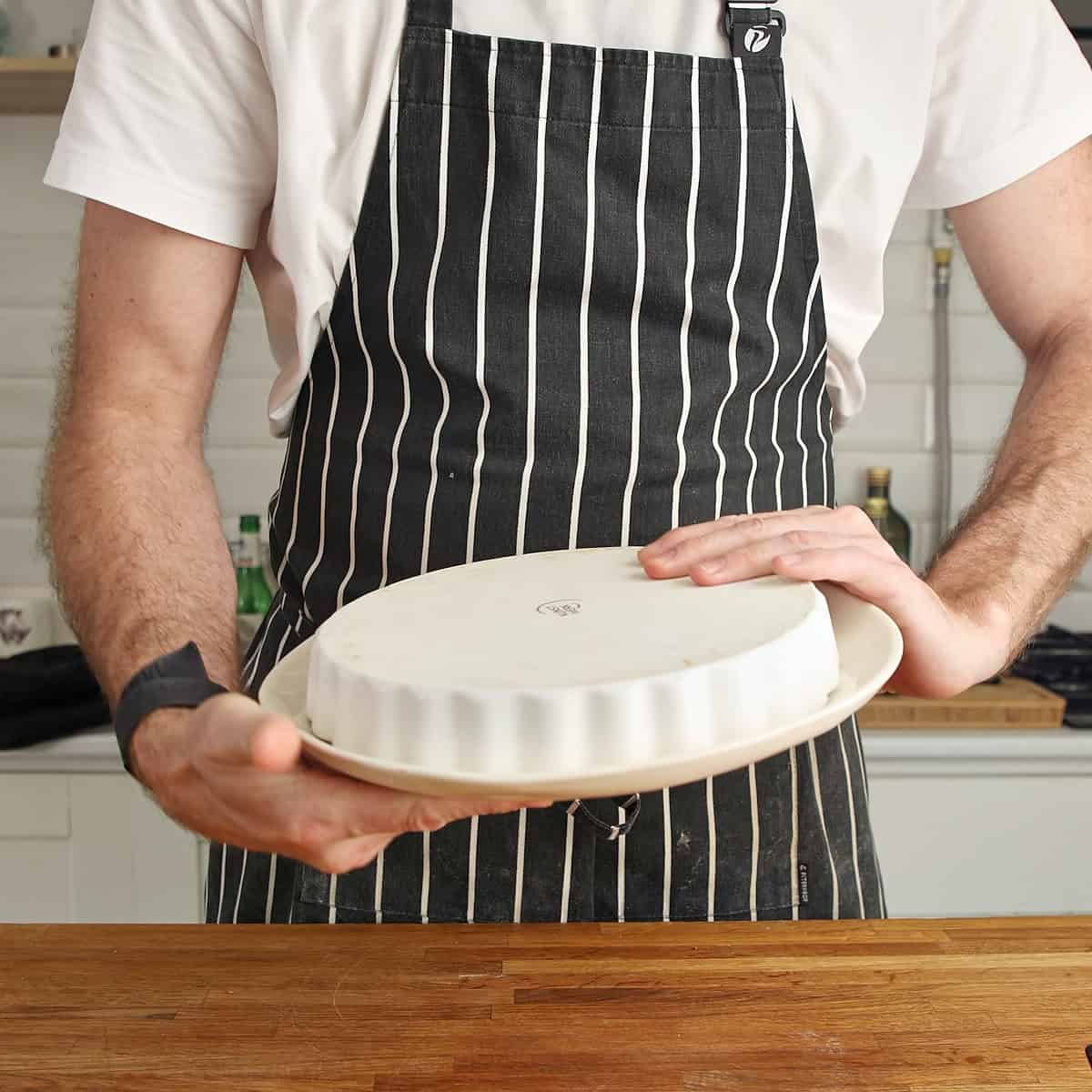
- Flip - Turn dish and plate over together so the tart releases.
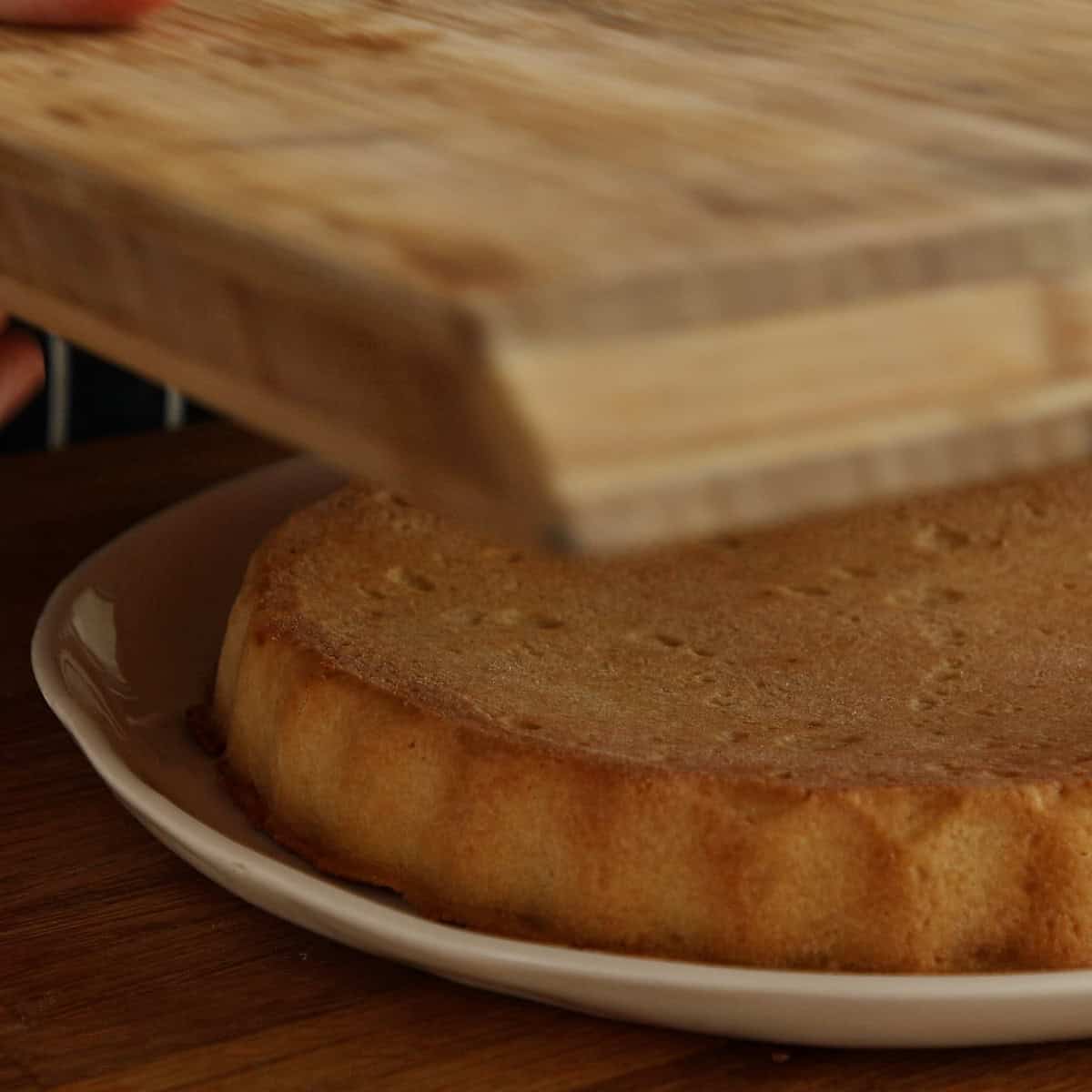
- Turn onto a board - Same trick again so it lands right side up.
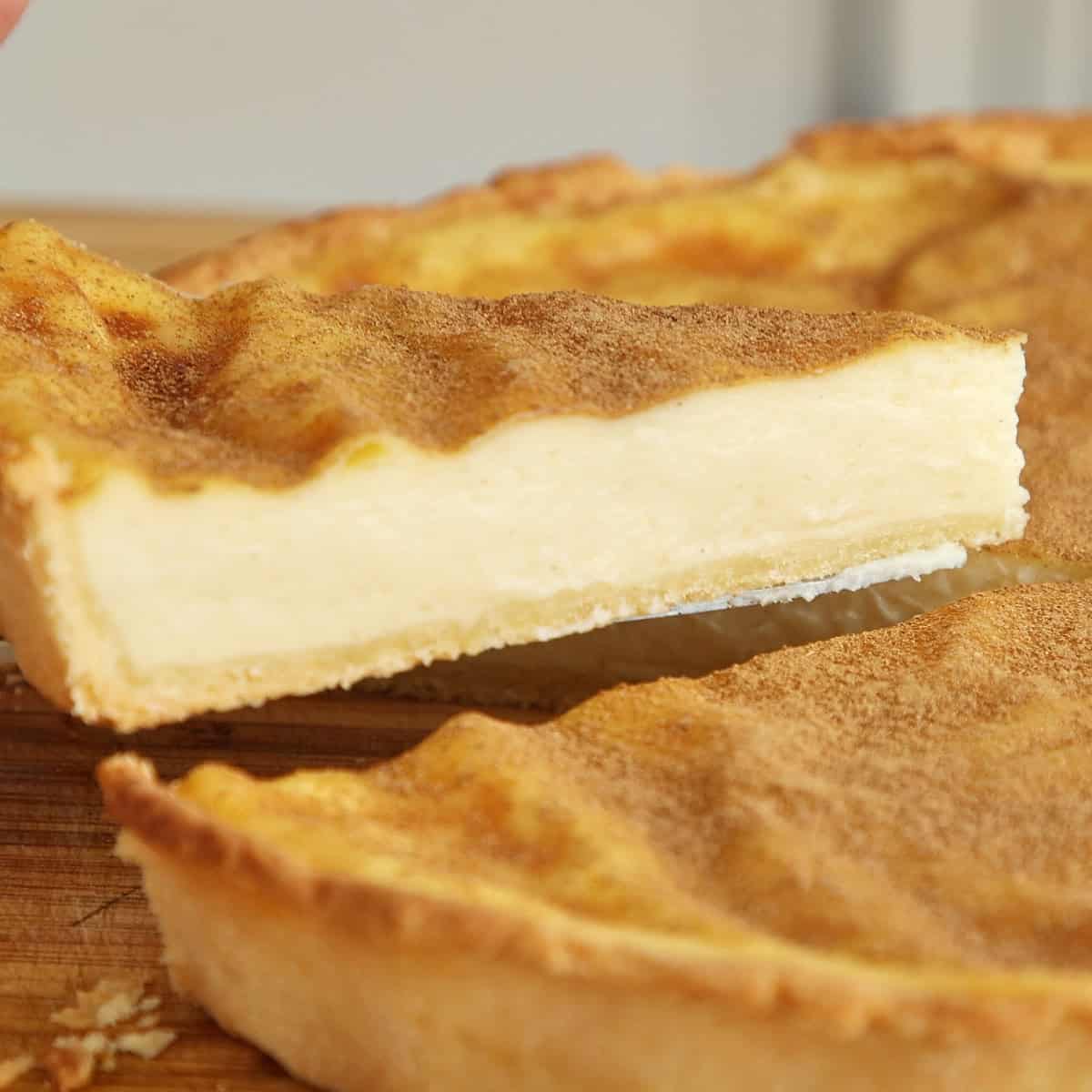
- Serve - At room temperature or lightly chilled, in clean slices.
Watch how to make it
Pro Tips
- Pastry - Rest it cold, roll it cool. Fridge-cold pastry cracks and room-warm pastry sticks - a few minutes out of the fridge is the window.
- Infusion - An hour is the floor. Overnight in the fridge is the real thing, and the pot does the work while you sleep.
- Tempering - Set the bowl on a damp cloth so it stays put, one hand pouring, one whisking. Slow at the start, faster once the paste has loosened.
- Rotate - Turn the tart once, about two-thirds through the bake. Ovens brown unevenly, and the browned patches should land across the whole top.
- Cooling - Room temperature before you slice, no shortcuts. Warm custard smears under the knife, and the sinking, wrinkling top is the tart finishing its set, not a fault.
Variations and substitutions
- Gluten-free - A good gluten-free blend swaps one for one in the pastry, and replace the 25 g of flour in the custard with about 12 g (1.5 tbsp) extra cornstarch, which does the same setting job on its own.
- Puff pastry - About 375 g (13 oz) of all-butter puff, blind baked the same way. Plenty of South African bakeries make melktert on puff - flakier, but it softens faster under the custard, so eat it the same day.
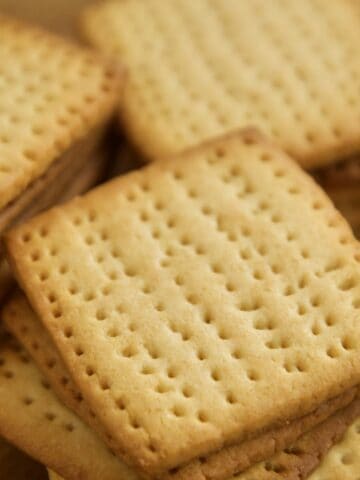
- Biscuit base - Crush 200 g (7 oz) of Tennis biscuits or graham crackers, mix with 80 g (5½ tbsp) melted butter, press into the buttered dish, and chill until firm before filling. No blind bake needed.
- Lactose-free - Lactose-free whole milk swaps one for one and sets identically, since it is real milk with the lactose already broken down. Use lactose-free or plant butter in the pastry and the custard.
Tart dish needed
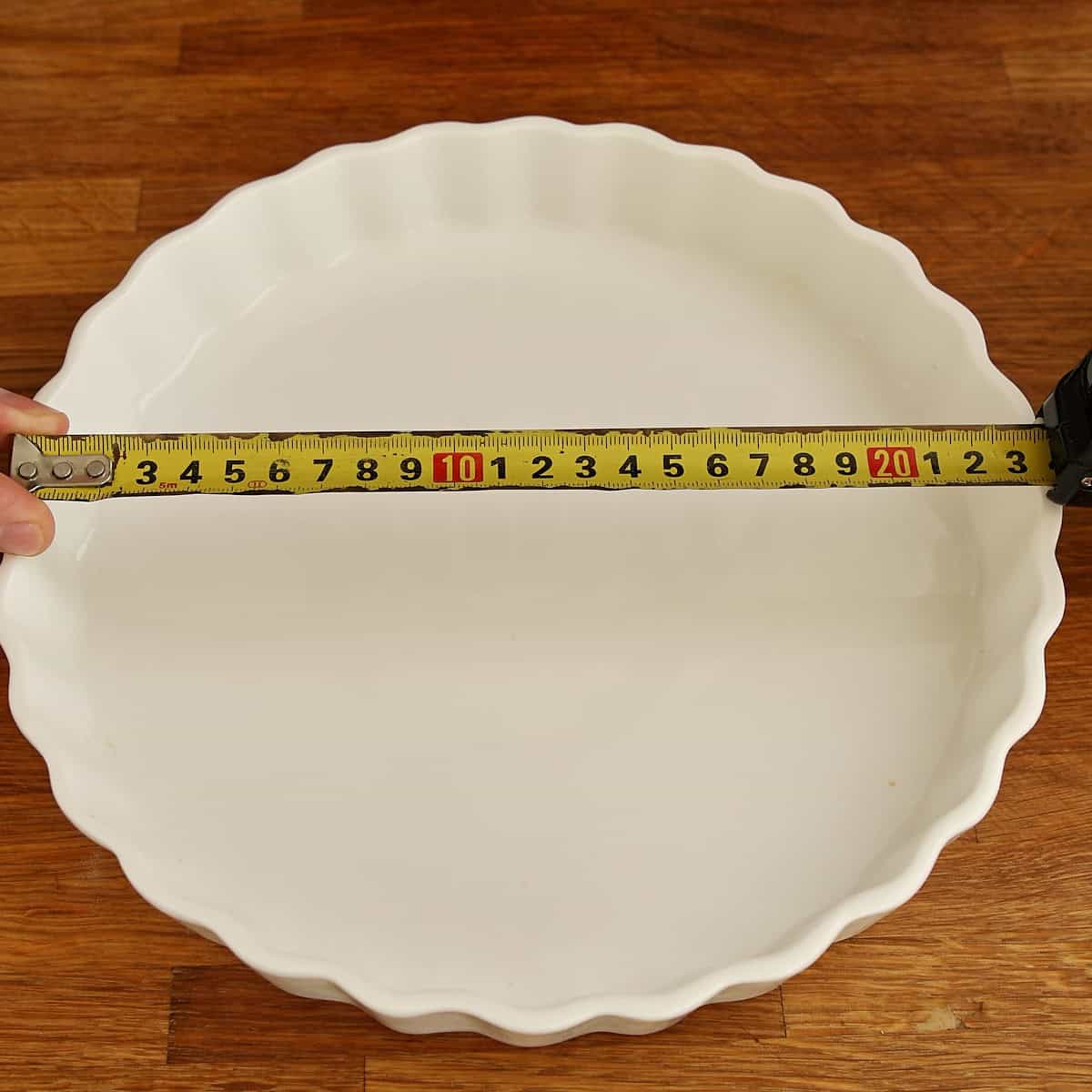
- I use a 23 cm (9 inch) round, about 3 cm (1¼ inch) deep ceramic pie dish that holds roughly 1 liter of filling. Ceramic heats slowly, so give the blind bake its full time - in metal, the base colors faster, so check at 10 minutes.
- A non-stick, removable bottom tart pan will also work great, and is quite convenient for getting the tart out of the tin.
Storage instructions
Covered in the fridge, the baked tart keeps for 3 days. Serve it cool or at room temperature. If it is baked for the next day, hold the cinnamon dusting until just before serving. Does not freeze well.
Frequently asked questions
Either your custard was not cooked fully on the stove, or you overcooked it in the oven. Make sure to thoroughly cook the custard on the stove, and remove from the oven as soon as the top has browned.
A fridge-set milk tart sets with starch alone and stays pale and soft. A baked one cooks twice - on the stove and again in the shell - which sets the custard denser and gives it the browned, wrinkled top.
No. Older recipes fold them in, but the air insulates the custard in the oven, so it bakes uneven and foamy instead of silky. Whole eggs whisked straight in set smoother.
Yes, swap it gram for gram for the cornstarch. Custard powder is mostly cornstarch with vanilla flavoring and yellow coloring, so the filling turns more yellow and tastes of vanilla custard rather than clean milk and cinnamon.
Room temperature is best- that is how it is eaten across South Africa.
One 23 cm baked milk tart cuts into 8 slices.
Melktert is mostly milk, lightly set with cornstarch and flour, with cinnamon on top. An English custard tart or a Portuguese pastel de nata uses far more egg yolk for its set, so it tastes eggier and denser - melktert is lighter and tastes of the milk itself.
Serving suggestions
- Milk tart is the classic finish to a Cape Malay bobotie - Smooth, milky custard after the warm spice of bobotie is the perfect ending to a Sunday lunch.
- More braais end on melktert than any other dessert. Pork belly braai is exactly the right thing for this.
- It holds the same spot on a South African tea table that scones hold on a British one. Put both out and easily bridge the divide.
More South African recipes
More baking recipes
If you found this post helpful or have learned something, please comment, subscribe, and follow me on social media for more delicious recipes.
Recipe
Baked Milk Tart (Gebakte Melktert)
Ingredients
Pastry
- 250 grams all-purpose flour
- 32 grams powdered sugar
- 3 grams fine table salt
- 125 grams cold butter - diced into 2 cm cubes
- 50 grams egg - beaten and sieved
Custard
- 750 grams whole milk
- whole cinnamon stick
- 3 strips dried naartjie or tangerine peel
- ⅓ whole nutmeg - finely grated
- 67 grams white sugar
- 3 each large whole eggs
- 1 each large egg yolk
- 45 grams cornstarch
- 25 grams all-purpose flour
- 8 grams vanilla extract
- 3 grams fine table salt
- 30 grams unsalted butter
- Ground cinnamon, for dusting

Instructions
Pastry and tart shell
- Sift the flour and powdered sugar into a bowl and add the salt. Rub in the cold diced butter with your fingertips until it looks like coarse sand with a few small butter bits still visible. Work fast so the butter stays cold.
- Add the beaten, sieved egg and mix just until the dough starts to clump. Press it together on the bench without kneading, shape into a flat disc, wrap, and chill for at least 1 hour or overnight.
- Butter a 23 cm dish about 3 cm deep and chill it.
- Let the dough lose its fridge chill for a few minutes, then roll it to about 3 mm on a floured surface. If it tears, pinch it back together.
- Roll the pastry around the pin, unroll it over the dish, and ease it into the corners without stretching. Press it into the flutes, leave a small overhang above the rim for shrinkage, and trim. Chill the shell until firm. Preheat the oven to 170°C.
- Prick the base with a fork, line with parchment, and fill with a thin layer of rice or dried beans. Bake 12 minutes, remove the parchment and weights, then bake 6 more minutes until the base is golden and fully cooked.
Filling and baking
- Infuse the milk: warm the milk, cinnamon stick, naartjie peel, and grated nutmeg until it just starts to simmer. Off the heat, cover, and steep for at least 1 hour, overnight in the fridge is better.
- Whisk the sugar, whole eggs, yolk, cornstarch, flour, vanilla, and salt to a smooth, lump-free paste.
- Reheat the infusion to just below a simmer. Strain it onto the paste in a slow stream, whisking hard the whole time. Discard the cinnamon and peel.
- Pour everything back into the pan over medium-low heat. Whisk constantly to a full boil, thick, with big slow bubbles, then boil for about 10 seconds, still whisking.
- Off the heat, add the butter and blitz with a stick blender for 30 to 60 seconds until glossy and completely smooth.
- Sieve the custard into the baked shell and smooth the top roughly level. Raise the oven to 180°C.
- Bake about 25 minutes, rotating once for even color, until the surface sets into a skin and browns in patches.
- Cool in the dish on a wire rack to room temperature.
- Dust the cooled surface with ground cinnamon, generous but light, and slice into 8.
Video
Notes
- Naartjie peel - The naartjie is South Africa's small, loose-skinned tangerine. Use dried strips, and swap in tangerine, mandarin, or orange peel if you cannot get them. In season, dry your own strips on a rack for a few days.
- The boil - The 10-second full boil fully gelatinizes the cornstarch and flour so the custard holds its water through the second bake. Cut it short and the baked slices weep. Older recipes fold in whipped egg whites - the air insulates the custard and it bakes uneven and foamy, so this recipe uses whole eggs whisked straight in.
- Equipment - A 23 cm dish about 3 cm deep holds the roughly 1 liter of filling. Ceramic heats slowly, so give the blind bake its full time. Metal colors the base faster - check at 10 minutes. No stick blender: whisk the butter in hard off the heat and rely on the sieve.
- Doneness - Surface set into a skin, browned in patches, slight wobble in the center. The puffed top sinking into wrinkles as it cools is correct, not a fault.
- Common pitfalls and recovery - Grainy custard, egg threads: blitz hard and sieve. Torn pastry: pinch together or patch with scraps. Shrunken shell: fill what you have, the tart just bakes slightly shallower.
- Substitutions - Store-bought all-butter shortcrust, about 375 grams, works, blind baked the same way. Gluten-free: a GF blend for the pastry, and replace the 25 grams flour in the custard with about 12 grams extra cornstarch. Dairy-free: full-fat coconut milk one for one, plant butter in the pastry, skip the finishing butter.
- Storage and reheating - Covered in the fridge, 3 days. Serve cool or at room temperature, never reheated. Dust with cinnamon just before serving. Do not freeze the baked tart.
- Make-ahead - Dough and infusion the night before, shell blind baked in the morning, custard and final bake under an hour.
Nutrition
This recipe, and 109 others.
Everything I actually cook, organized in one book, with the exclusives that never made the blog and an online edition that behaves with flour on your hands. No ads. $19.99, yours for life.
Get the cookbook →This site contains affiliate links. I may earn a tiny commission on qualifying purchases at no extra cost to you. By bookmarking these links you help support the upkeep of this site.
Comments
No Comments