

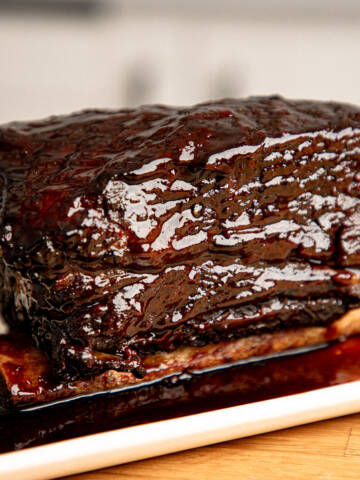
Homemade beef stock is an essential ingredient, alongside other stocks such as chicken stock, in most professional kitchens and good restaurants. Good beef stock is the difference between a fantastic, rich, and delicious onion gravy and a bland one. It's also one of the key ingredients in these legendary melt-in-the-mouth beef short ribs.
Making your own beef stock is easy when you know the right technique. Which is exactly what I'll show you in this classic French recipe.
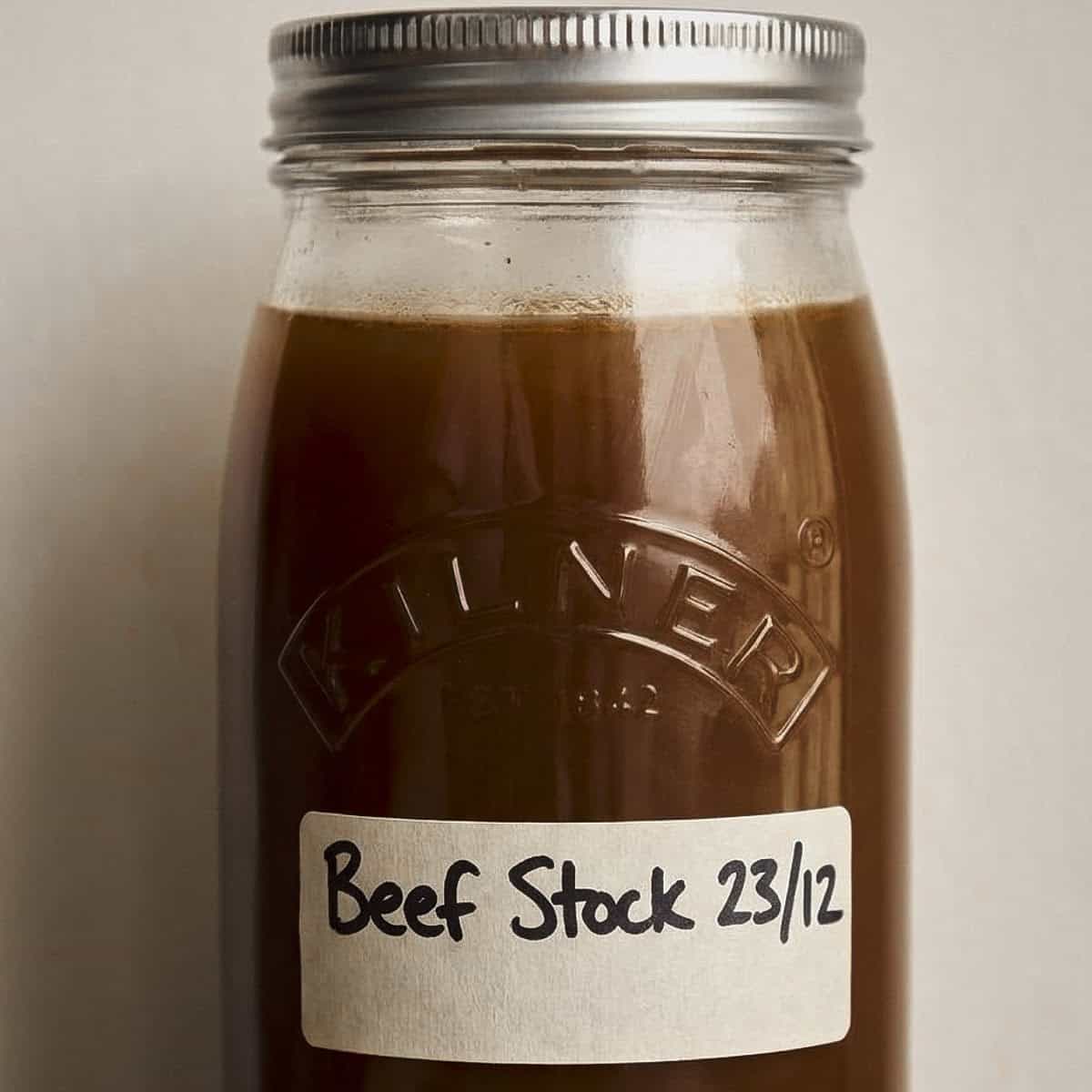
Even though it takes a little hands-off time to make, once it's done, it stores well in the fridge or freezer. Convenient for when you want to make a stew, soup, or gravy for roast beef.
Jump to:
Why make your own beef stock
Homemade beef stock is a lengthy but rewarding process that greatly improves the quality of your home cooking while saving you money and giving you more control.
- Flavor - Homemade beef stock has a deep, beefy flavor and a viscous mouthfeel because collagen breaks down into gelatin during cooking. Commercial varieties lack the flavor depth and body of homemade stock.
- Quality - If you make your own beef stock at home, you know exactly what goes into it. You control the quality of beef bones as well as other ingredients. Which should be important because, after all, beef stock is the extraction of nutrients into a concentrated liquid.
- Salt - Store-bought beef stock often contains high amounts of salt. Especially the ones with a long shelf life that are kept at room temperature. Aside from the obvious quality issues, these stocks cannot be used in sauces and stews, where the liquid needs to be reduced. Because doing so will make the sauce or stew inedibly salty. Homemade stock lets you season it as needed.
- Price - Apart from being inferior on all levels to home-made beef stock, store-bought can also cost an arm and a leg. Especially the "fresh" ones sitting in the refrigerator section.
Making your own will not only improve your cooking and provide better nutrition, but also save you money.
Beef Stock vs broth
Although sometimes used interchangeably when describing a beef-flavored liquid, beef stock and beef broth are two very different preparations.
- Beef stock - Made by using beef bones rich in collagen. Preferably without meat stuck on the bone. Sometimes the vegetables are roasted, and it always includes tomato paste. Optionaly but traditionally also red wine.
- Beef broth - Made with a combination of beef bones, trimmings, and meat. Usually, it does not contain tomato puree, and never red wine. The vegetables are never roasted, and it never contains wine.
In both beef stock and beef broth, the bones can be roasted or left unroasted, depending on the final dish you plan to make. For this recipe, we'll use the classic roasted bones method for a dark stock.
Beef bones
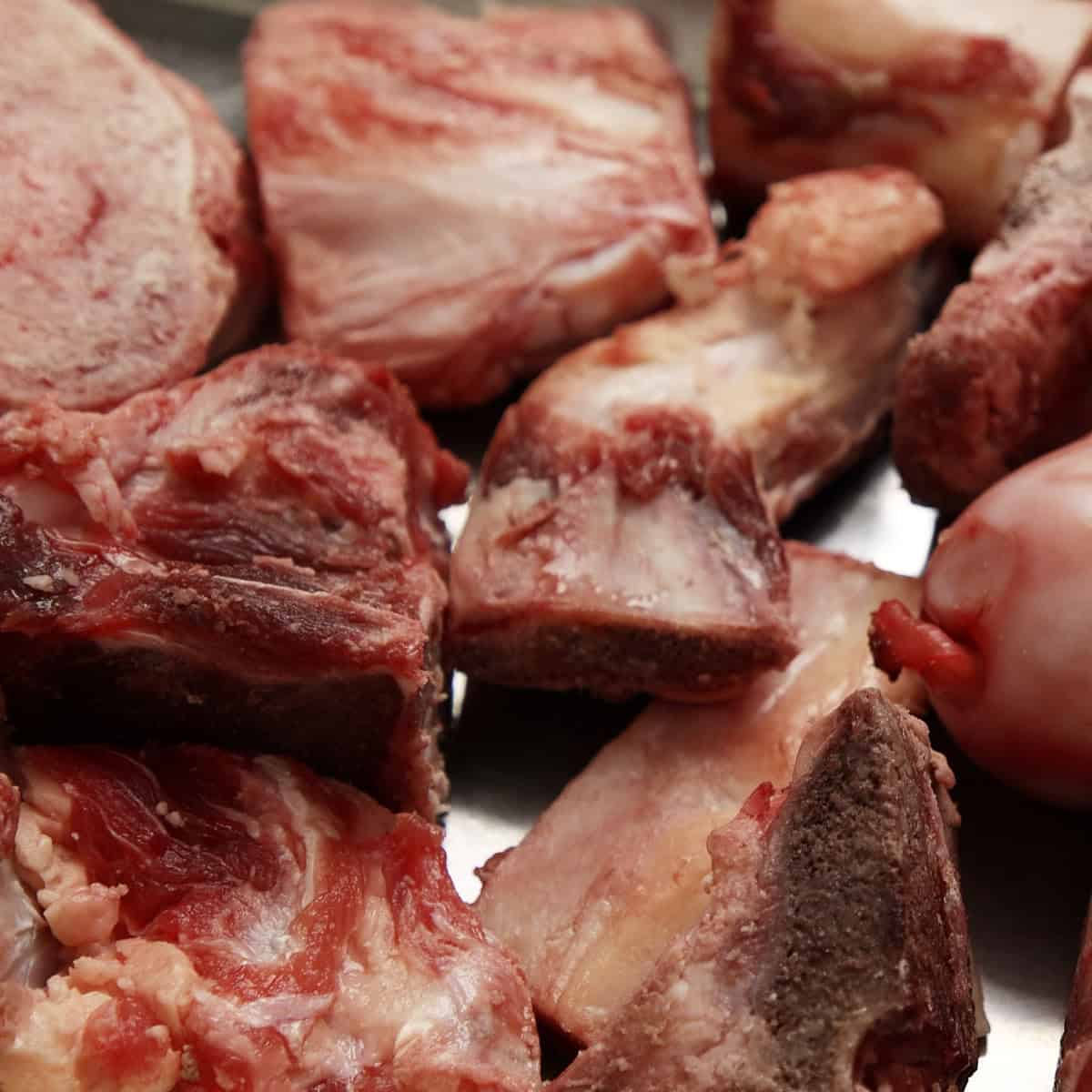
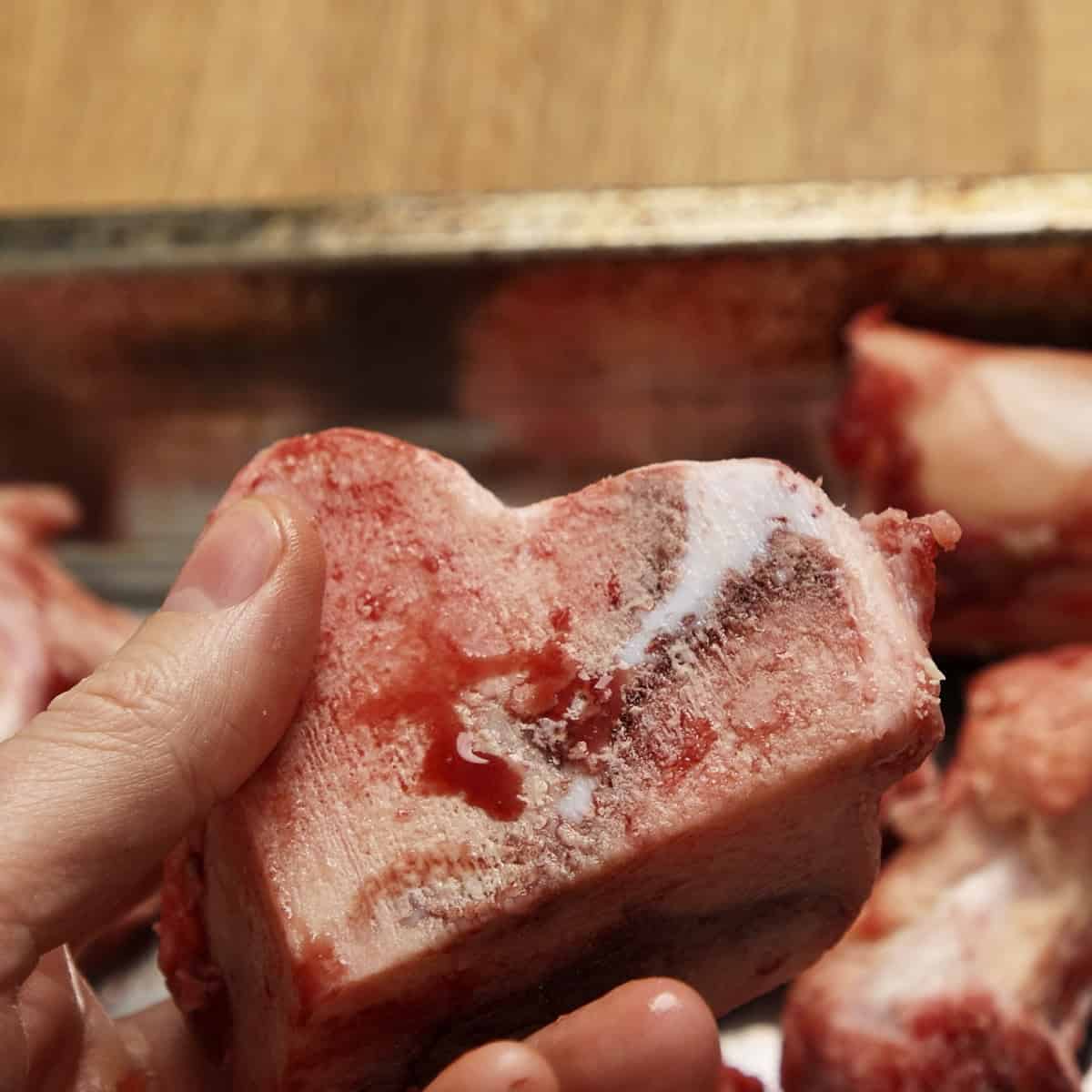
Generally speaking, the denser the bones(knuckle or shin bones), the more collagen they contain and the richer the mouthfeel your stock will have.
In restaurant kitchens with enormous stock pots, these large hip and shoulder knuckle joints are the standard bones to use. Unfortunately, most people do not have a massive 100L stockpot at home, let alone the space.
So, you can either ask your butcher to cut these into more manageable pieces or use smaller bones normally sold as bones for soup.
If you can only find the smaller bones, they will lack collagen and end up less viscous, but still delicious. However, if you want a thicker mouthfeel, you can cheat a bit and add ready-made beef gelatin to compensate.
Ingredients
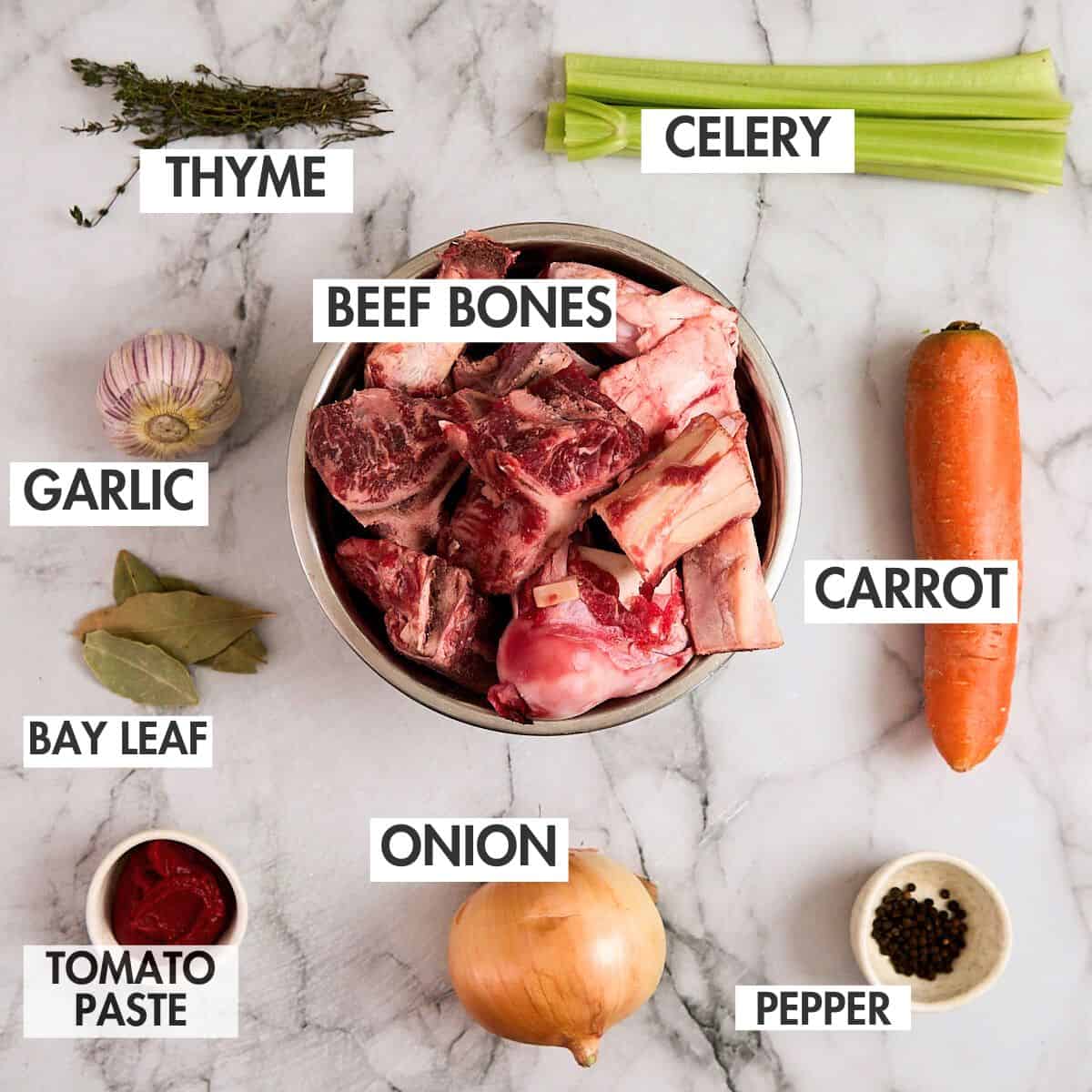
- Aromatics - Classically, beef stock contains onion, carrot, celery, and garlic. Those are the must-use veggies. I also like adding tomatoes and mushrooms when I have scraps, as they are rich in umami and enhance the depth of flavor.
- Tomato paste - Classic ingredient in beef stock. It has to be concentrated tomato paste and not chopped tomatoes or tomato pasata.
- Bones - Obviously, beef bones are used when making a beef stock. You can also add roasted chicken carcasses or wings if you have some that need to be used up.
- Spices and herbs - Black pepper, bay leaf, and thyme.
- Liquid - Water and, optionally, but recommended, dry red wine.
See recipe card for quantities.
Instructions
I made this beef stock in an 8-liter (quart) stockpot. Which fits 3 kg (6.6 pounds) of bones plus the veggies and liquid. The process takes 6 hours compared to the 1 hour it takes to make chicken stock.
You can also make beef stock in the oven, in a slow cooker, and in a pressure cooker. All of which I'll explain in a second.
Making beef stock
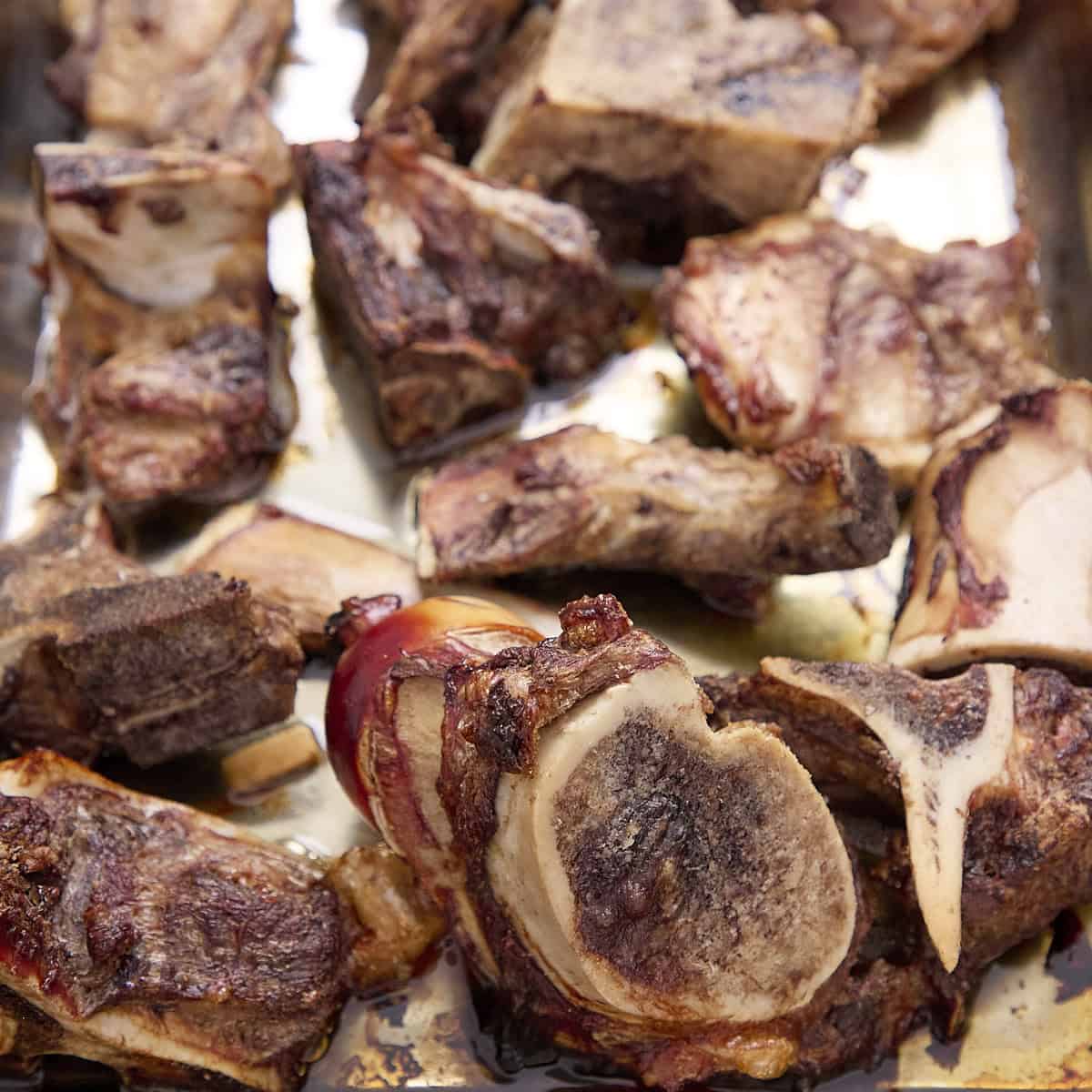
- Roast the bones: Preheat your oven to 230 °C (446 °F). Place the beef bones onto a roasting tray and roast until deep golden brown.
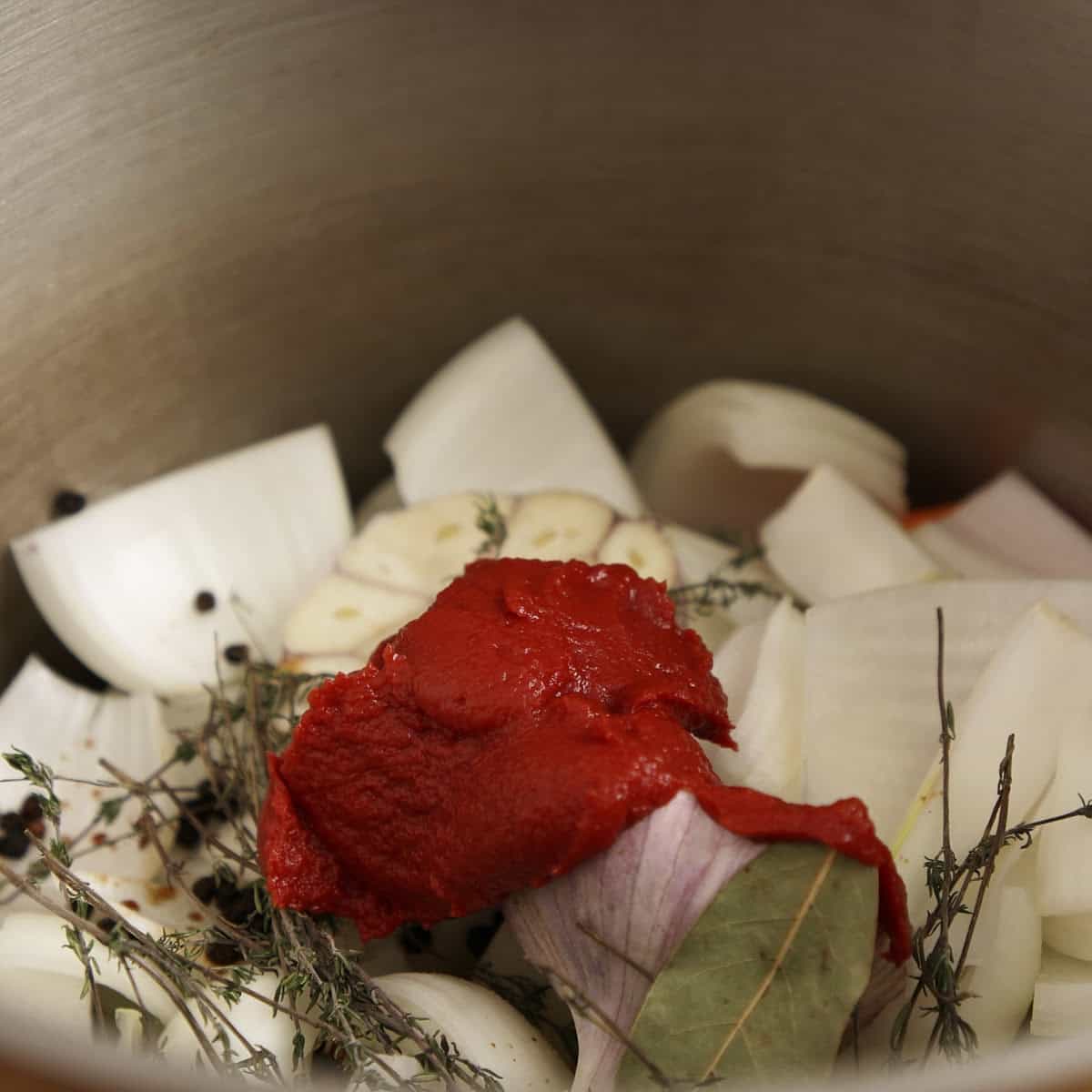
- Prep aromatics: While the bones are roasting, peel the carrot and onion. Chop them up into chunks. Chop the celery into chunks. Half the garlic horizontally. Add it all to a stockpot along with the bay leaves, thyme, peppercorns, and tomato paste.
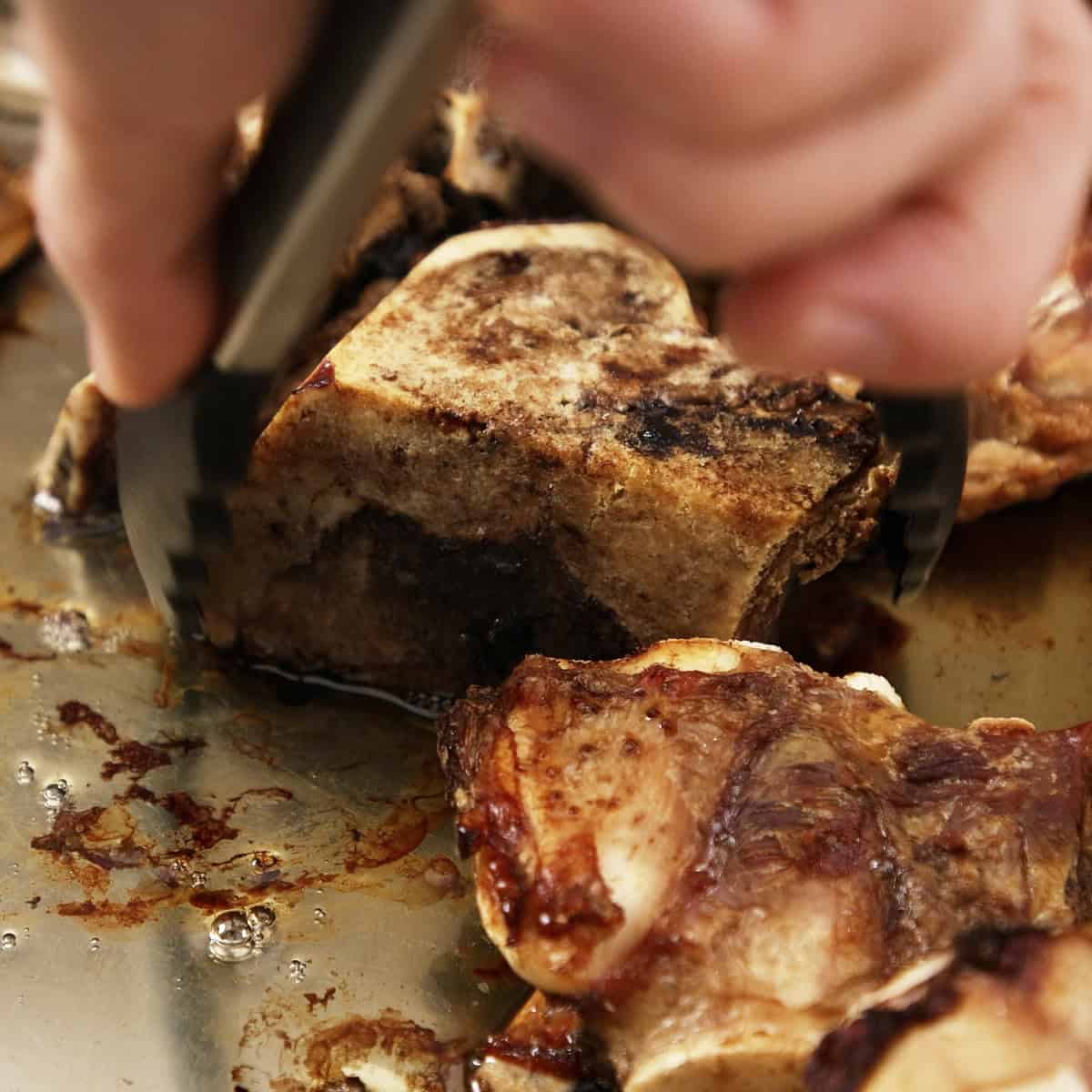
- Add bones to the pot: Once the bones are roasted, remove them from the tray. There will be a pool of rendered fat in the tray, which should not go into the stock pot.
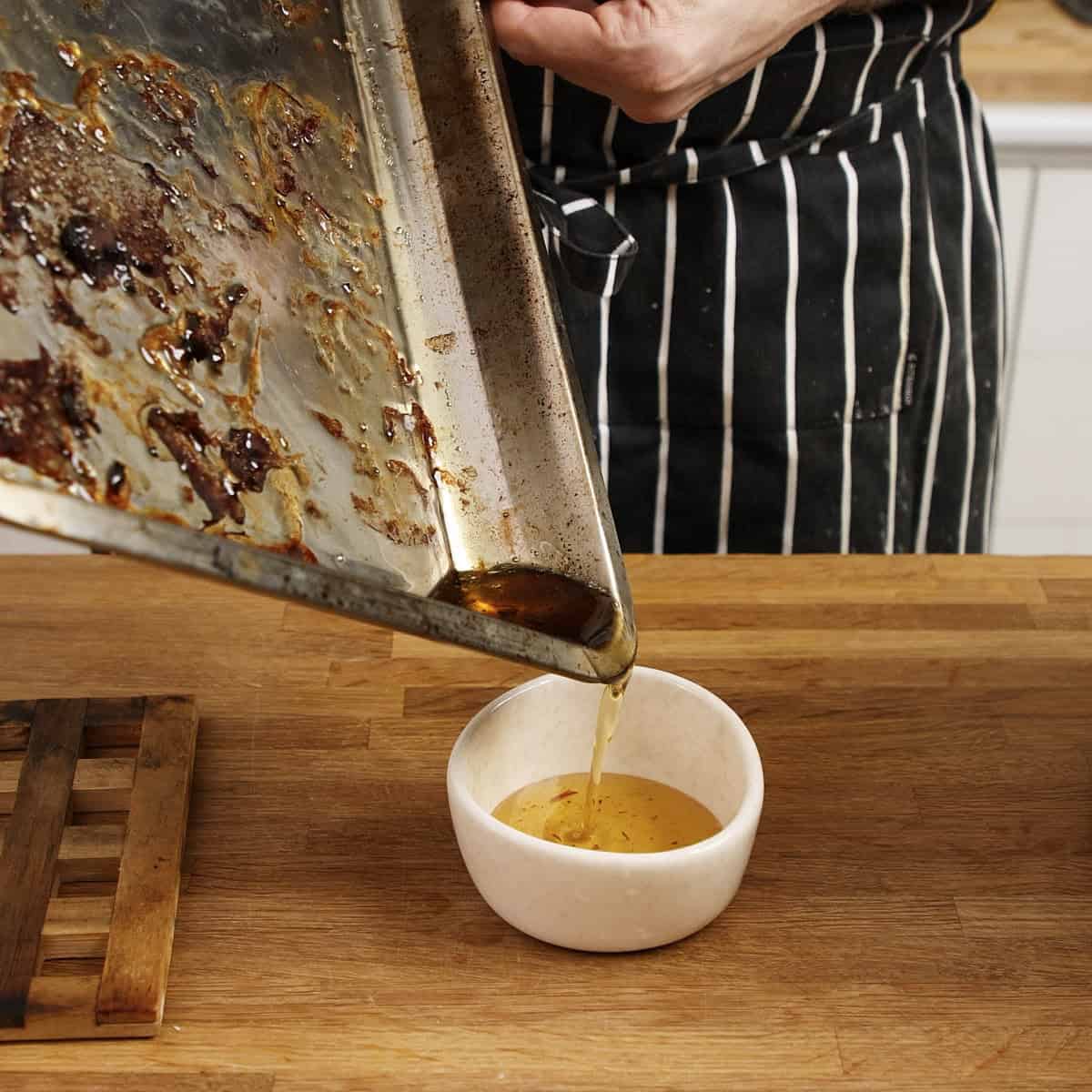
- Store rendered fat: Rendered beef fat can be stored in the fridge and used to make roasted potatoes or to fry onions for onion gravy or tomato stew.
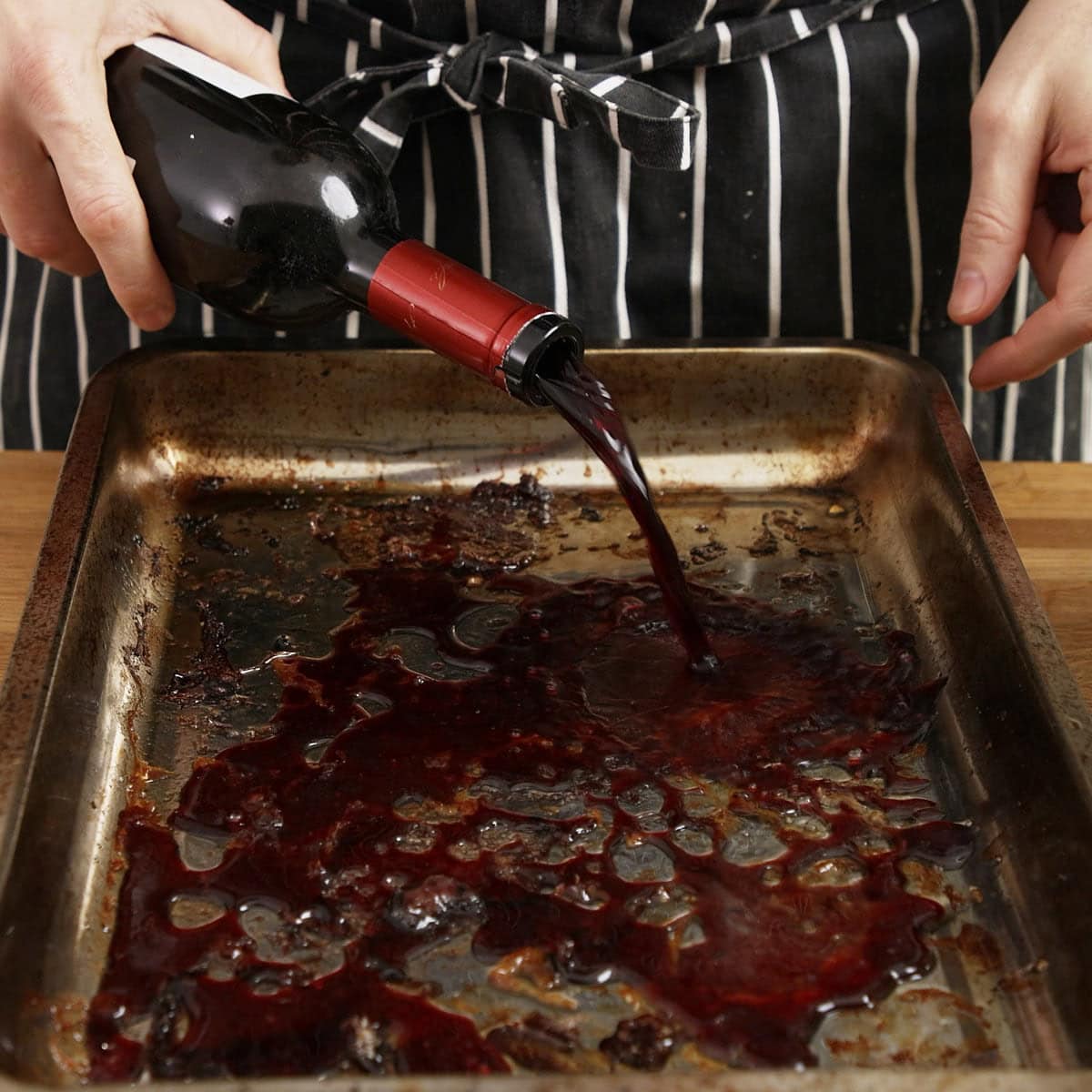
- Deglaze fond: The roasting tray will have a rich layer of fond, which means it will have a lot of flavor. Use red wine or water to scrape this fond off the tray.
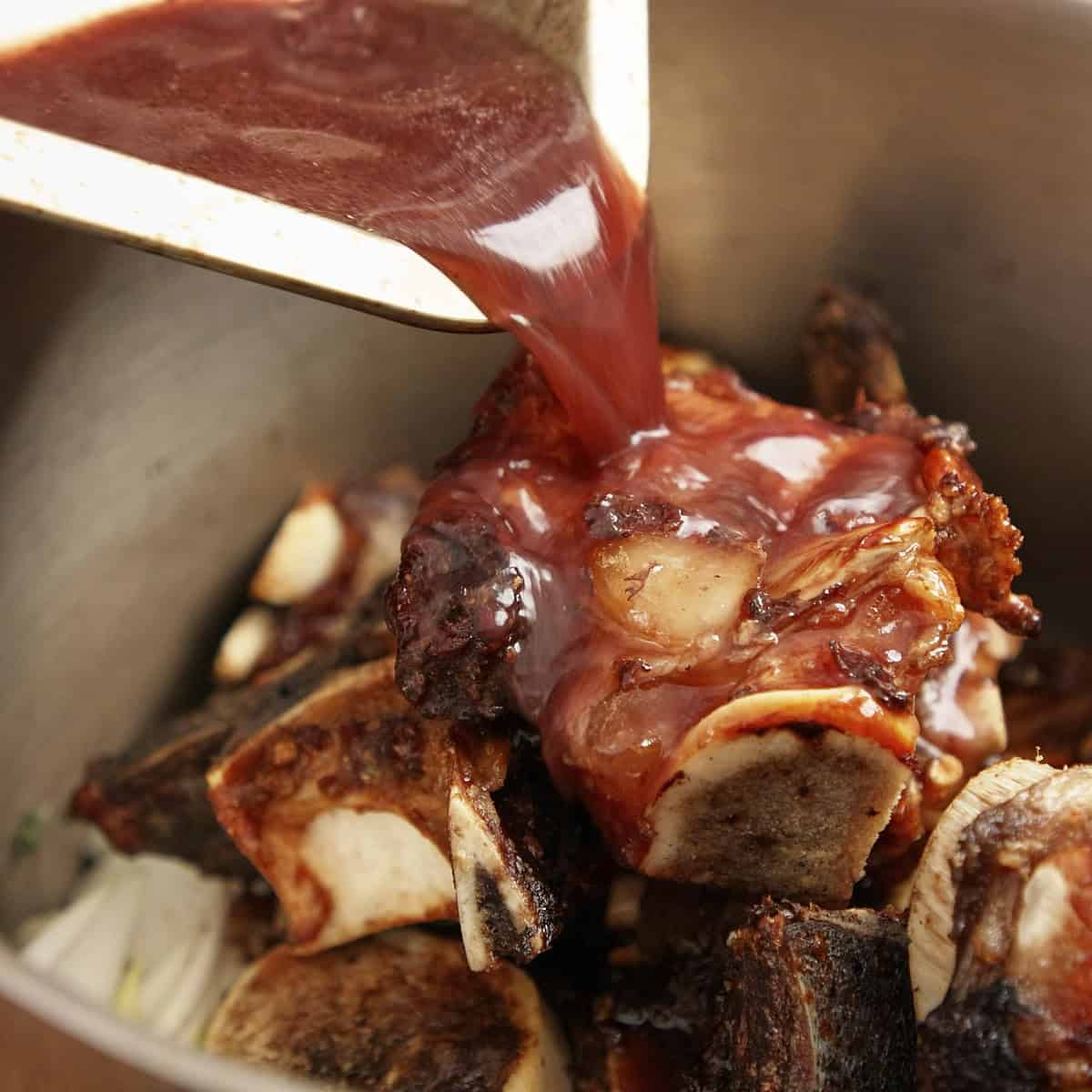
- Add fond to pot: Add the scraped-off fond to the rest of the ingredients, making sure to get every last caramelized bit of flavor.
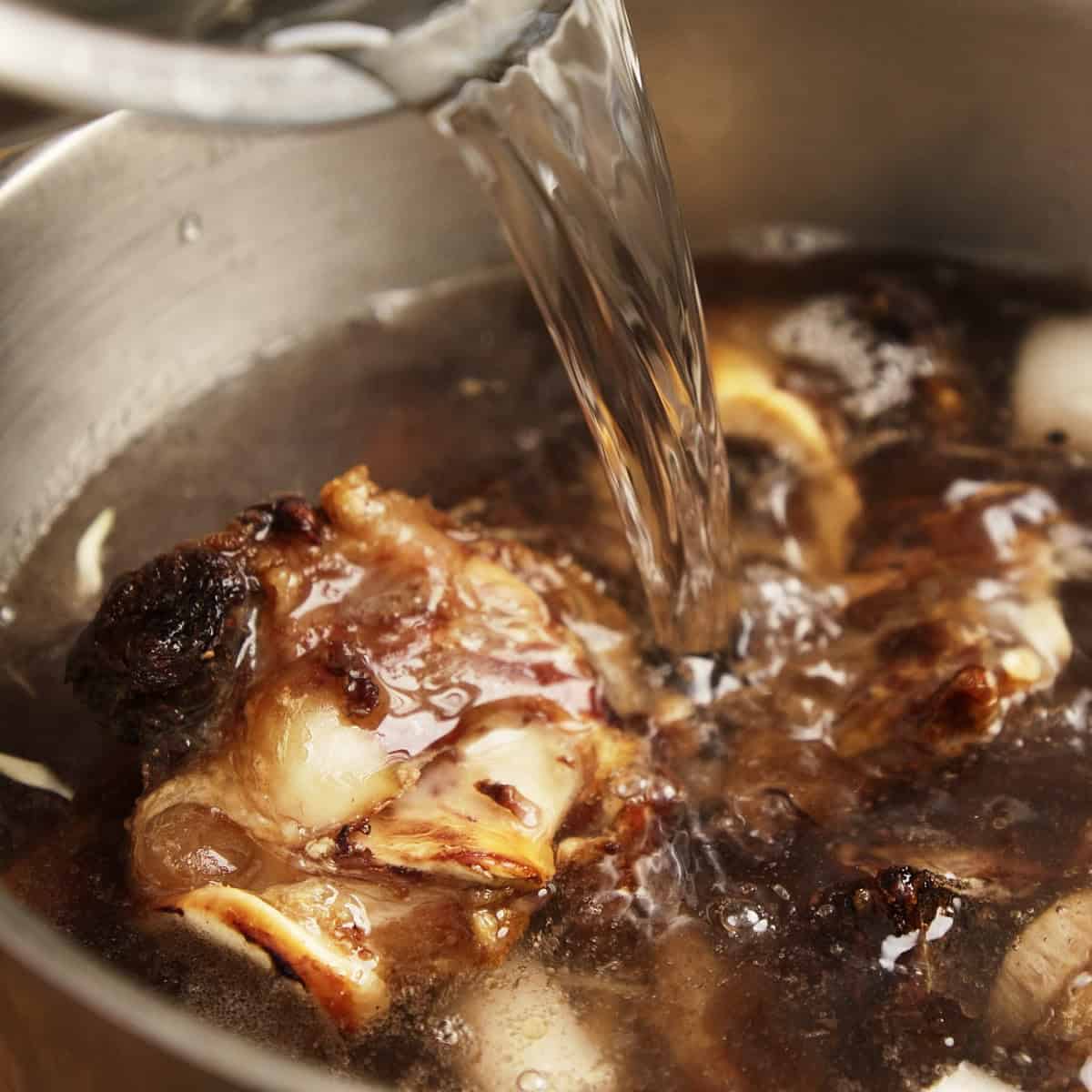
- Water: Add water until the ingredients are just covered. Do not overfill the pot to avoid spills.
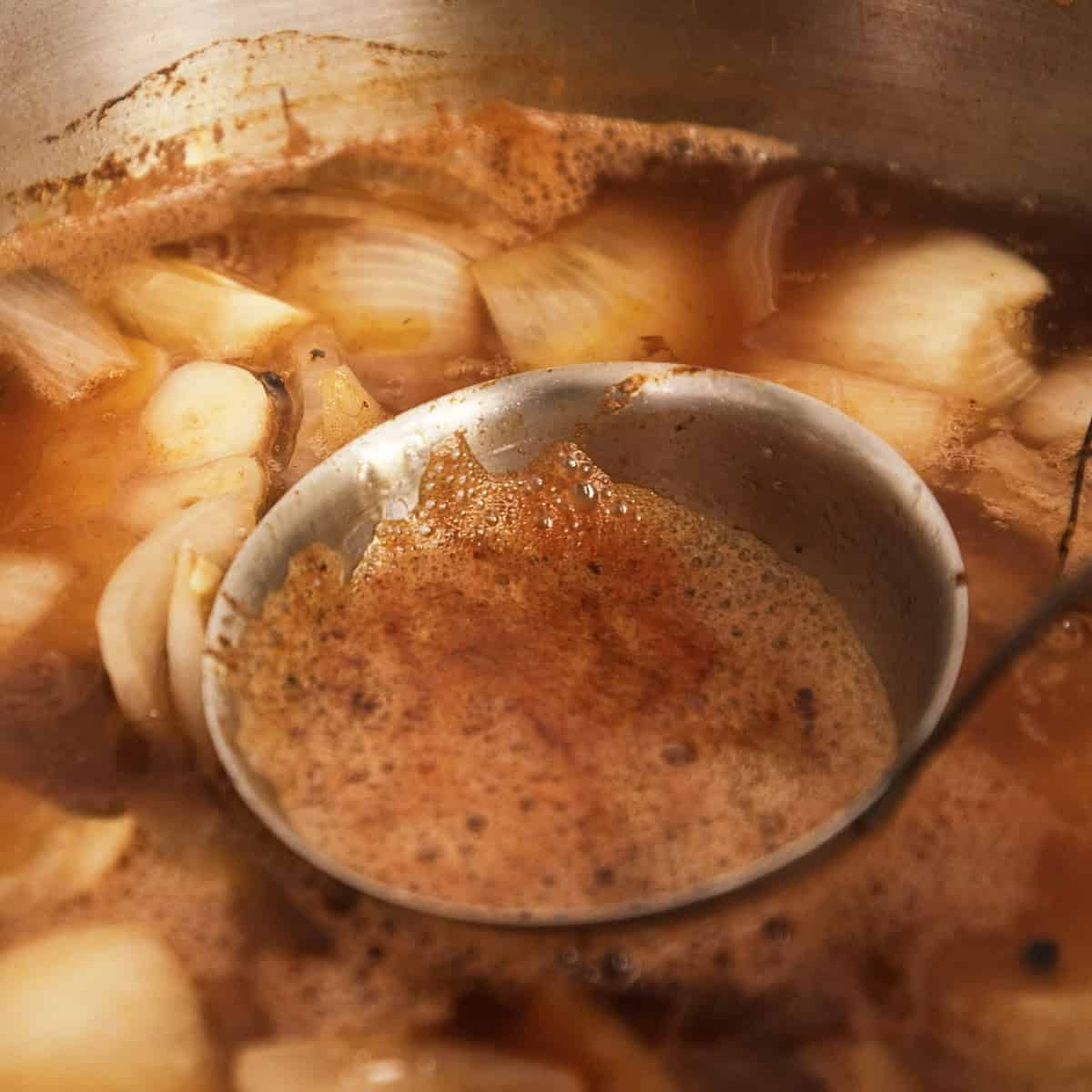
- Simmer and skim: Bring the stock up to a bare simmer. You should see small bubbles pop on the surface, but never let it boil rapidly, as that would emulsify impurities into the stock. Skim any froth and fat that rises to the surface. Skim periodically and add a touch of water if the bones start to stick out from the liquid.
Straining and storing
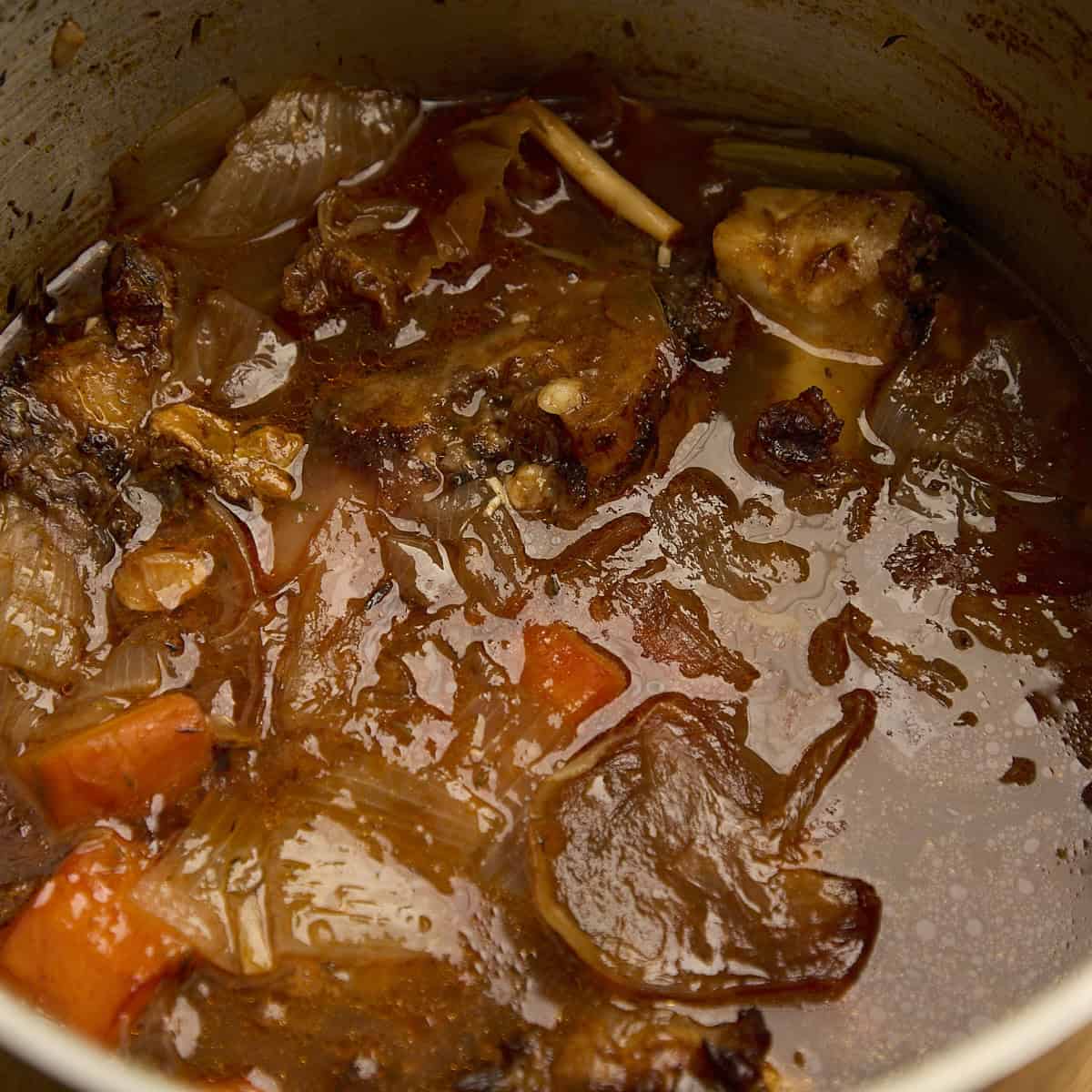
- Full extraction: After 6 hours using smaller bones, your stock would be fully extracted. Meaning all the nutrients and flavor have gone from the bones and veggies into the liquid.
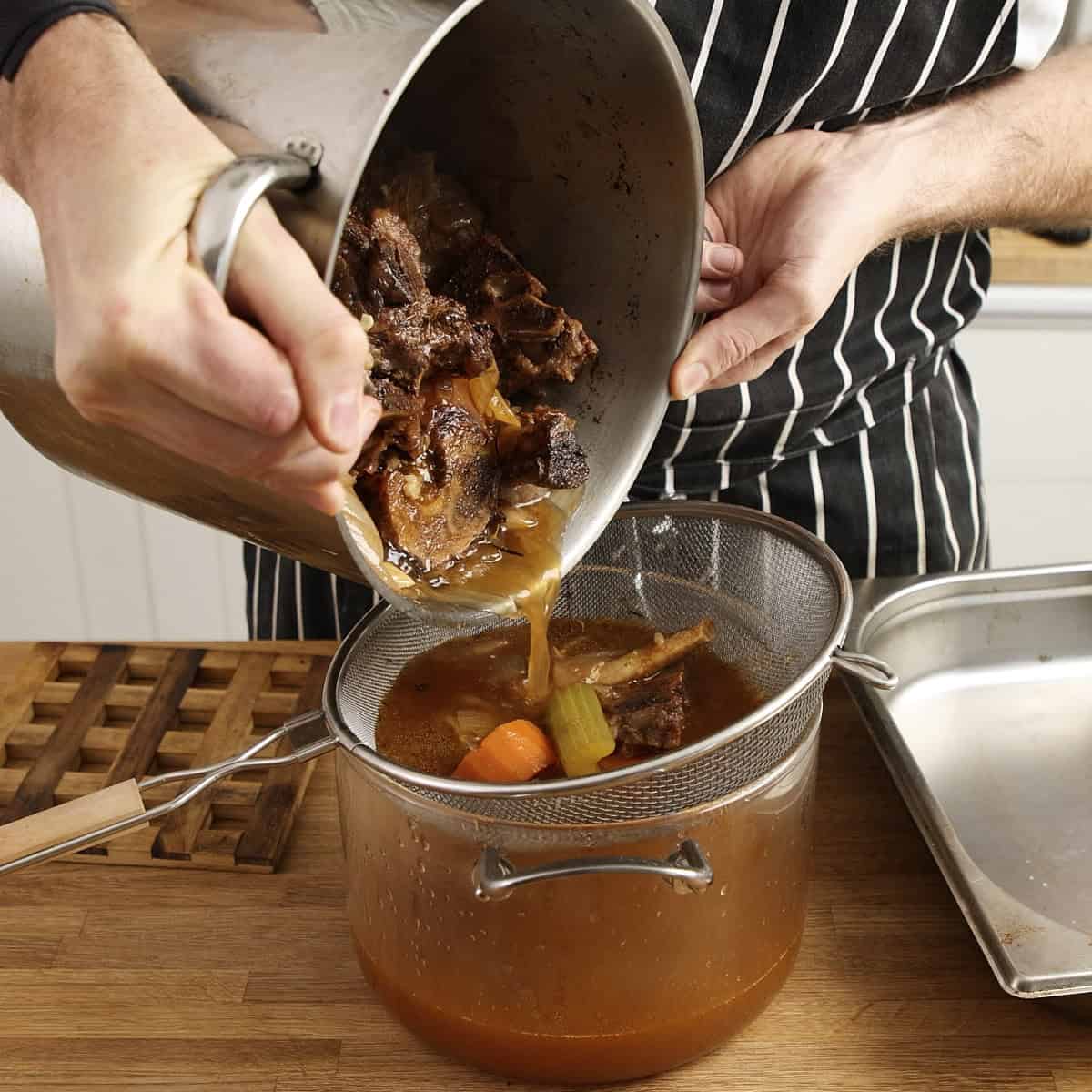
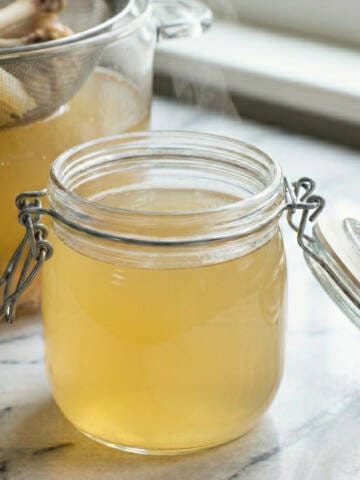
- Strain: Strain the liquid through a fine mesh sieve.
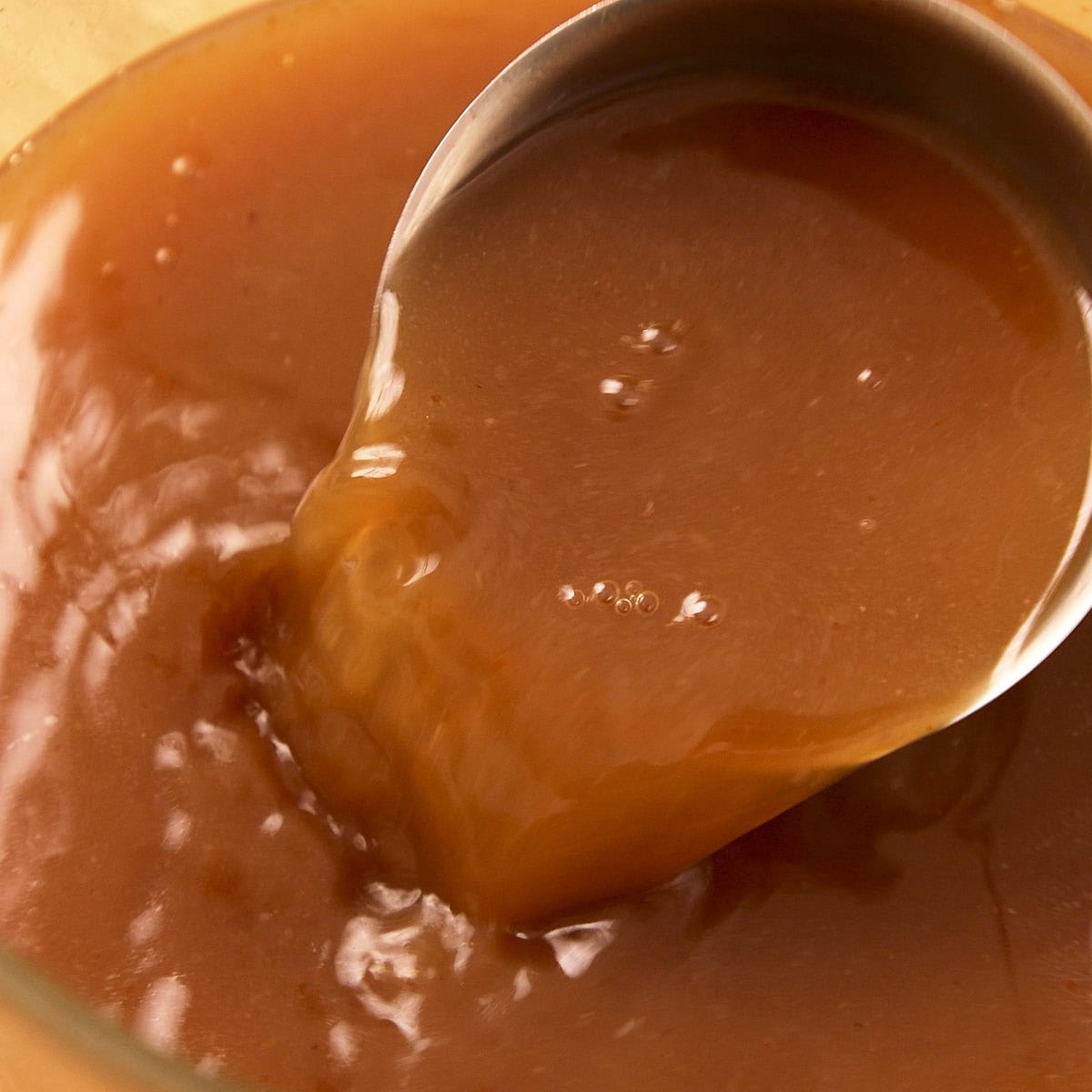
- Optional double strain: If you want it to be even clearer, strain it through a muslin cloth once passed through the sieve. In restaurants, this is standard practice to obtain the purest beef stock. For home use, once is good enough.
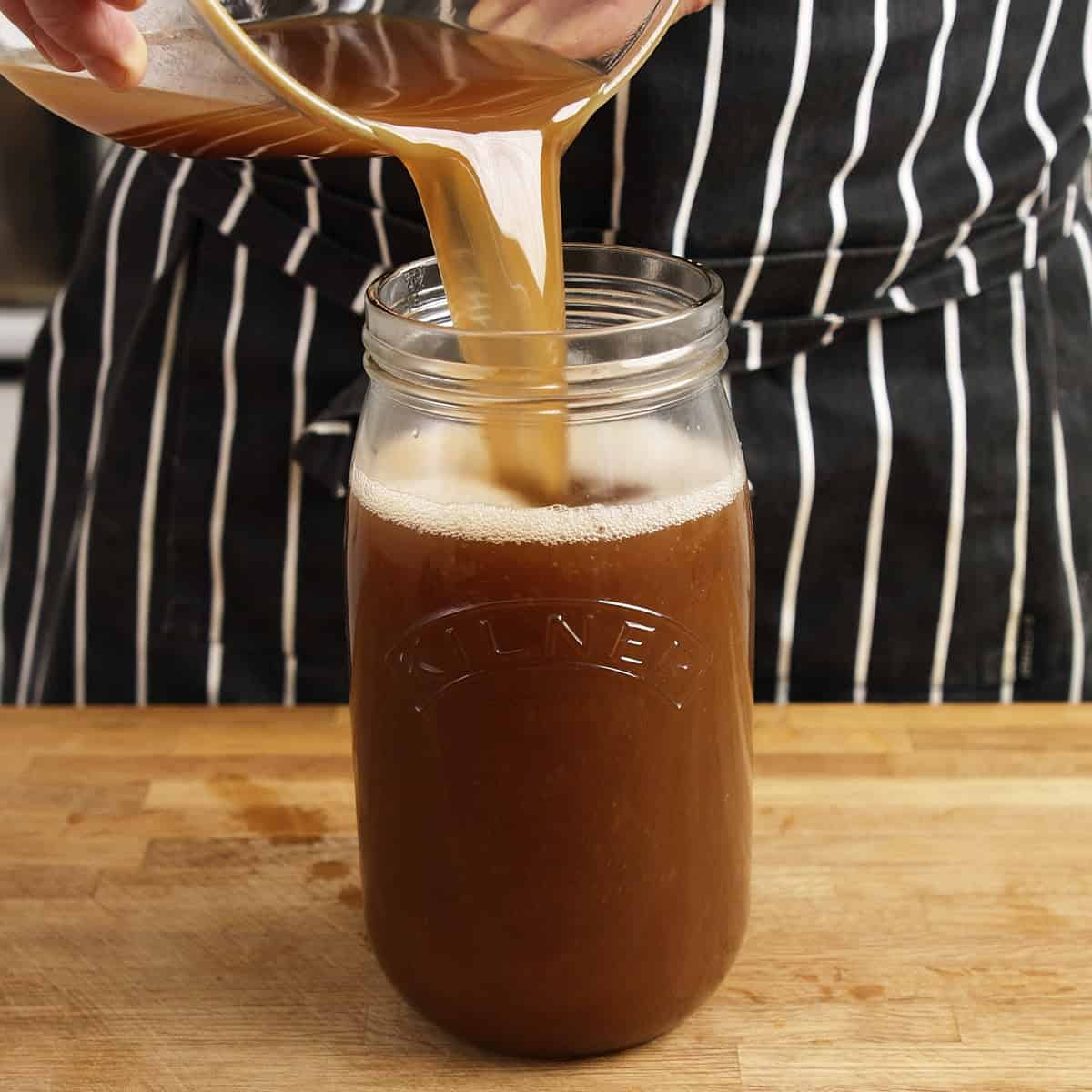
- Cool: Pour the stock into storage containers, then cool it down quickly to room temperature in iced water before moving to the fridge. This is to prevent your fridge from warming up and causing other ingredients to spoil.
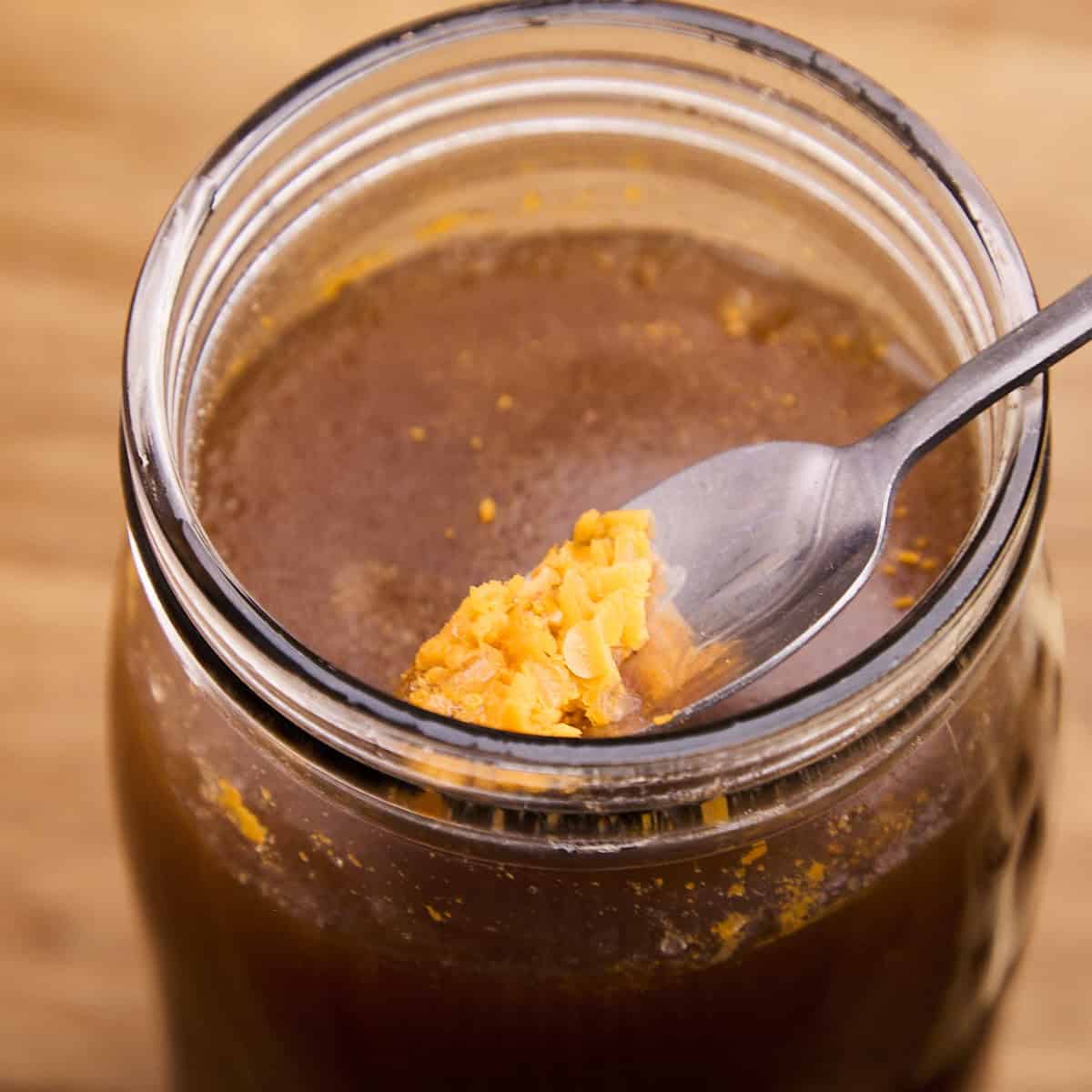
- Skim off any leftover fat: Once chilled, you may see a thin or thick layer of solidified fat on top of the stock, depending on how well you skimmed it during cooking. Remove this fat with a spoon and discard it in the bin. Not the sink. As that discarding it in the sink could block the pipes.
- Store: Seal and label your beef stock before storing it in the fridge or freezer. See the storage instructions below for storage options and how long it will keep.
Watch how to make it
Below is a video guide to making a full rib roast, where we make this beef stock from scratch and also use it to make a delicious onion gravy.
Yield
This recipe yields 2 litres/ quarts of beef stock.
As a guide, you should end up with about ⅓ of what you started with in volume. Any further reduction when making concentrated sauces should happen after it's been strained.
Alternative cooking methods
- Oven - Instead of cooking it on the stove all day, place the pot in the oven at 130 °C (266 °F), with the lid on, after bringing it to a simmer and skimming off the impurities once. This method allows for a safe overnight version or while you're doing other things. It also prevents excessive moisture evaporation.
- Slow cooker - If you have a large enough slow cooker, this method is also a convenient set-and-forget option. Follow all the steps and skim the stock once before you let it cook, and once it's cooled.
- Pressure cooker - Pressure cookers work quickly to make a very good-tasting stock, turning a long process into a few hours. However, make sure there is very little fat in the pot to start with, and do not let the stock boil before closing the lid. After 3 hours under pressure, let the valve release naturally so the stock does not end up cloudy.
Pro Tips
- Bones - Joint bones contain the most gollagen which makes the best beef stock. Ask your butcher to cut these into pieces that fit inside your stockpot.
- Fat - Remove the roasted bones from the rendered fat after roasting, and skim off the fat that rises to the top during cooking. Any leftover fat can be skimmed off after the stock has chilled.
- Boil - Never let the stock boil vigorously. This will emulsify the fat and impurities into the stock, dulling its flavor and appearance.
- Strain - Strain your stock through a fine meshes sieve at least once. For a very clean stock, strain it through cheesecloth a second time.
Substitutions
- Bones - If you have chicken carcasses or chicken wings, they can be added along with the beef bones.
- Vegetables - Popular and tasty editions include fresh tomatoes or tomato trimmings. mushrooms and leeks. These are all high in umami when cooked, which adds a lot of flavor.
- Liquid - You can make a double stock by using a previous batch of beef stock instead of water, which will give you a very intense beefy stock.
How to use beef stock
- Stews and braises - Instead of using bland water. Use beef stock to make stews like tomato bredie, or beef short ribs, for maximum flavor.
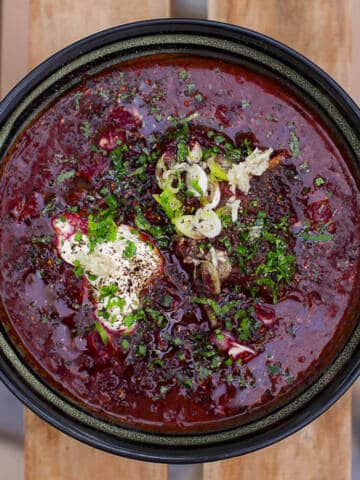
- Soups - In hearty winter soups like beetroot borscht.
- Sauces - Reduce it down to make a delicious onion gravy or demi glace.
Important note on salt
Never salt the bones or stock at the start of cooking. That's the golden rule.
Two reasons why
- Salting at the start will prevent full extraction of flavor and nutrients from the bones and aromatics.
- Reducing a salted stock for sauces or in braises will result in an overly salty dish that can't be saved.
Equipment
- Stock pot - This recipe uses an 8-liter/quart stockpot.
- Roasting tray - Choose a deep tray that will hold plenty of bones and rendered fat.
- Fine meshed strainer - Glass jars for the fridge.
Storage
Store in sealed food-safe containers in the fridge for up to 5 days. For longer and more convenient storage, freeze it for up to 6 months.
Tip: Instead of freezing big blocks of beef stock, freeze it in these silicone molds. This makes it easy to use a few cubes as needed instead of defrosting more than you need.
FAQ
It takes up to 12 hours for all the nutrients to be extracted from the bones and for the collagen to turn into gelatin, which is what gives beef stock its richness.
Beef bones, Mirepoix(onion, celery, carrot), tomato paste, water.
The biggest mistakes when making beef stock are boiling it too quickly and failing to skim the impurities and fat that rise to the top. Failing to do so gives a cloudy, dull-tasting stock.
Yes, store the rendered beef fat in the fridge to use for roasting potatoes or sautéing vegetables.
Recipes that use beef stock


If you found this post helpful or have learned something, please comment, subscribe, and follow me on social media for more delicious recipes.
Recipe
Homemade Beef Stock
Ingredients
- 3 kg beef bones - note 1
- 1 large carrot - peeled or unpeeled, cut into chunks
- 1 large onion - peeled or unpeeled, white, red, or brown, cut into chunks. Can also use leeks as a substitute.
- 1 celery stalk - well rinsed and cut into chunks, leaves and all
- 1 whole garlic - whole head cut in half
- 50 grams tomato paste - not tomato pasata, which is not concentrated.
- 2 grams peppercorns - whole (optional)
- 4 sprigs thyme - whole sprigs, or 1 teaspoon dried leaves (optional)
- 4 whole bay leaves - fresh or dried (optional)
- 350 ml red wine - dry red wine for deglazing the pan fond. (optional)
- 4 litres water - drinkable cold tap water

Instructions
Roasting the bones
- Preheat your oven to 230°C (446°F). Place the beef bones on a roasting tray and roast until they reach a deep golden brown color.3 kg beef bones
- Prepare aromatics. While the bones roast, peel and chop the carrots and onions into large chunks. Chop the celery, halve the garlic horizontally, and add them to the stockpot with bay leaves, thyme, peppercorns, and tomato paste.1 large carrot, 1 large onion, 1 celery stalk, 1 whole garlic, 50 grams tomato paste, 2 grams peppercorns, 4 sprigs thyme, 4 whole bay leaves
Deglazing the fond
- Deglaze the tray. Remove the roasted bones from the tray, leaving the rendered fat behind. Use red wine or water to scrape the caramelized fond from the bottom of the tray.350 ml red wine
- Combine ingredients. Add the roasted bones and the deglazed fond to the stockpot. Avoid adding the pool of rendered fat from the tray to the pot. Store the rendered fat in the fridge and use for frying when cooking other dishes.
Cooking stock
- Cover with water. Fill the pot with water until the ingredients are just submerged. Do not overfill.4 litres water
- Simmer and skim. Bring the liquid to a bare simmer where only small bubbles surface. Periodically skim any froth or fat that rises to the top. Add a small amount of water if the bones become exposed.
- Extract flavor. Continue simmering for 6 to 12 hours. The stock is ready once the flavor and nutrients have fully transferred from the bones into the liquid.
Straining and storing
- Strain the stock. Pass the liquid through a fine-mesh sieve. For a clearer restaurant-style finish, perform a second strain through a muslin cloth.
- Chill quickly. Transfer the stock to containers and place them in an ice water bath to reach room temperature quickly before refrigerating.
- Remove solidified fat. Once chilled, remove the layer of solidified fat from the surface with a spoon. Discard this in the bin, not the sink.
- Seal and label. Label the containers and store them in the refrigerator or freezer.
Video
Notes
- Bones - The best bones to use are joint bones. However, they are too large for a regular home cook's stock pot. Ask your butcher to cut these up into manageable pieces no bigger than a tennis ball. Alternatively, most stores will sell packs of bines called "soup bones" Or "stewing bones". These will also work great.
- Alcohol free - Dry red wine is classically used, but feel free to omit it if you don't use alcohol products. The color might be a touch lighter, but the stock will still be great.
- Substitutions and additions - You can add tomato trimmings or overripe tomatoes to use up, as well as mushrooms. These are high in umami, which will enhance the stock's flavor. Additionally, you can substitute or add coriander seeds along with the peppercorns. These add depth but aren't prominent in the final stock.
- Yield - This recipe yields 2 litres (quarts) of stock, which you can reduce further to intensify the flavor if needed, or keep as is for a base.
- Oven - Instead of cooking it on the stove all day, place the pot in the oven at 130 °C (266 °F), with the lid on, after bringing it to a simmer and skimming off the impurities once. This method allows for a safe overnight version or while you're doing other things. It also prevents excessive moisture evaporation.
- Slow cooker - If you have a large enough slow cooker, this method is also a convenient set-and-forget option. Follow all the steps and skim the stock once before you let it cook, and once it's cooled.
- Pressure cooker - Pressure cookers work quickly to make a very good-tasting stock, turning a long process into a few hours. However, make sure there is very little fat in the pot to start with, and do not let the stock boil before closing the lid. After 3 hours under pressure, let the valve release naturally so the stock does not end up cloudy.
- Salting at the start will prevent full extraction of flavor and nutrients from the bones and aromatics.
- Reducing a salted stock for sauces or in braises will result in an overly salty dish that can't be saved.
Nutrition
This recipe, and 109 others.
Everything I actually cook, organized in one book, with the exclusives that never made the blog and an online edition that behaves with flour on your hands. No ads. $19.99, yours for life.
Get the cookbook →This site contains affiliate links. I may earn a tiny commission on qualifying purchases at no extra cost to you. By bookmarking these links you help support the upkeep of this site.


Comments
No Comments