

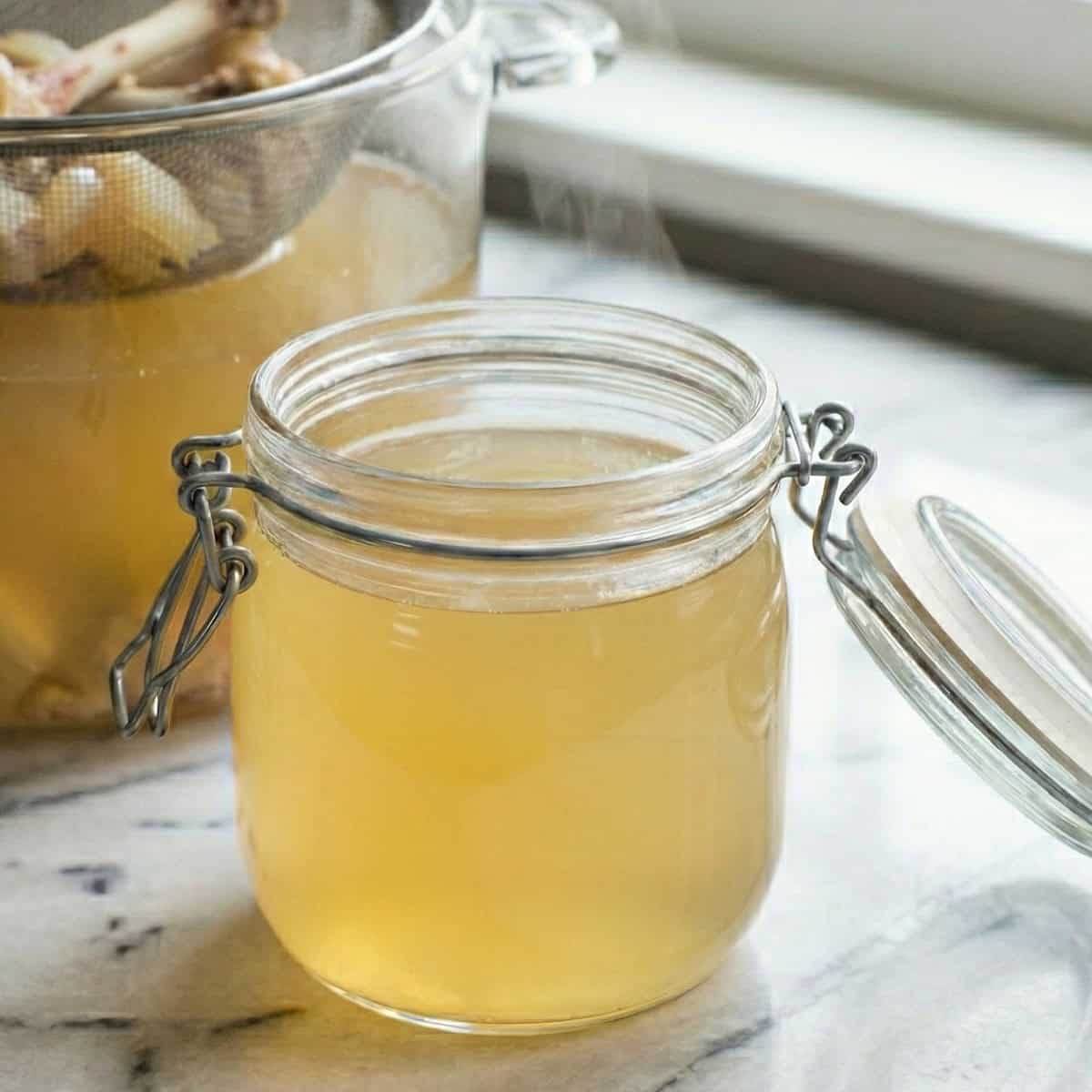
Making your own chicken stock is super easy, a great way to use up chicken bones or trimmings, much quicker than making beef stock, and far superior to stock cubes or store-bought chicken stock. It also makes the perfect flavor base for soups, stews, and sauces.
What makes this chicken stock exceptional is the "steep method." Unlike many recipes that require simmering the stock for hours, this one calls for a gentle simmer for just 1 hour, followed by steeping it as it cools. This method enhances the aroma, flavor, and gelatin extraction, resulting in a superior stock.
Once prepared, you can easily freeze the dish in portions for use in cooking French chicken fricassée or Indian chicken biryani. Additionally, if you want a simple method to make fluffy rice or enhance the flavor of couscous, try cooking it in chicken stock instead of water.
Jump to:
Why the "1-hour steep" works best
- Purity of Flavor: Long boiling destroys volatile aromatics (the things that make it taste good). Steeping preserves them.
- Clarity: Longer boling causes cloudiness. By reducing the heat and letting it sit, the extraction happens gently. Any leftover impurities settle to the bottom, and unskimmed fat rises to the top, leaving the middle crystal clear.
- Gelatin Extraction: You don't need endless boiling to melt chicken collagen into gelatin. With beef stock, it's a different story because of the denser bone and tissue. The residual heat during the 2-3 hour cooling process is sufficient to extract the necessary nutrients.
Brown vs white chicken stock
- White chicken stock - This recipe is for a classic white stock, which is neutral and perfect for risottos, soups, and creamy chicken stews like chicken fricassée.
- Brown chicken stock - Brown chicken stock is made similarly to brown beef stock. Before the bones are simmered, they are roasted and browned in the oven. It often includes tomato paste and always celery and carrots. Brown stock is used for gravies, especially good with roasted chicken or turkey, and when reduced by half, used in this fantastic chicken pie.
Bones for chicken stock
There is a lot of bad advice online telling you to avoid chicken skin or specific cuts because they are "too fatty." As a chef, I strongly disagree. Let me explain.
To make the best chicken stock possible, you need to understand what each part of the chicken contributes. My recipe uses a mix of bones, wings, and skins. Here's why:
- Wings - Wings have the highest ratio of skin and cartilage to bone. This is your source of gelatin. It gives your stock the famous "wobble" when cold and a silky mouthfeel when hot.
- Skins - Many recipes advise against using skin because it makes the stock greasy. This is a mistake. Fat carries flavor molecules that water cannot. By simmering with the skin, we get the most chickeny flavor. Because we skim excess fat and let our stock cool completely, the fat will solidify on top for easy removal later, giving us all the flavor with none of the grease. The skimmed fat is also a valuable and delicious byproduct, which you can use to stir-fry vegetables or roast potatoes, for example.
- Frames/Carcasses - These have the least flavor but provide gelatin and some meatiness if the bones aren't completely cleaned.
- Chicken feet - These are typically sold separately and add great body to chicken stock because they are rich in collagen. If you can find them, add them.
- Gizzards - These are the internal organs, and sometimes the neck is included. The gizzards are often included in whole chickens. Contrary to some beliefs, these add gaminess and a bold, rich flavor to your chicken stock. They are better added when you plan to make ramen, brown chicken stock, or a gravy for game birds like Partridge, Pheasant, or Guinea fowl. For an all-round white chicken stock, I would leave them out.
- Roasted chicken leftovers - If you don't want to waste food and get an extra meal out of roasted chicken, you can use the leftover carcass, bones, and skin, but it will lack in flavor. When going down this route, it's best to flavor the resulting stock heavily with aromatics and even a dash or two of soy sauce. It's perfect for a light noodle soup, but for rich sauces, stick to the raw wings/frames method.
Ingredients
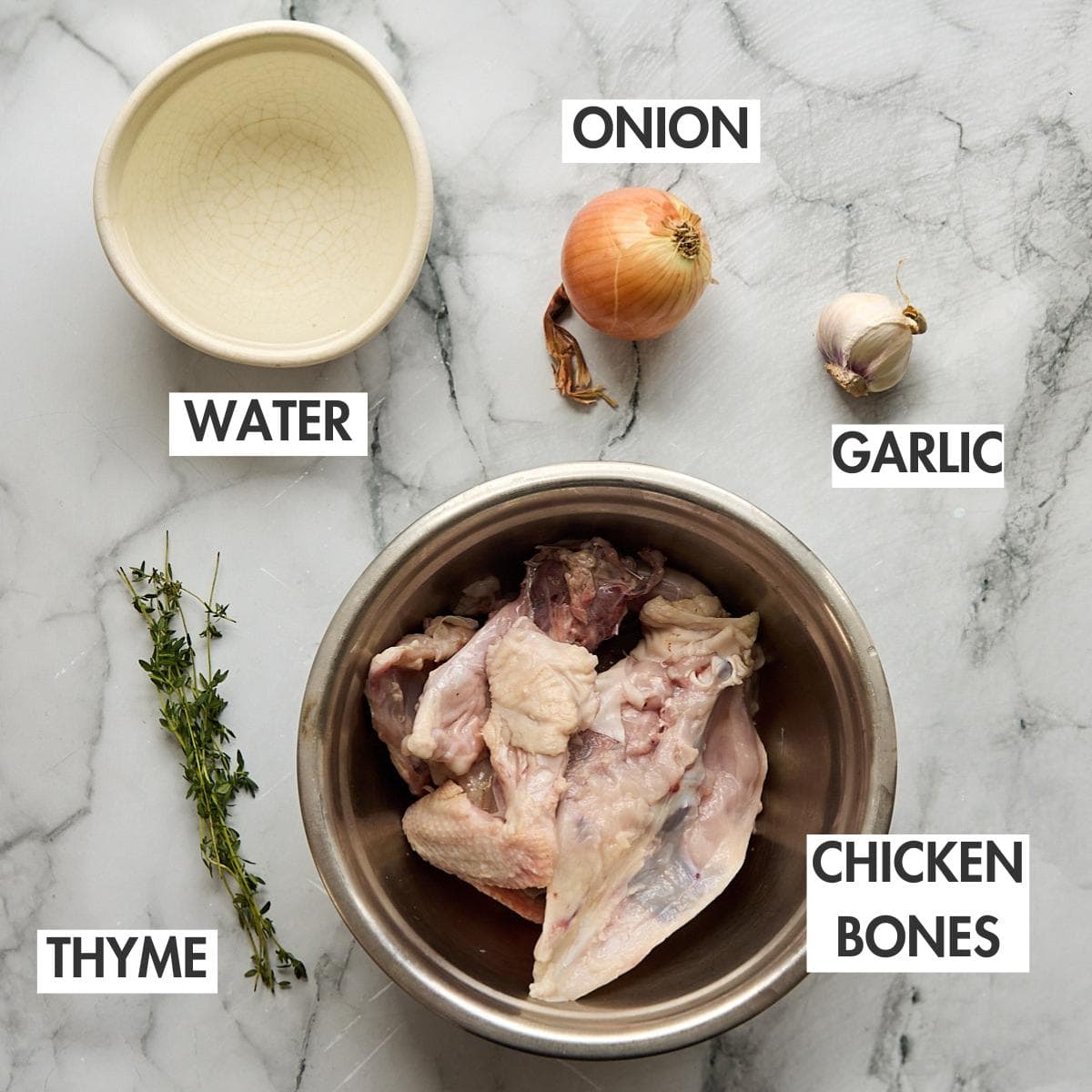
- Chicken Bones - Use wings, carcasses, necks, and skin. You need the connective tissue (collagen) to get the texture right.
- Water - At home, you'll use clean drinking water. For professionals, it's best to use another chicken stock to make what is called a double stock. More intense in flavor and higher in gelatin.
- Aromatics - Onions, garlic, thyme. Chicken and thyme are a naturally great flavor combination. Onions and garlic break down into complex, umami-rich compounds.
- Optional aromatics - Carrot, celery, peppercorns, and bay leaf. These are more common in a brown chicken stock. For an Asian style broth, ginger is often added.
See recipe card for quantities.
Instructions
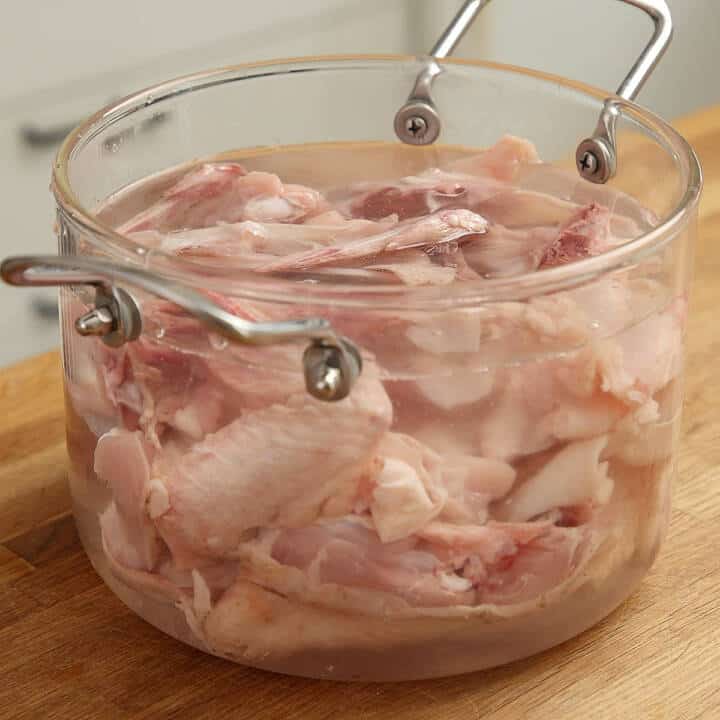
- Add the ingredients to the pot and cover with water.
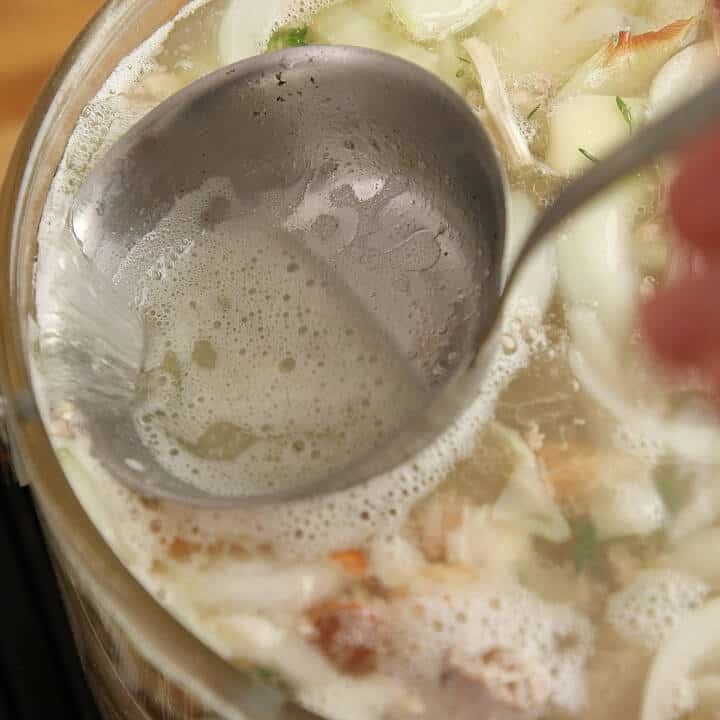
- Bring to a bare simmer and skim any fat or impurities that rise to the top.
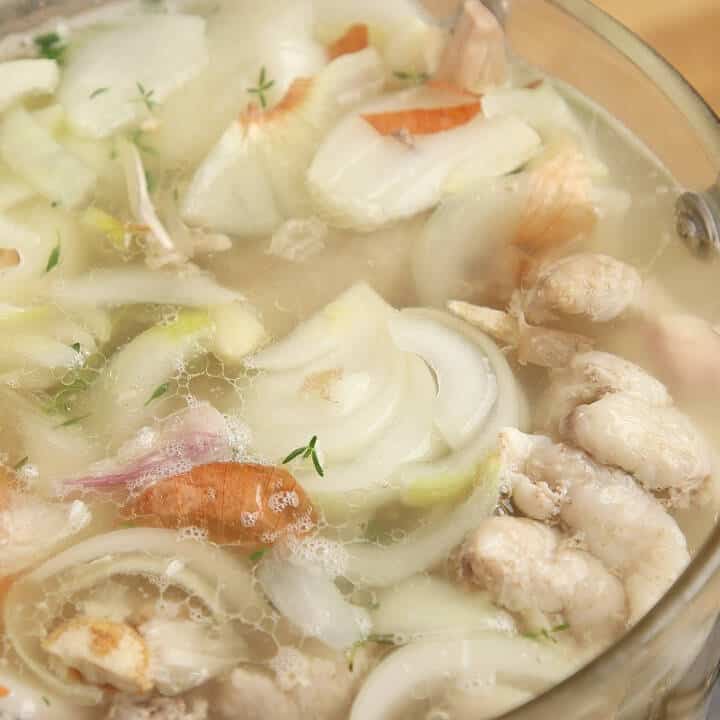
- After 1 hour, set aside to cool to room temperature, then strain through a fine mesh sieve into a suitable container, such as a Kilner jar.
Hint: Never boil the stock, as it will emulsify the fat into it, leaving it cloudy and muddying the gentle chicken flavor.
Top Tip
If you don't want to skim the stock during cooking, let it cool, then let the fat rise to the top, and skim it off once it's cool and solidified.
Why no salt?
Never salt a stock. Two reasons.
We use stock to make sauces, often reducing it by half. If you salt the stock now, your sauce will be inedible later.
By adding salt, you block the natural extraction process and end up missing some of the nutrients and flavor from the ingredients.
Storage
Keep in the fridge for up to 4 days or freeze for up to 6 months.
For convenience, freeze in large ice cube trays or lay flat in vacuum bags.
Alternative cooking methods
- Instant Pot (Pressure Cooker) - The pressure cooker is actually superior for extraction because it doesn't agitate the liquid.
- Add bones, aromatics, and water (do not fill past the max line).
- Cook on High Pressure for 40 minutes.
- Allow a Natural Release (approx 20 mins). Do not Quick Release, or the boiling action will cloud the stock.
- Slow Cooker - Add everything to the slow cooker. Cook on Low for 4 hours. Do not use High, as it can boil too vigorously and mess up the flavor and look.
Equipment
You need a stockpot to make the stock, a fine-mesh strainer to filter it, and a few glass jars for storage.
How to use chicken stock
- Chicken pie - Reduce this stock by half, and it turns into something with real body. It's exactly what I build the velouté on for a rich chicken and mushroom pie, where the concentrated stock does most of the flavor work.
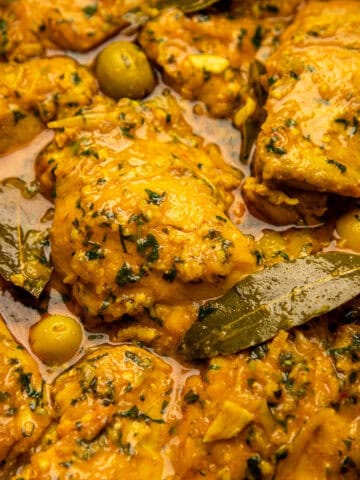
- The Ultimate White Stew: This stock is the backbone of my Chicken Fricassée. Since the sauce is essentially just stock and cream reduced down, the quality of the stock plays a big part in the quality of the dish.
- Braises and Tagines: Use it to add deep, savory notes to slow-cooked dishes like my Moroccan Lemon Chicken with Olives. The collagen in the stock helps thicken the cooking juices into a rich glaze rather than a watery sauce.
- Soups - I use chicken stock as a default for making most soups. Potato and leek soup, red lentil soup, or pumpkin soup all taste way better when you use chicken stock instead of water.
- Risotto, grains, and potatoes: Starchy grains and veggies are like sponges. If you cook them in water, they lack flavor. If you cook it in stock, it takes on all the chickeny goodness. These fondant potatoes are a perfect example of how to use chicken stock for maximum flavor.
FAQ
You boiled it too hard. Vigorous boiling emulsifies the fat into the water, turning it milky. Next time, keep the heat lower (lazy bubbles) or use the steeping method.
You likely didn't use enough collagen-rich parts. If you only use picked-clean breast frames, you won't get a gel. Add a few raw chicken wings or feet next time.
You can skim it while cooking, but it's easier to wait. Once the stock chills in the fridge, the fat solidifies into a hard white disc. You can lift it off with a spoon. Don't bin it! Use it to roast potatoes or fry veggies.
You didn't use enough flavorful parts or boiled it too vigorously. Make sure to use a combination of fatty, bony, and meaty parts to get the full flavor and never boil it.
More chicken recipes

Recipe
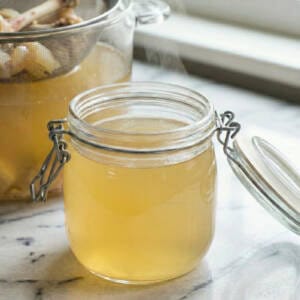
Chicken Stock
Ingredients
- 1.2 kilograms (2 ⅔ lb) chicken - carcass, wings, and skin
- 2 litres (2 litres) water
- 2 large (2 large) onions - sliced
- 1 whole head (1 whole head) garlic - cut in half
- 6 sprigs (6 sprigs) thyme
Optional extras
- 1 medium (1 medium) carrot
- 2 sticks (2 sticks) celery
- 3 grams (½ tablespoon) black peppercorns

Instructions
- Combine - Place chicken bones, onions, garlic, thyme, and cold water in a large pot.
- Skim - Bring to a boil, then immediately reduce heat to a gentle simmer. Skim off any grey foam and fat that rises to the surface.
- Simmer - Cook on very low heat (lazy bubbles) for 1 hour. During this some fat will rise to the top. Either skim it now or later once chilled.
- Steep - Turn off the heat and let the stock cool in the pot to room temperature (approx 2 hours).
- Strain - Pass through a fine sieve and discard solids.
- Store - Refrigerate. Remove the solidified fat cap once cold.
Notes
- Chicken - It's advised to use a mix of wings, carcass(bones left after removing the breasts, thighs, and wings), and trimmed fat for the best results. See the post for in-depth detail on this.
- Optional aromatics - You can optionally add carrots, celery, and peppercorns, or replace thyme with bay leaves. However, I recommend you use these when making a brown stock, which also requires roasting the bones and adding tomato paste.
- Seasoning - Do not salt the stock. This prevents complete flavor extraction and will cause overly salty sauces when reduced.
- Jelly - If you made it correctly, the stock will have a jelly consistency once chilled. This is a sign that things went well and that you have an excellent-quality stock.
- Fat - Once your stock is chilled, there might be a layer of congealed fat on top, depending on whether you skimmed it during cooking. Remove this layer with a spoon and use it for frying.
- Storage - It will last for up to 4 days in the fridge. Whenever you need some, scoop it out with a spoon and add it to your preparations. Don't worry about it looking like jelly. It will melt once heated. Freeze for more extended storage, and thaw in the fridge overnight if not using immediately.
Nutrition
This recipe, and 109 others.
Everything I actually cook, organized in one book, with the exclusives that never made the blog and an online edition that behaves with flour on your hands. No ads. $19.99, yours for life.
Get the cookbook →
Comments
No Comments