

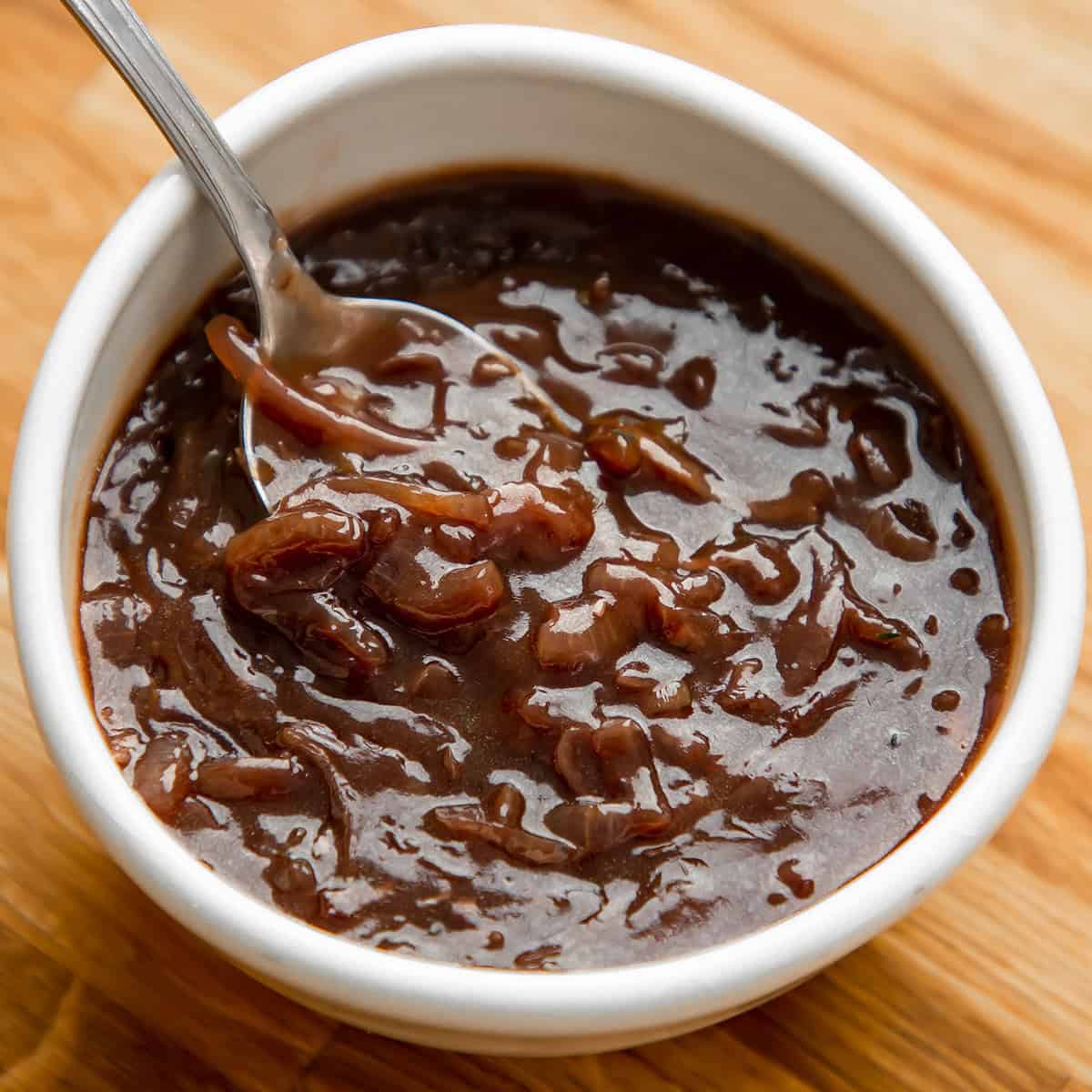
Authentic homemade onion gravy is a nostalgic staple, served with classic Sunday roast or frikkadels (South African meatballs).
While granules are often the shortcut, they lack the texture and umami flavor of a homemade gravy made with real beef stock. And no roast dinner is complete without a great onion gravy, Yorkshire puddings, and crispy roast potatoes.
Taking the extra time to make proper onion gravy can turn an average roast dinner into restaurant-quality in no time, and the best part is that you can make it in advance until needed.
Jump to:
Ingredients
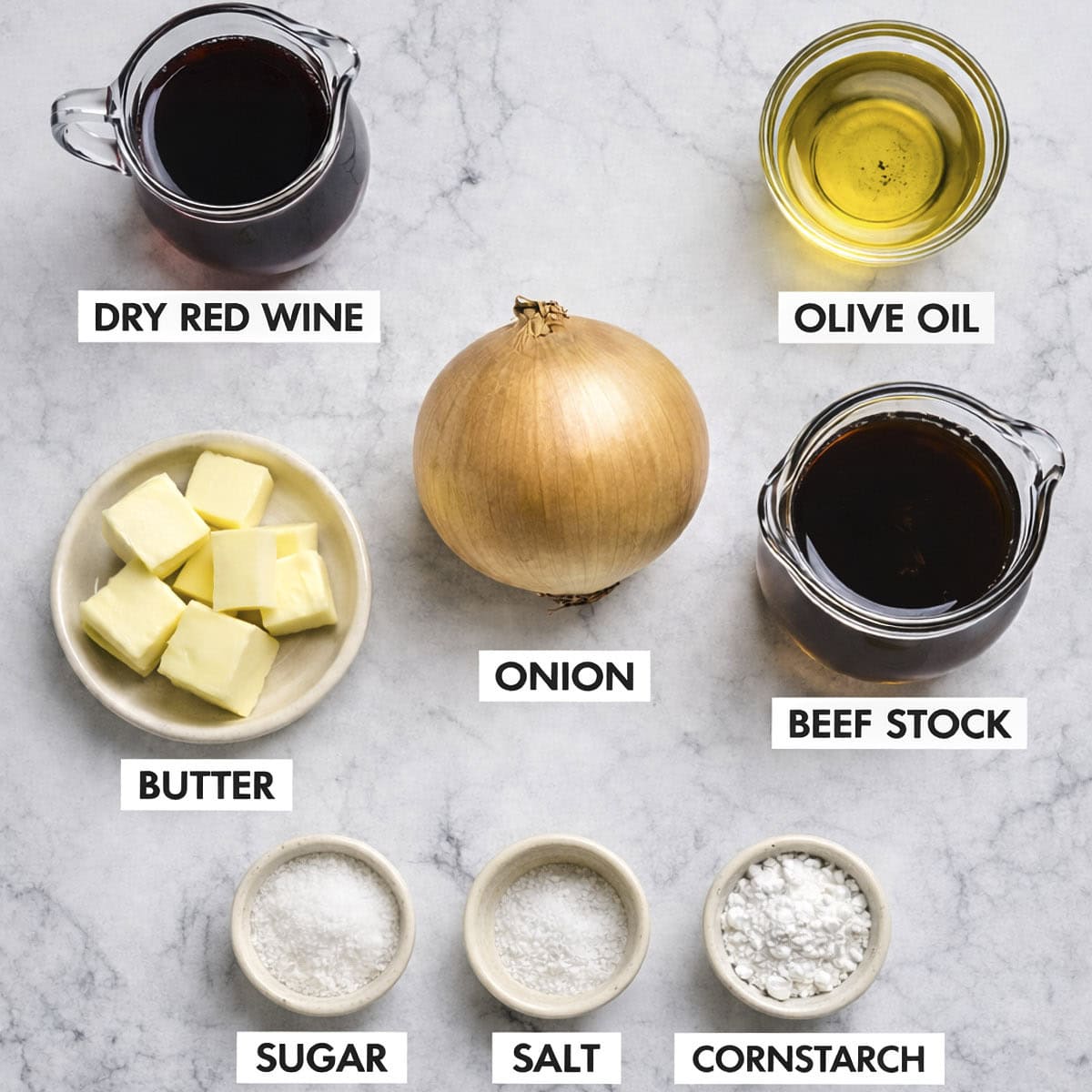
- Onion - I prefer to use a regular brown-skinned onion. You can use red onions, white-skinned onions, or shallots.
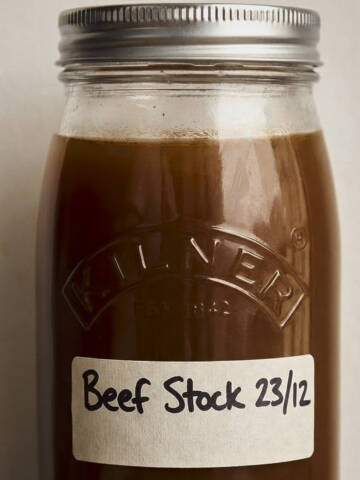
- Beef Stock - Homemade beef stock is best for control and flavor, or an unsalted store-bought brand.
- Red Wine - Dry red wine. It does not have to be expensive, but good enough to drink.
- Seasoning - Some sugar for balance and plain salt for seasoning right at the end, before serving.
- Butter - Adds restaurant-quality shine and richness to the gravy that would lack if not added.
- Thickener - Cornstarch or arrowroot works best. Avoid using flour.
See recipe card for quantities.
How to make onion gravy
Caramelizing onions
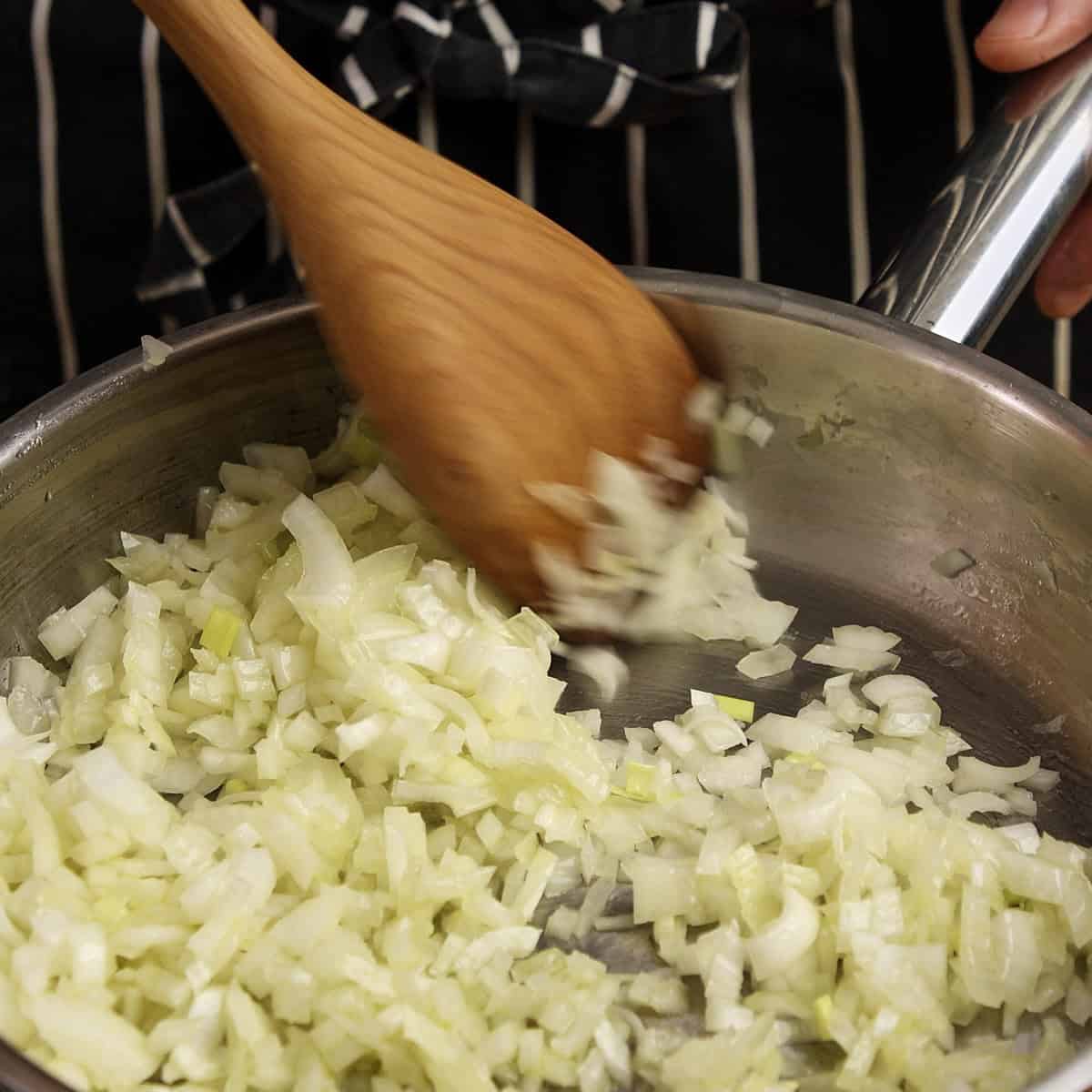
- Chop the onion and start frying it slowly in a touch of olive oil over medium heat. Do not salt them.

- Cook the onions until they start to caramelize and brown. Do not take them too far, but get some color on them.
Wine reduction
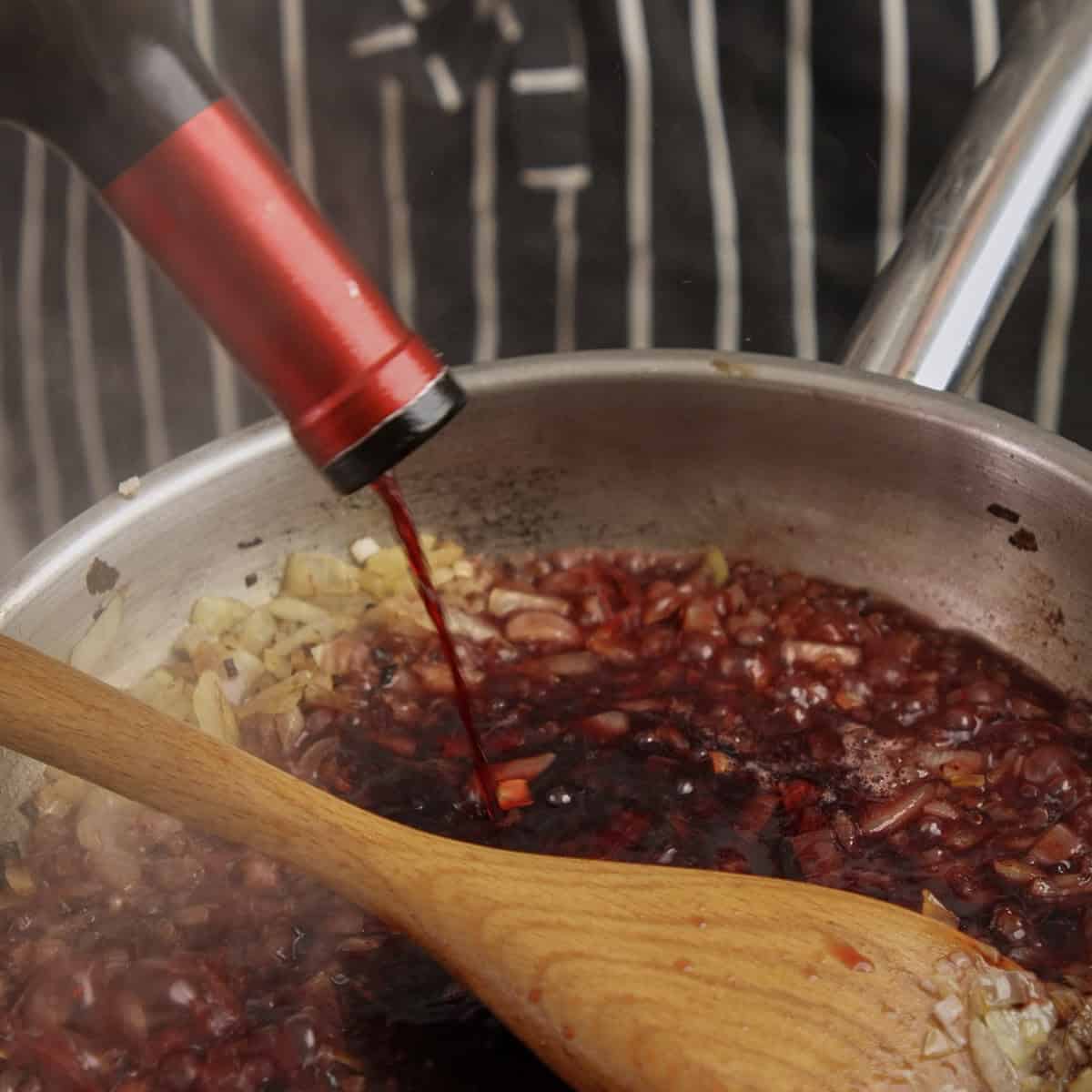
- Add dry red wine to the onions and scrape off any fond.
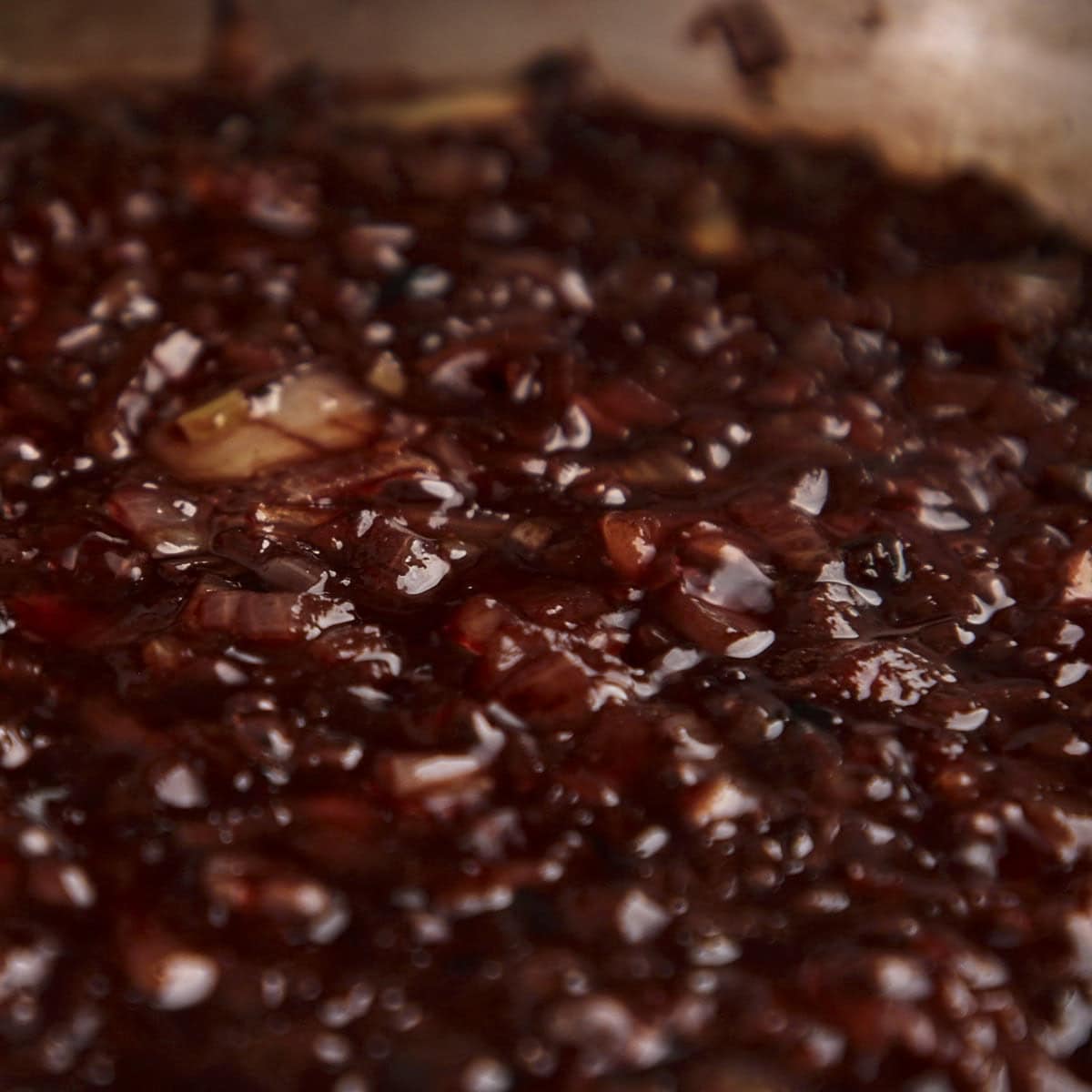
- Reduce the wine until thick, syrupy, and almost completely gone.
Beef stock and butter

- Add the beef stock to the wine reduction, and reduce it by half.
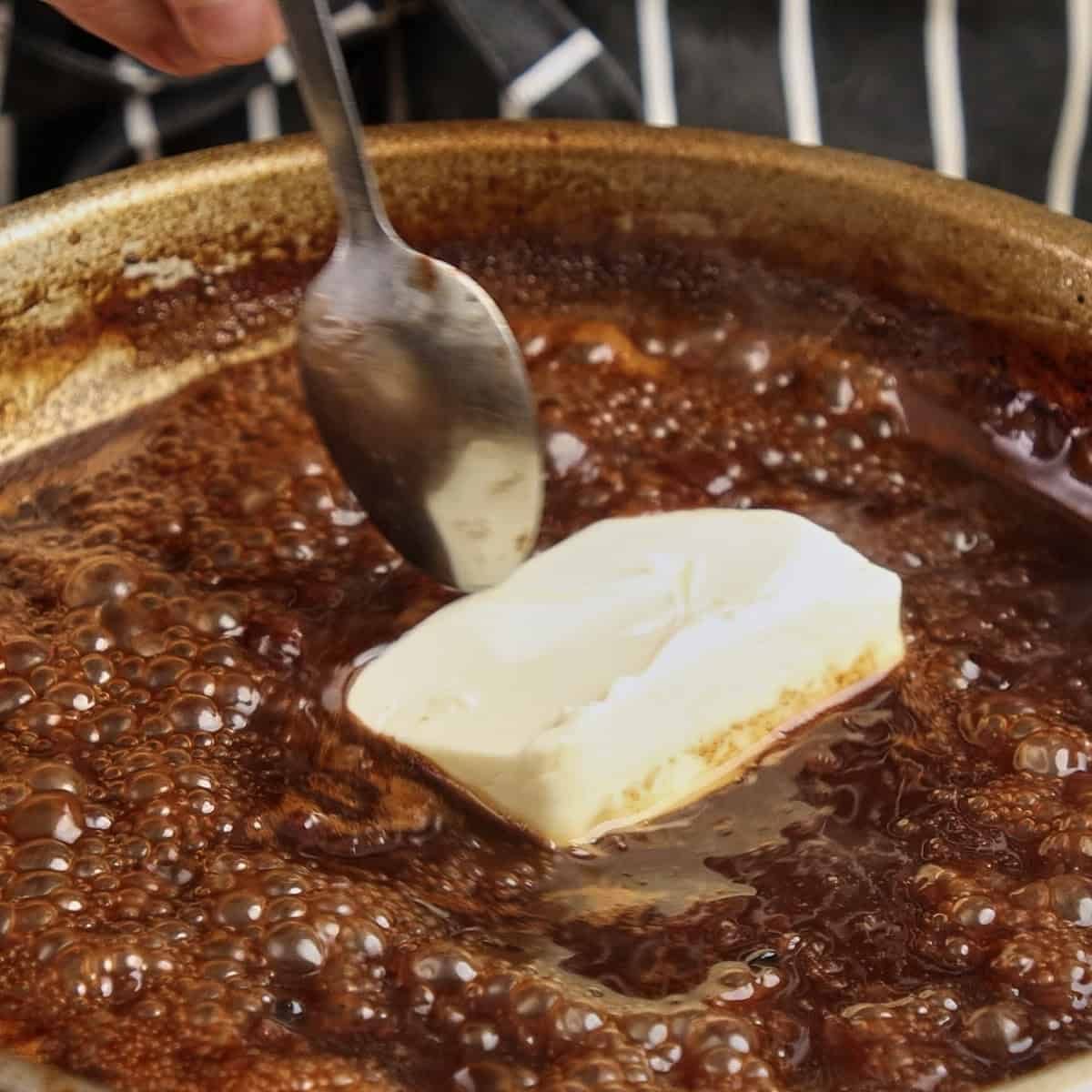
- Add the butter and whisk it into the gravy as it slowly simmers.
Thickening and seasoning
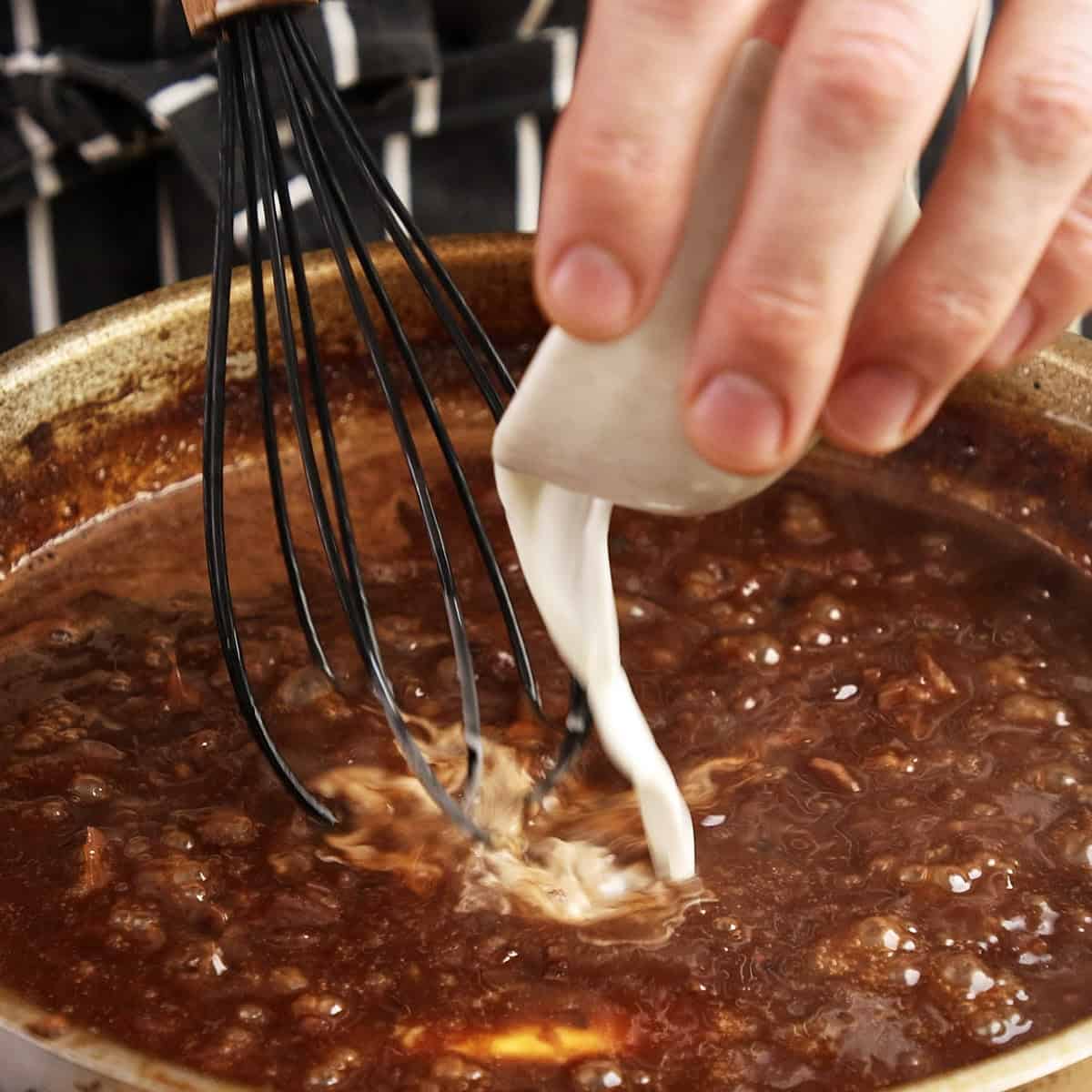
- Whisk the cornstarch slurry into the simmering gravy until it thickens.
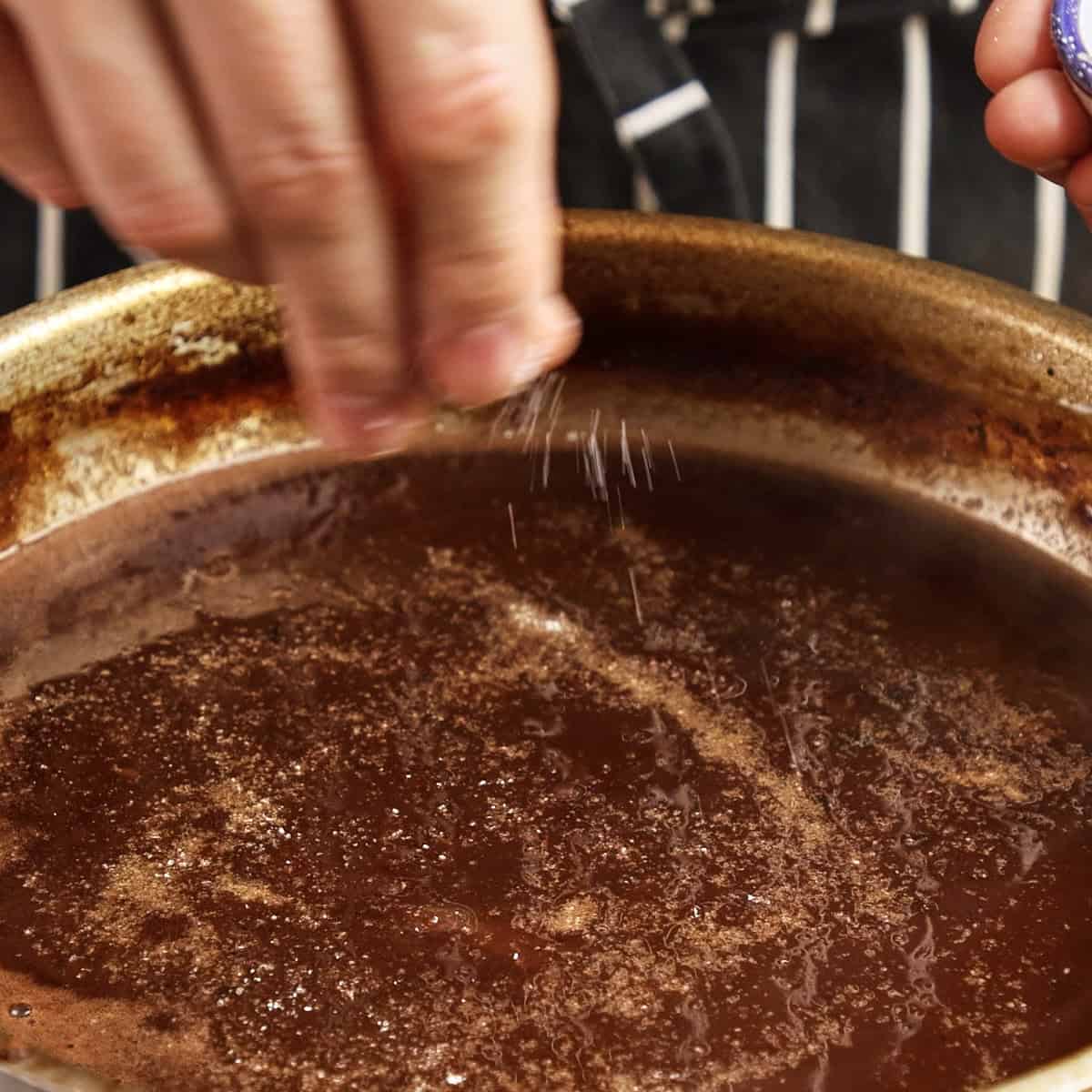
- Turn off the heat, and season the gravy with salt and sugar to balance it.
Watch how to make it
Chef Tips
- Caramelization - Do not rush the onions. Caramelize them slowly and steadily, moving around to avoid burnt spots.
- Texture - Your beef stock might lack gelatin depending on the bones used. This means you need to start with a touch more stock and reduce it a bit more. The perfect texture is when the gravy lightly coats the back of a spoon. Not too thin and not too thick.
- Seasoning - Never season the gravy before you reduce the stock. Doing so will result in oversalted, most likely inedible gravy.
Substitutions and variations
- Onion - You can substitute the brown onion for white, red, or shallots. If using leeks, use only the white parts.
- Stock - Chicken stock works well to make a lighter gravy, especially when serving onion gravy with roasted chicken or turkey.
- Without wine - If you don't consume alcohol products, replace the wine with more beef or chicken stock. For a touch of acidity, you can add a teaspoon of lemon juice or vinegar instead.
- Pan juices - Once the gravy is seasoned and ready, add the roasting juices from a roast rib or chicken for added flavor.
- Herbs - Add thyme, rosemary, or bay leaf when reducing the stock for extra flavor.
Storage and reheating
Onion gravy will keep in the fridge stored airtight for up to 4 days. For longer storage, freeze it for up to 3 months.
To reheat, gently bring to a simmer over the stove while whisking. If it thickens too much, add a splash of stock or water while heating.
FAQ
Yellow or brown onions are the most popular choice as they caramelize the best.
Avoid adding salt, and stir them often over medium heat to achieve even caramelization rather than burnt pieces.
Either you burnt the onions, or they are old. The stock can also make it bitter if it is not of good quality.
Starches like cornstarch or arrowroot mixed with water and added at the end of cooking are preferred to flour thickeners like a roux. Alternatively, you can reduce it until thickened, but it requires twice as much gelatin-rich beef stock.
If you don't want onion bits in the gravy, but still want the flavor, you can strain it through a fine-mesh sieve.
More sauces for meat
What to serve onion gravy with
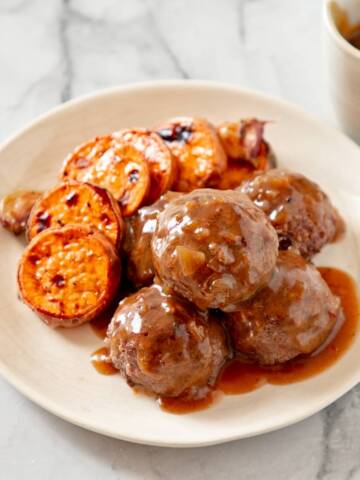

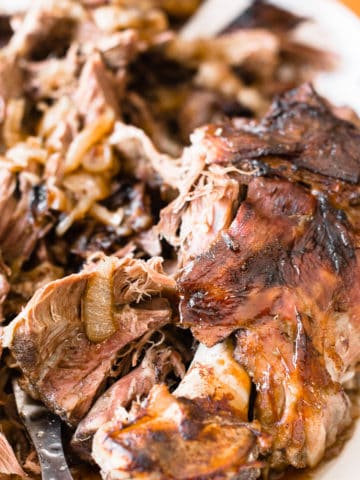
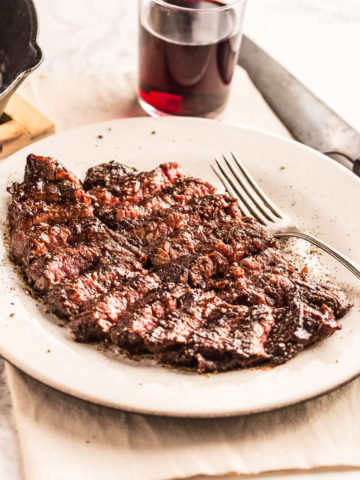
Recipe
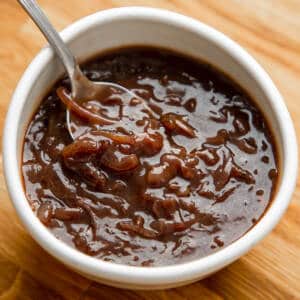
Onion Gravy
Ingredients
- 1 large (1 large) onion - finely chopped or sliced
- 20 grams (1 ½ tablespoon) olive oil - extra virgin
- 350 grams (1 ½ cups) dry red wine
- 8 grams (2 teaspoon) sugar
- 1 liter (1 liter) beef stock
- 65 grams (½ stick) butter
- 3 grams (½ teaspoon) salt
- 5 grams (2 ½ teaspoon) cornstarch - mixed with water into a slurry

Instructions
Caramelizing onions
- Chop the onion and start frying it slowly in a touch of olive oil over medium heat. Do not salt them.1 large onion
- Cook the onions until they start to caramelize and brown. Do not take them too far, but get some color on them.20 grams olive oil
Wine reduction
- Add dry red wine to the onions and scrape off any fond.350 grams dry red wine
- Reduce the wine until thick, syrupy, and almost completely gone.
Beef stock and butter
- Add the beef stock to the wine reduction, and reduce it by half.1 liter beef stock
- Add the butter and whisk it into the gravy as it slowly simmers.65 grams butter
Thickening and seasoning
- Whisk the cornstarch slurry into the simmering gravy until it thickens.5 grams cornstarch
- Turn off the heat, and season the gravy with salt and sugar to balance it.8 grams sugar, 3 grams salt
Video
Notes
- Caramelization - Do not rush the onions. Caramelize them slowly and steadily, moving around to avoid burnt spots.
- Seasoning - Never season the gravy before you reduce the stock. Doing so will result in oversalted, most likely inedible gravy.
- Onion - You can substitute the brown onion for white, red, or shallots. If using leeks, use only the white parts.
- Stock - Chicken stock works well to make a lighter gravy, especially when serving onion gravy with roasted chicken or turkey.
- Without wine - If you don't consume alcohol products, replace the wine with more beef or chicken stock. For a touch of acidity, you can add a teaspoon of lemon juice or vinegar instead.
Nutrition
This recipe, and 109 others.
Everything I actually cook, organized in one book, with the exclusives that never made the blog and an online edition that behaves with flour on your hands. No ads. $19.99, yours for life.
Get the cookbook →This site contains affiliate links. I may earn a tiny commission on qualifying purchases at no extra cost to you. By bookmarking these links you help support the upkeep of this site.
Comments
No Comments