
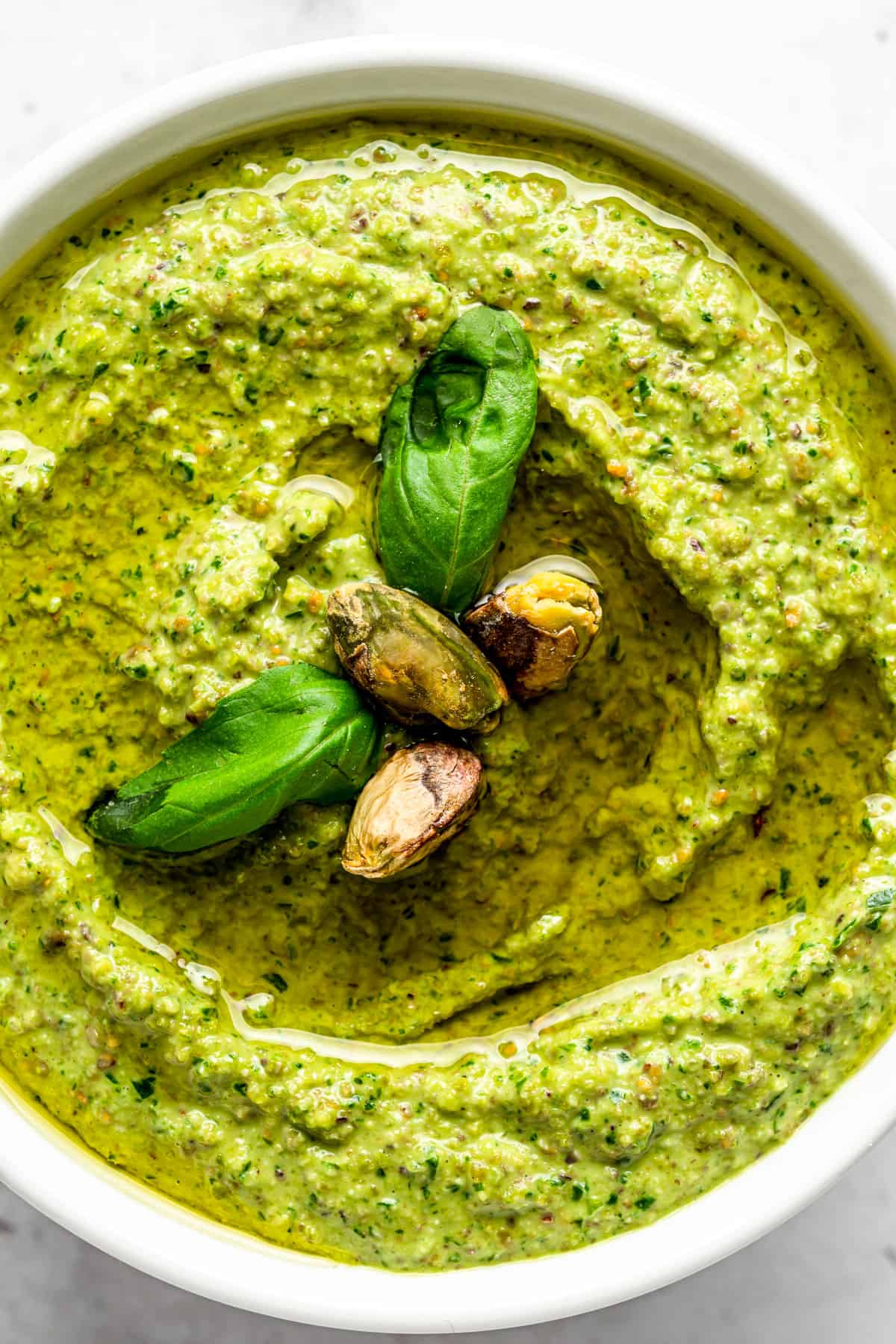
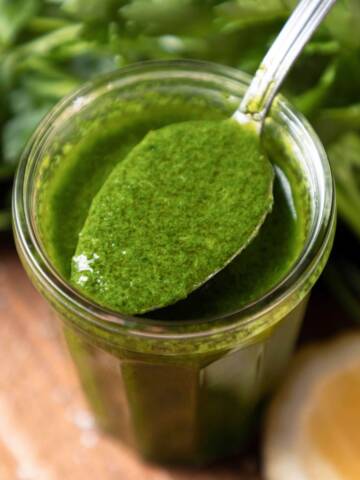
Pistachio pesto is a delicious alternative to classic basil pesto made with pine nuts. It contains all the same ingredients but uses bright green pistachios instead.
It's fantastic spread onto toasted sourdough bread like baguettes or flax seed sourdough, on fried chicken sandwiches with soft milk buns, and takes simple potato sides like creamy mashed potatoes, or crispy smashed potatoes to a whole new level.
It also makes a super useful gift and can be stored for ages in the freezer to conveniently use in a quick weeknight pasta with pistachio pesto and plenty of Parmesan. It can also be added to this tomato and mozzarella pasta for a luxurious upgrade.
Jump to:
Equipment
The quickest way to make pistachio pesto is in a small kitchen blender. Alternatively, a pestle and mortar if you want a more rustic texture. A fine Microplane grater always comes in handy for the Parmesan, but you can use pre-grated Parmesan for convenience.
Ingredients
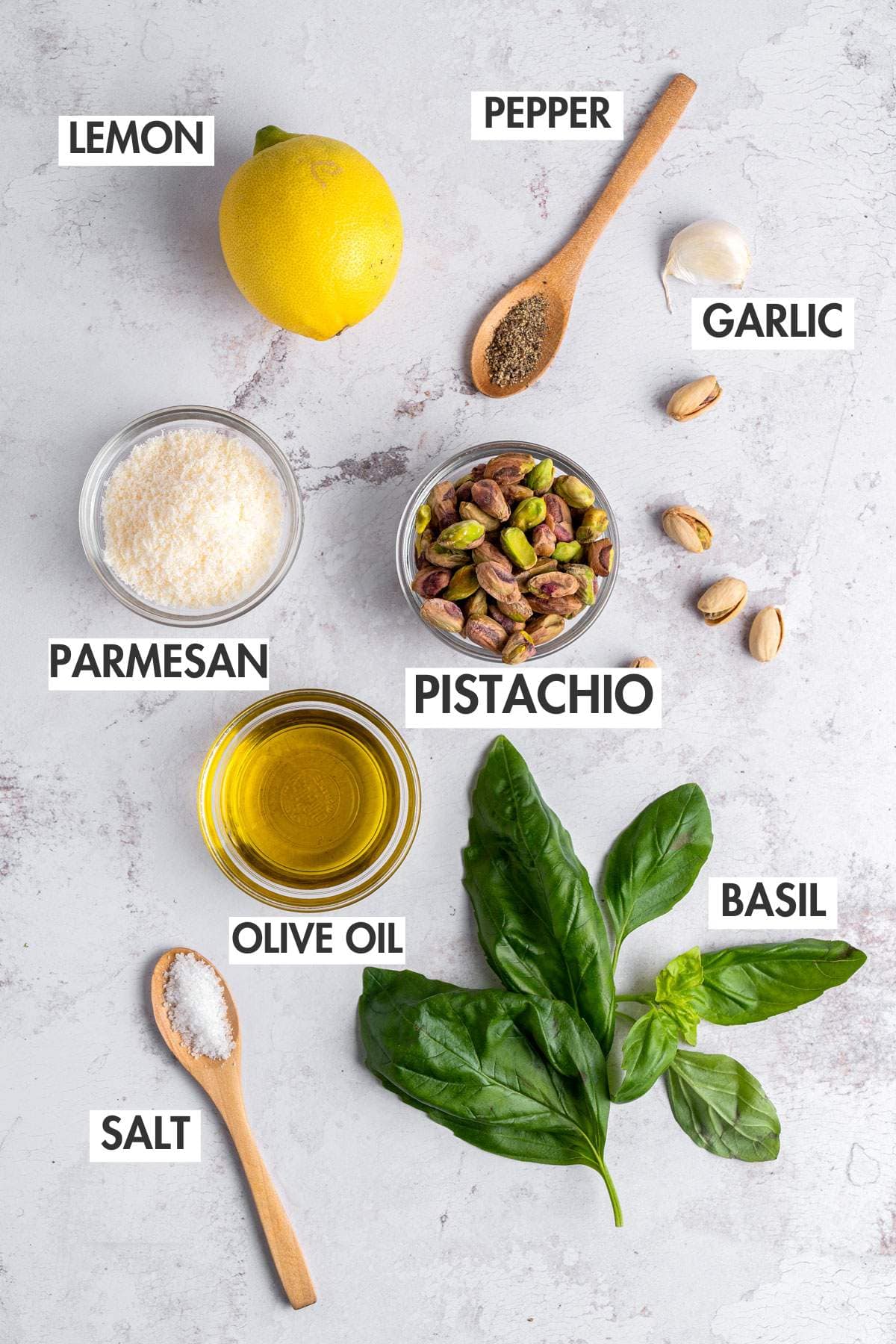
- Pistachio - I prefer using Sicilian pistachios for their bright green color and intense flavor. These are pre-roasted. It saves you the time of shelling, roasting, and cleaning them before using.
- Basil - Fresh green Italian Basil. Dried basil won't work. Thai basil has a different flavor profile.
- Lemon - Fresh unwaxed lemon for the juice as well as the zest.
- Olive oil - Use a mild extra virgin olive oil. If you find extra virgin olive oil too bitter, you can use a blend of canola oil and olive oil.
- Parmesan - Parmesan or Grana Padano both work equally well.
See recipe card for quantities.
Instructions
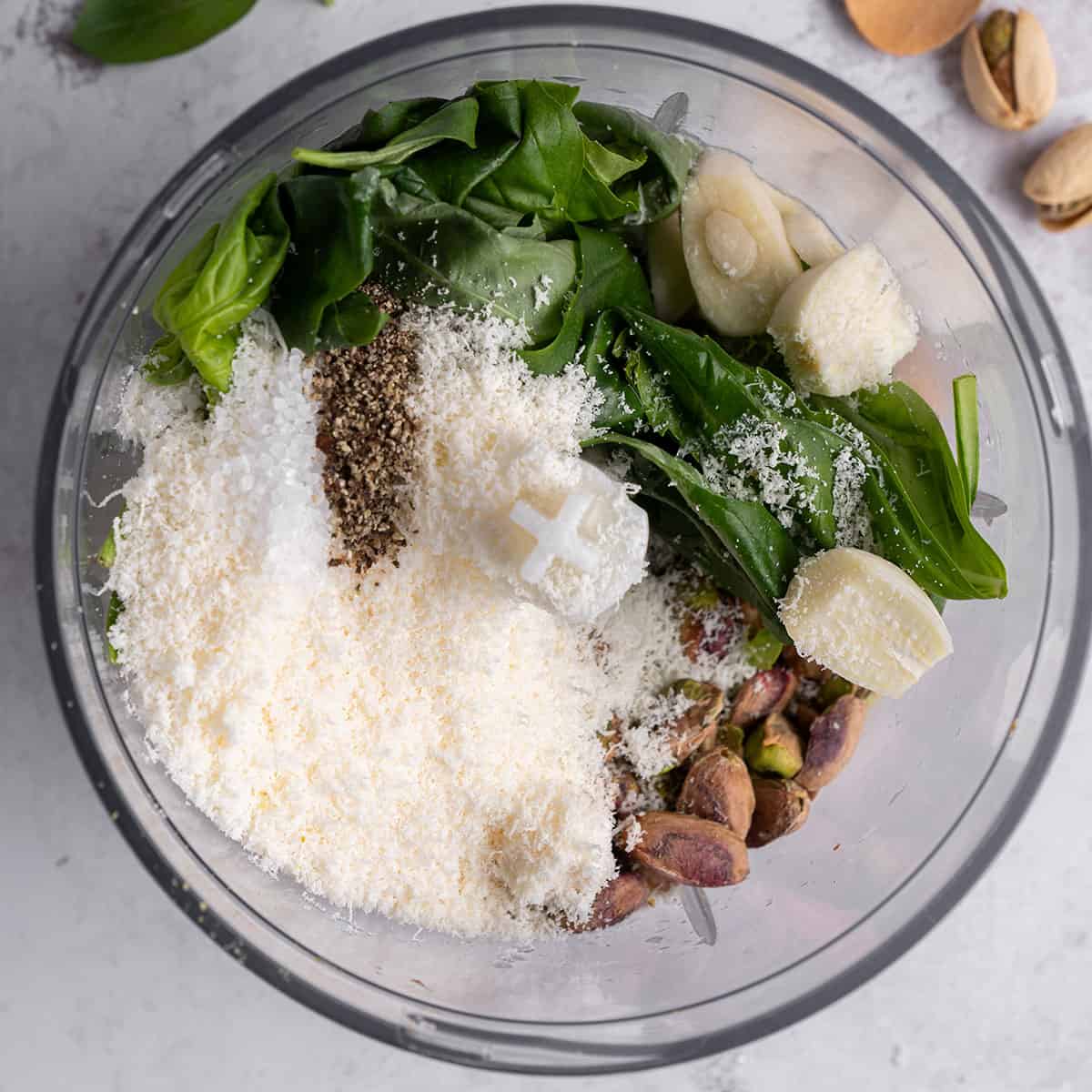
- Step 1: Combine all the dry ingredients in a blender jug or pestle and mortar.
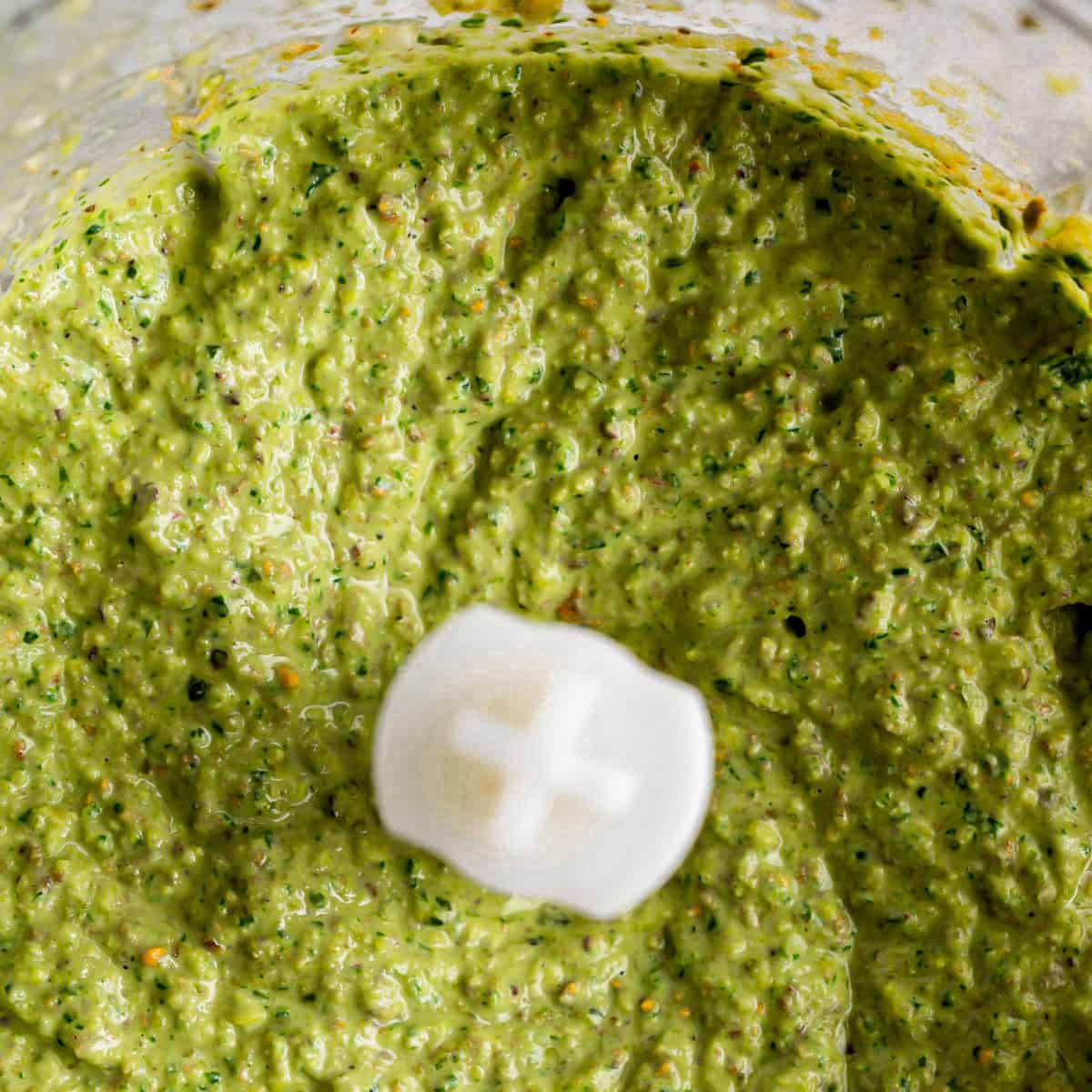
- Step 2: If using a Pestle and mortar, pound the ingredients into a paste first, then add the oil to emulsify. If using a blender, add the oil slowly until a smooth consistency is achieved.
Hint: If you don't like raw garlic, bake a whole head of garlic in the oven at 180 °C (356° F) for 20 minutes. Let it cool down, then add the soft garlic cloves. This results in a sweet, barely noticeable garlic flavor.
Top tips and troubleshooting
- Pre-roast the pistachios at 180 °C (356° F) for 10 minutes, if you are using untoasted ones. It brings out the flavor and color. Cool down completely before blending.
- For a bright green pesto, blanch the basil for 10 seconds in boiling water, then shock it in ice water. Squeeze out the extra moisture and add it to the blender.
- Use mild olive oil to avoid bitterness.
- Freeze the pesto in ice-cube trays, then pop out single portions as needed.
Substitutions and Variations
- Nuts - Swap pistachios for walnuts, pecans, almonds, or pumpkin seeds.
- Herbs - Replace half (or all) of the basil with flat-leaf parsley, baby arugula, spinach, or cilantro.
- Lemon - Use the same amount of fresh lime juice, or 1 tablespoon mild white-wine vinegar, for every ½ lemon.
- Lactose-free and vegan - Substitute 1 tablespoon nutritional yeast for each 30 g Parmesan.
- Nut allergy - Toasted sunflower or pumpkin seeds are the best replacements.
- Truffle - Stir in ½ teaspoon black-truffle paste or drizzle 1 teaspoon truffle oil after blending. Works especially well with grilled ribeye steak or pasta.
- Spicy - Blend in ¼ teaspoon Calabrian chili flakes or one seeded jalapeño to add gentle heat.
Storage and freezing
- Fridge (≤ 4 °C / 40 °F) - Spoon pesto into a small jar, level the surface, seal with a 2 mm (¹⁄₁₆ in) film of olive oil, and use within 5 days for best color and flavor.
- Freezer (−18 °C / 0 °F) - Portion pesto into silicone ice-cube trays, freeze solid, then transfer cubes to a labelled bag; they hold quality for 3 months.
Ways to use pistachio pesto
- Pasta or gnocchi sauce - Stir 2 tablespoon pesto into hot orecchiette, strozzapreti, or potato gnocchi; thin with pasta water for a glossy finish.
- Pizza or focaccia base - Swap tomato sauce for a thin pesto layer, then top with mozzarella and roast vegetables.
- With veggies- Drizzle on roasted zucchini, asparagus, or sweet potatoes.
- Salad dressing - Whisk 1 part pesto with 1 part olive oil and a splash of vinegar for a five-second vinaigrette.
Related recipes
If you found this post helpful or have learned something, please comment, subscribe, and follow me on social media for more delicious recipes.
Recipe
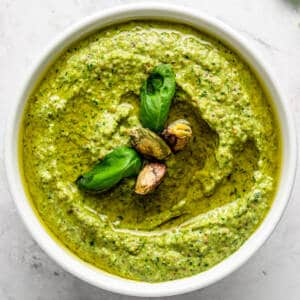
Pistachio Pesto Recipe
Ingredients
- 135 grams (1 cups) pistachios - shelled
- 50 grams (2 cups) Fresh basil leaves - picked from the stalks
- 100 grams (½ cups) Extra-virgin olive oil
- 50 grams (½ cups) Parmesan - finely grated
- 5 grams (1 clove) Garlic
- 15 grams (1 tablespoon) Lemon juice - ½ lemon 1 Tbsp
- Salt and black pepper
- 30 grams (2 tablespoon) water or extra oil for thinning - optional

Instructions
- Load the bowl: Add pistachios, basil, Parmesan, garlic, lemon zest, and salt to a food-processor bowl (or a large mortar).
- Make the paste: Mortar: pound to a coarse paste, then work in the olive oil until glossy. Processor: run on low and drizzle in the olive oil until the pesto turns smooth, pausing once to scrape the sides.
Notes
- Pistachios - Start with raw, unsalted kernels. For a deeper, toasted flavor, bake 8-10 min at 175 °C / 350 °F until fragrant, then cool before blitzing.
- Basil - Weigh leaves after removing thick stems and spin-dry well; surface water thins the sauce.
- Cheese - Parmigiano Reggiano aged ≥ 24 months gives the best flavor. Pecorino works if you like a sharper edge.
- Olive oil - Choose a mild, fruity oil; very peppery oils can be too bitter.
- Consistency tweaks - For pasta, whisk in 15-30 ml / 1-2 Tbsp cold water to loosen. Keep it thick for spreads or as a dip with crudités.
- Processor vs. mortar - A mortar delivers a rustic, chunkier pesto; the food processor is faster and yields a smoother sauce.
- Salt timing - Blend first, then taste; pistachios and cheese both contain natural salt, so you may need less than expected.
- Fridge storage - Pack into a small jar, level the top, and cover with a 2 mm / ¹⁄₁₆ in olive-oil seal. Store at ≤ 4 °C / 40 °F and use within 3 days for peak color and flavor. Some cooks report acceptable quality up to a week if the oil film stays intact.
- Freezer storage - Portion into silicone ice-cube trays, freeze solid, then bag the cubes. Quality holds for about 3 months at −18 °C / 0 °F. Thaw overnight in the fridge, or melt a cube straight into hot food.
- Yield & scaling - This batch makes roughly 250 g / 1 cup-enough for 4 servings of pasta. Double or triple the recipe by maintaining the same ratios.
Nutrition
This recipe, and 109 others.
Everything I actually cook, organized in one book, with the exclusives that never made the blog and an online edition that behaves with flour on your hands. No ads. $19.99, yours for life.
Get the cookbook →This site contains affiliate links. I may earn a tiny commission on qualifying purchases at no extra cost to you. By bookmarking these links you help support the upkeep of this site.
Comments
No Comments