

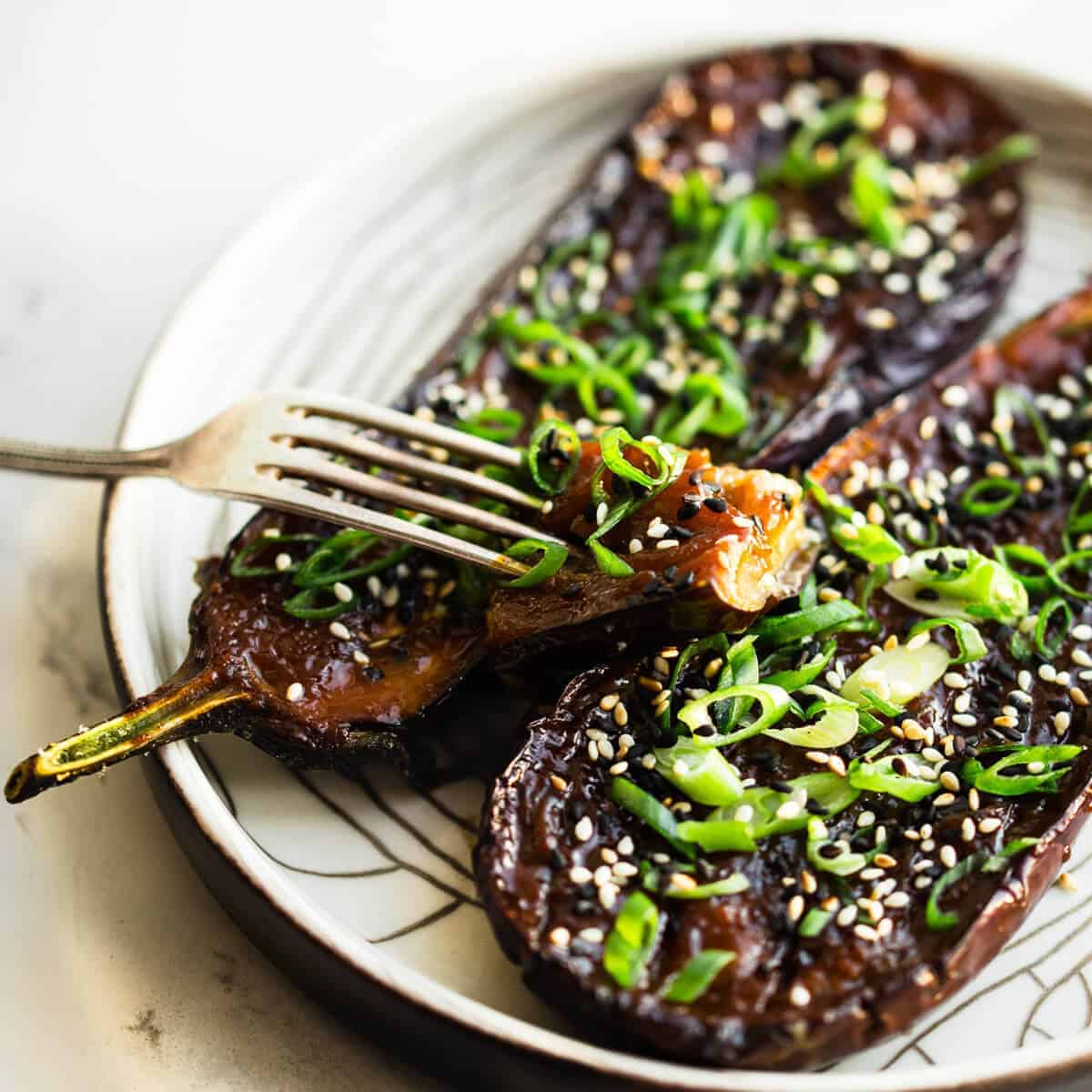
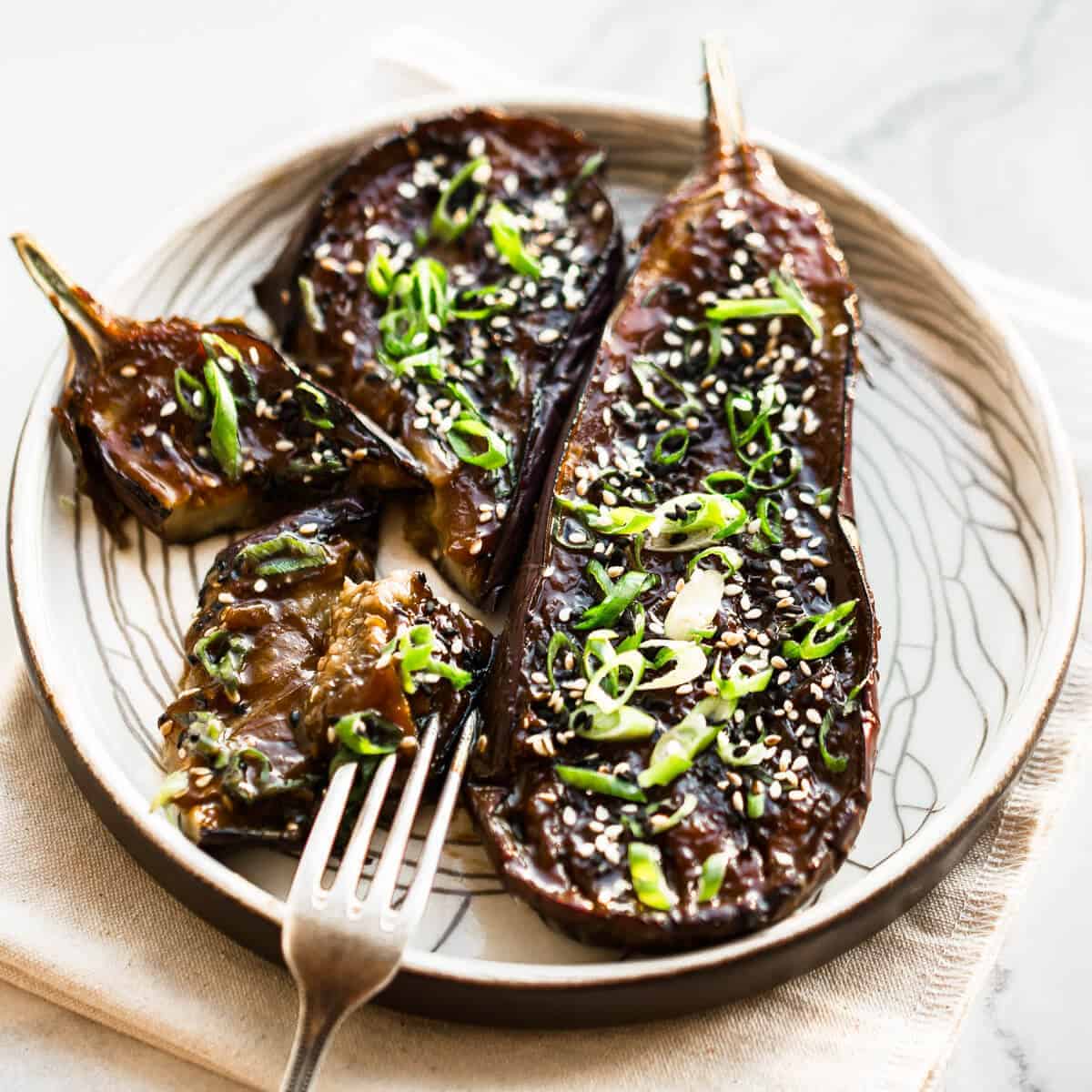
Stop eating mushy, bitter eggplant. If you tasted this dish blindfolded, you would have a hard time guessing it's a 100% vegan vegetable side. That's how extremely rich, savory, and intensely delicious traditional Nasu Dengaku is.
In this recipe, the eggplant becomes perfectly soft and creamy, topped with a Classic Japanese sweet miso glaze that bubbles into a sticky, salty-sweet crust in the oven. It is the exact same umami flavor profile that made Nobu restaurant famous, right in your home kitchen.
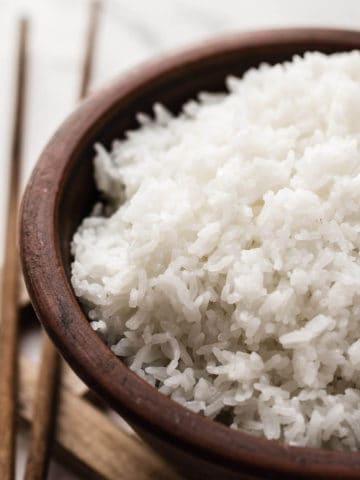
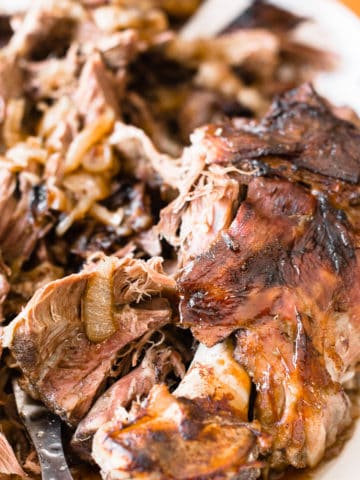
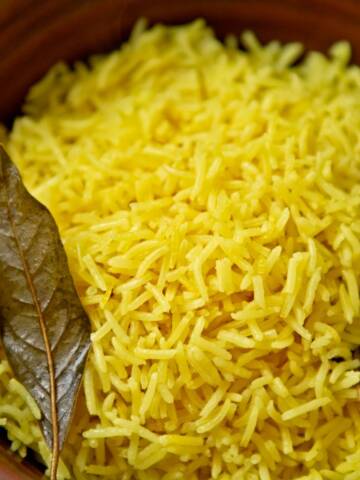
It is the perfect pairing with teriyaki-glazed pork fillet, or simply a show-stopping appetizer on its own, served with fluffy rice.
Quick Prep Stats
- Yield: 4 Portions (Appetizer or Side)
- Dietary: 100% Vegan & Dairy-Free
- Active Hands-on Time: 10 Minutes
- Total Time: 25 Minutes
- Difficulty: 2/10 (Beginner Friendly)
Jump to:
What is Nasu Dengaku?
Nasu is Japanese for eggplant. Dengaku refers to the traditional cooking method of slowly glazing food with miso while roasting, broiling, or grilling it. Translated, Nasu Dengaku simply means "glazed eggplant."
Some people might recognize this flavor as "den miso," which was made wildly popular in the West by Chef Nobu Matsuhisa. He uses this exact style of sweet, fermented soybean glaze on his world-famous roasted black cod.
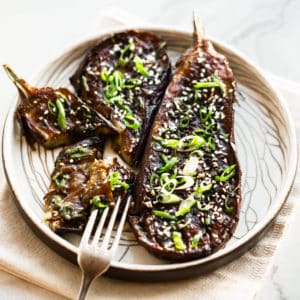
Once roasted and glazed, the eggplant transforms. It becomes soft all the way through, with a sticky, caramelized surface that tastes deeply nutty, salty, and sweet.
Why most homemade eggplant fails (and how we fix it)
If you've ever cooked eggplant at home and ended up with a rubbery, watery, or oil-soaked mess, it is not your fault. Eggplant acts like a sponge. To get a restaurant-quality result, we use three specific techniques:
- The "Stable Base" Trim: We slice a tiny sliver off the rounded bottom of the eggplant. This stops it from wobbling on the tray, preventing your precious miso glaze from sliding off into the pan.
- The Cross-Hatch Score: Scoring the flesh 2mm deep allows the intense heat to penetrate quickly, cooking the inside into a creamy puree without burning the outside.
- The Pre-Sear: We pan-fry the eggplant before baking it. This seals the surface and jumpstarts the cooking process, ensuring the eggplant doesn't just boil in its own juices.
Ingredients
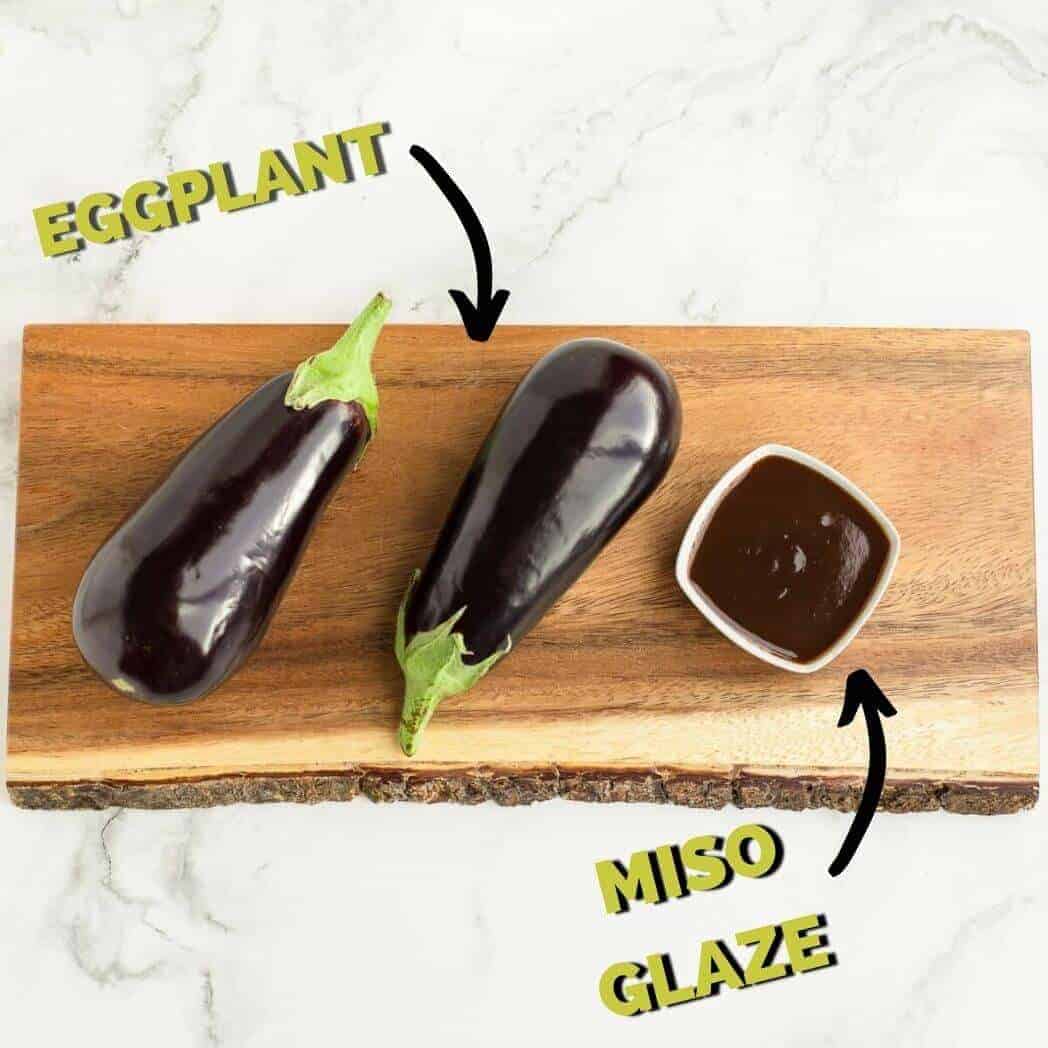
- Eggplant - You can get any eggplant you like, but pick ones that are firm, not oversized for their kind, and not bruised. Oversized eggplant will be watery, and when you glaze it, the water will dilute the glaze and make it hard to caramelize. Not to mention the texture will be mushy too.
- Den miso glaze - I don't know if any stores stock this ready-made, but it's easy to make, and all you will need for that is miso paste, sake or white wine if you can't get hold of sake, mirin or sweet white wine if you can't find that, and sugar. Those ingredients are easily found in most stores.
- Scallions/spring onion (optional) - This is basically a little finishing touch. Totally optional, but the gentle onion taste goes extremely well with the sweet, rich savouriness of the caramelized eggplant.
- Toasted sesame seeds(optional) - Adds an extra layer of flavor and texture to something already perfect. Why not make it double perfect?
Step 1: Make the Sweet Miso Glaze
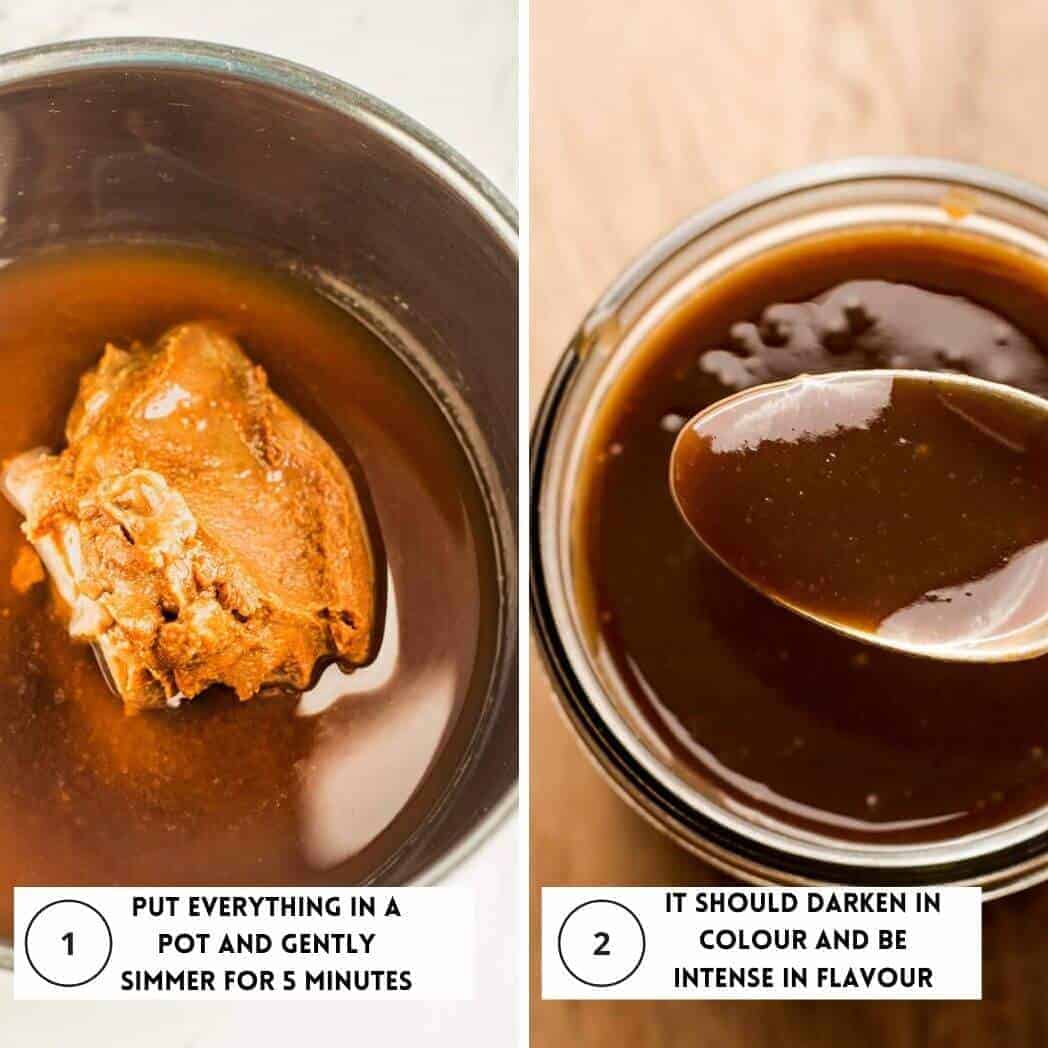
Combine your Sake (50g), Mirin (50g), White Miso (150g), and Brown Sugar (75g) in a small saucepan. Place it over medium-low heat and whisk gently for 5 to 10 minutes until the sugar dissolves and the sauce slightly thickens. Set it aside.
Step 2: Score, Sear, and Broil
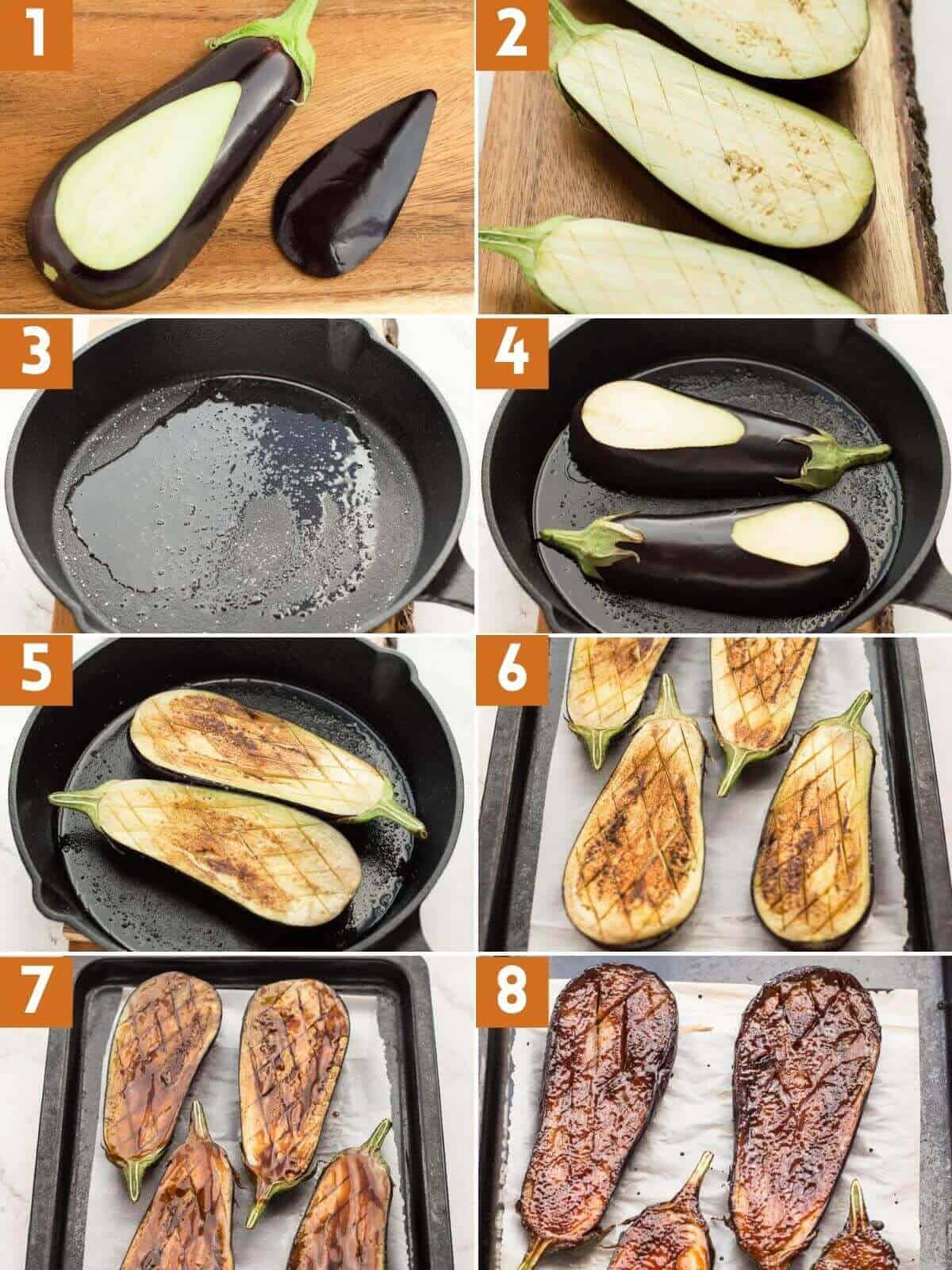
- Prep and Score: Cut the eggplant in half lengthwise. Slice a tiny, flat piece off the rounded bottom so it sits completely flat. Using a sharp knife, score the flesh in a criss-cross diamond pattern (about 2mm deep). Do not cut through the skin.
- The Pre-Sear: Heat a splash of neutral oil in a large frying pan over medium-high heat. Fry the eggplant halves, flesh-side down, until beautifully browned (about 3-4 minutes).
- The First Glaze: Transfer the seared eggplant to a baking tray, flesh-side up. Generously brush a thick layer of your miso glaze over the top.
- Bake / Broil (Watch closely!): Place the tray under a low broiler (or in a 200°C/392°F oven). Cook until the eggplant is completely tender. Pro Tip: Re-glaze the eggplant every 3 to 5 minutes during the bake. This builds layers of sticky caramelization instead of just burning a single layer of sugar.
- Garnish: Once bubbly and charred on the edges, remove from the oven. Top with sliced scallions and toasted sesame seeds. Serve immediately!
Watch how to make it
Variations
This recipe is a classic in Japanese cuisine. If you change it, it's another dish altogether, but a few things are set in stone, and eggplant is a versatile vegetable to cook with. So, let's look at how you can change things up a bit.
- Different Glazes: Don't have miso? Swap it out for a Western variation with homemade BBQ sauce, Teriyaki sauce, or Unagi sauce.
- The Skewer Method: Cut the eggplant into smaller, bite-sized cubes. Skewer them on metal skewers, grill them over charcoal, and brush them with glaze as they cook for an authentic street-food vibe.
- Toppings - Replace the scallions with chives or other herbs, such as chopped cilantro. The sesame can be replaced with crispy fried shallots, roasted crushed peanuts, or even dukkah.
What to serve with Nasu Dengaku
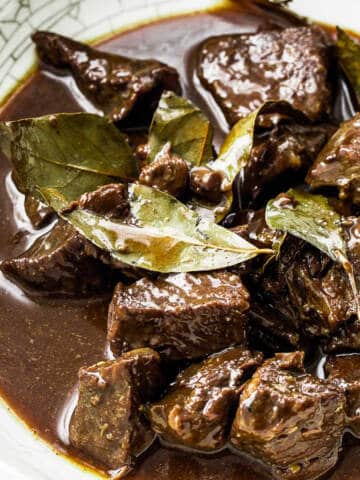
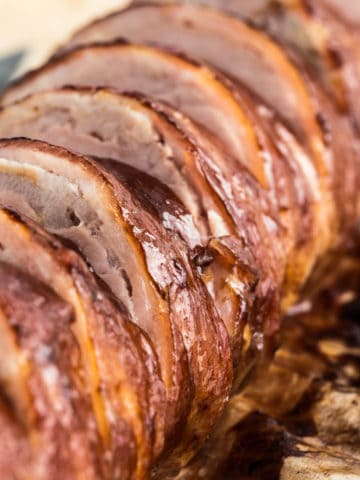
The intense, salty-sweet profile of miso eggplant demands balance. It pairs perfectly with simple grains and savory meats.
FAQ
Yes! The skin of the eggplant becomes completely soft and edible during roasting. It also helps the eggplant hold its shape so it doesn't fall apart on the plate.
If you cannot find sake, you can substitute it with dry white wine or even water mixed with a splash of rice vinegar. If you don't have mirin, use a sweet white wine or simply add a little extra sugar to the glaze.
Undercooking. Eggplant must be cooked completely through until the flesh collapses into a creamy texture. If your glaze is burning before the eggplant is tender, move the tray lower in the oven or reduce the heat.
Other recipes you might like
If you like Asian flavors, you will find the following recipes useful:



If you found this post helpful or have learned something, please comment, subscribe, and follow me on social media for more delicious recipes.
Recipe
Japanese Sweet Miso Baked Eggplant - Nasu Dengaku
Ingredients
For the den miso glaze
- 50 g (3 ⅓ tablespoon) sake or white wine
- 50 g (3 ⅓ tablespoon) mirin or sweet white wine
- 150 g (½ cups) white miso paste(Shiro miso)
- 75 g (⅓ cups) brown sugar
For the eggplant
- 2 (2) eggplants
- oil for frying
- few scallions
- few pinches of toasted sesame seeds

Instructions
Make the Glaze
- Simmer: In a small saucepan, combine the miso paste, brown sugar, sake, and mirin. Whisk over medium-low heat for 5 to 10 minutes until the sugar is completely dissolved and the glaze is smooth and slightly thickened. Set aside.
Prep the Eggplant
- Slice & Trim: Cut the eggplants in half lengthwise. Slice a very thin, flat piece off the rounded skin side (the bottom) of each half so they sit completely flat on a tray without wobbling.
- Score: Using a sharp knife, score the flesh in a criss-cross diamond pattern, cutting about 2mm (⅛ inch) deep. Crucial: Do not cut all the way through the skin!
Sear & Glaze
- Preheat: Preheat your oven to 200°C (392°F) or preheat your broiler to low. Line a baking sheet with foil or parchment paper.
- Pan-Sear: Heat the oil in a large frying pan over medium-high heat. Place the eggplant halves flesh-side down in the hot oil. Sear for 3-4 minutes until beautifully golden brown.
- First Glaze: Transfer the seared eggplant halves to your prepared baking tray, flesh-side up. Brush a generous, thick layer of the sweet miso glaze over the top of each half.
- Bake & Caramelize: Bake in the oven for 15-20 minutes, or place under the low broiler. The Trick: Brush the eggplant with another layer of glaze every 5 minutes. The dish is ready when a knife pierces the flesh with zero resistance, and the glaze is bubbling, sticky, and slightly charred at the edges.
- Garnish: Remove from the oven. Sprinkle immediately with sliced scallions and toasted sesame seeds. Serve hot!
Video
Notes
- The Pre-Sear is Mandatory: Don't skip pan-frying the eggplant! Eggplants act like sponges. Searing the flesh-side down jumpstarts the cooking process, creates a barrier, and prevents them from just boiling in their own juices in the oven.
- Make-Ahead & Storage: The miso glaze can be made up to 2 weeks in advance and stored in an airtight jar in the fridge. Leftover cooked eggplant will keep for 3 days in the fridge and reheats beautifully in the microwave or a hot oven.
- Ingredient Substitutions: If you cannot find Sake, use a dry white wine or water mixed with a tiny splash of rice vinegar. If you don't have Mirin, use a sweet white dessert wine or simply add an extra tablespoon of sugar to the glaze.
- BBQ Grill Method: To cook on a barbecue, sear the scored flesh side on the hot grates first. Flip them over, move to indirect heat, apply the glaze, and cover the grill. Brush with more glaze every few minutes until the glaze is soft and caramelized.
Nutrition
This recipe, and 109 others.
Everything I actually cook, organized in one book, with the exclusives that never made the blog and an online edition that behaves with flour on your hands. No ads. $19.99, yours for life.
Get the cookbook →This site contains affiliate links. I may earn a tiny commission on qualifying purchases at no extra cost to you. By bookmarking these links you help support the upkeep of this site.



Kim Archer says
Delicious miso eggplant. Just like I had in little Japanese restaurant in Tokyo! Now I can make it at home no problem