

Kecap manis is extremely easy to make, and once you've made this simple and versatile Indonesian sweet soy sauce, you will never have to buy another bottle of below-par ABC kecap manis ever again.
Jump to:
What is kecap manis?
Kecap manis is the most widely used soy-based sauce in Indonesian cuisine.
Proper kecap manis is usually small batches, and producers take great pride and care in making this sweet, salty, rich, and molasses-like condiment.
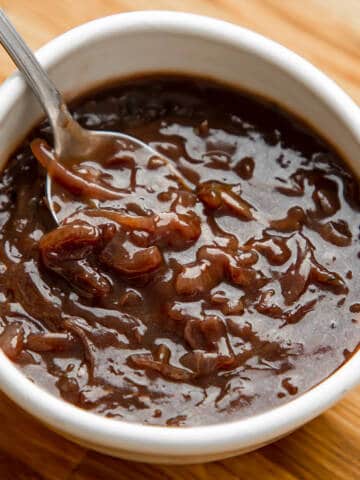
Unlike plain soy sauce, kecap manis has a thick, syrupy consistency. This is because it's traditionally made by cooking down palm sugar and soy sauce together over low heat until thickened.
Why make your own?
It's extremely simple and rewarding to make your kecap manis from scratch.
Not only will it taste much better than mass-produced, store-bought versions, but you will also save a ton of money by not buying something overpriced.
Kecap manis can be extremely hard to come by in some parts of the world, including many European countries and large parts of America.
By making your own, you will be able to use it freely in any recipe that calls for it. Like my chocolate bbq sauce or a classic Indonesian dishes like nasi goreng.
How does it taste
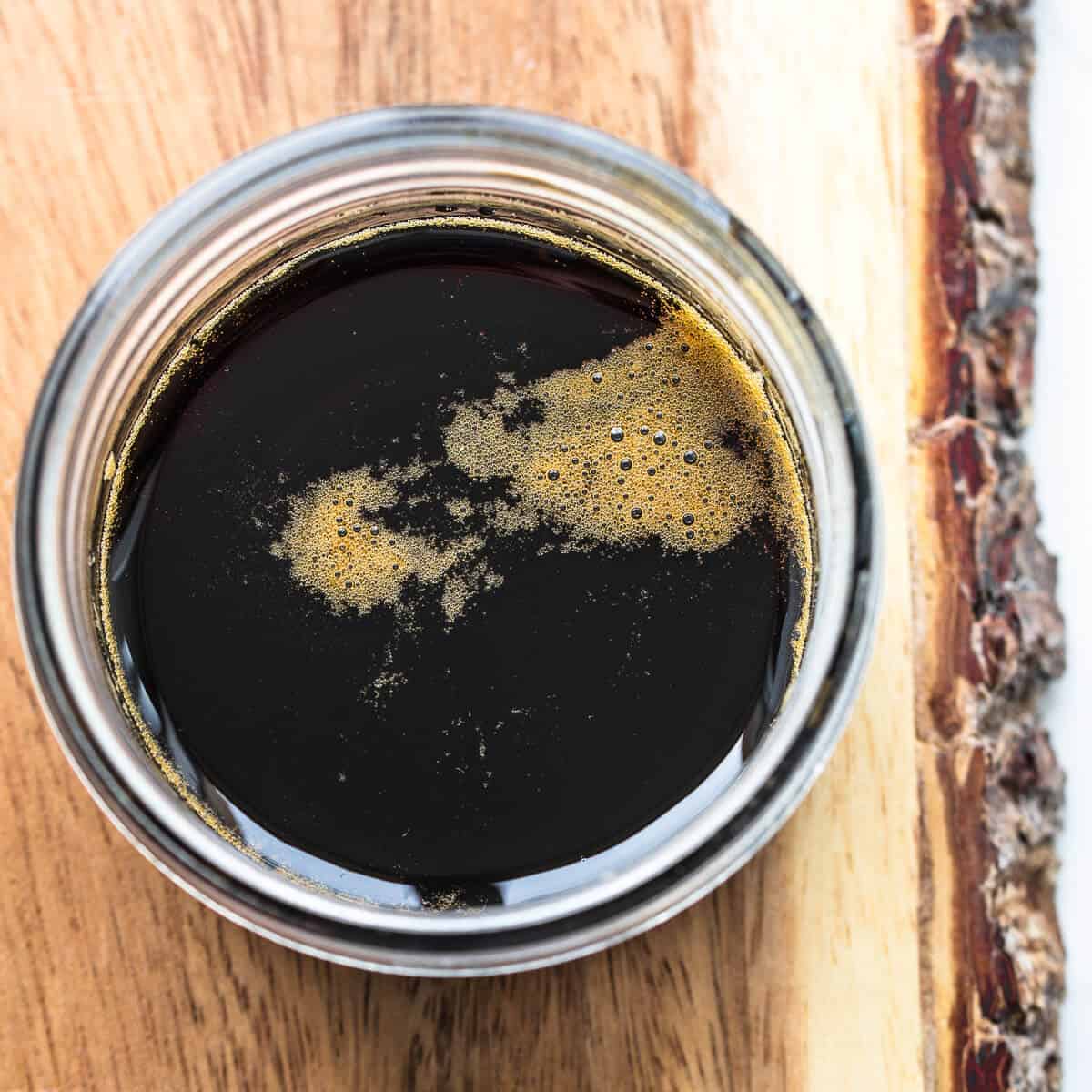
Authentic kecap manis should be well balanced between salty and sweet.
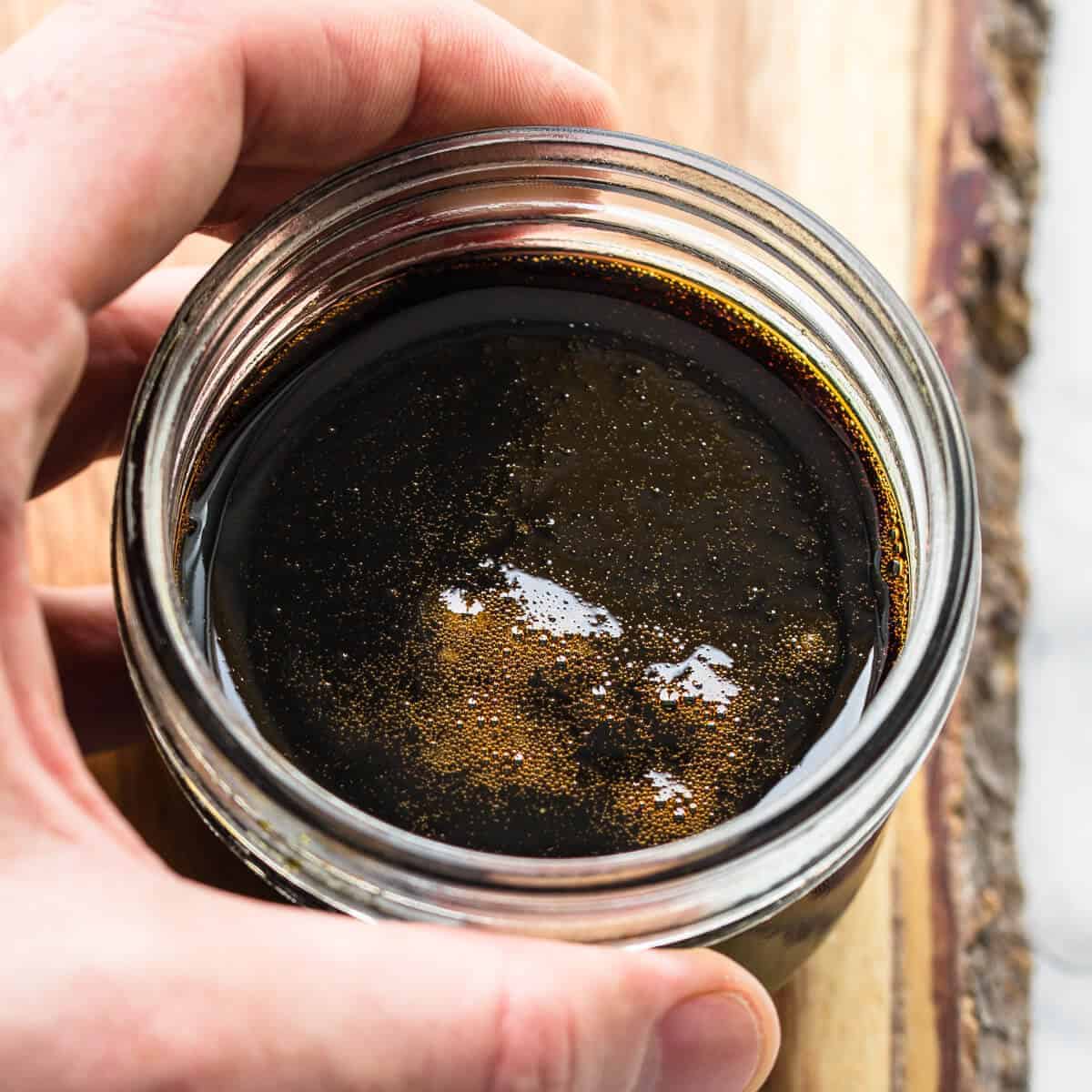
It should have a smooth, syrupy yet still pourable consistency and be without sugar lumps.
The flavor should be complex, with a rich molasses flavor coming through.
All the characteristics are achieved by using the correct ingredients and cooking the sauce properly.
Ingredients
It only takes a few ingredients to make, so make sure they are of good quality.
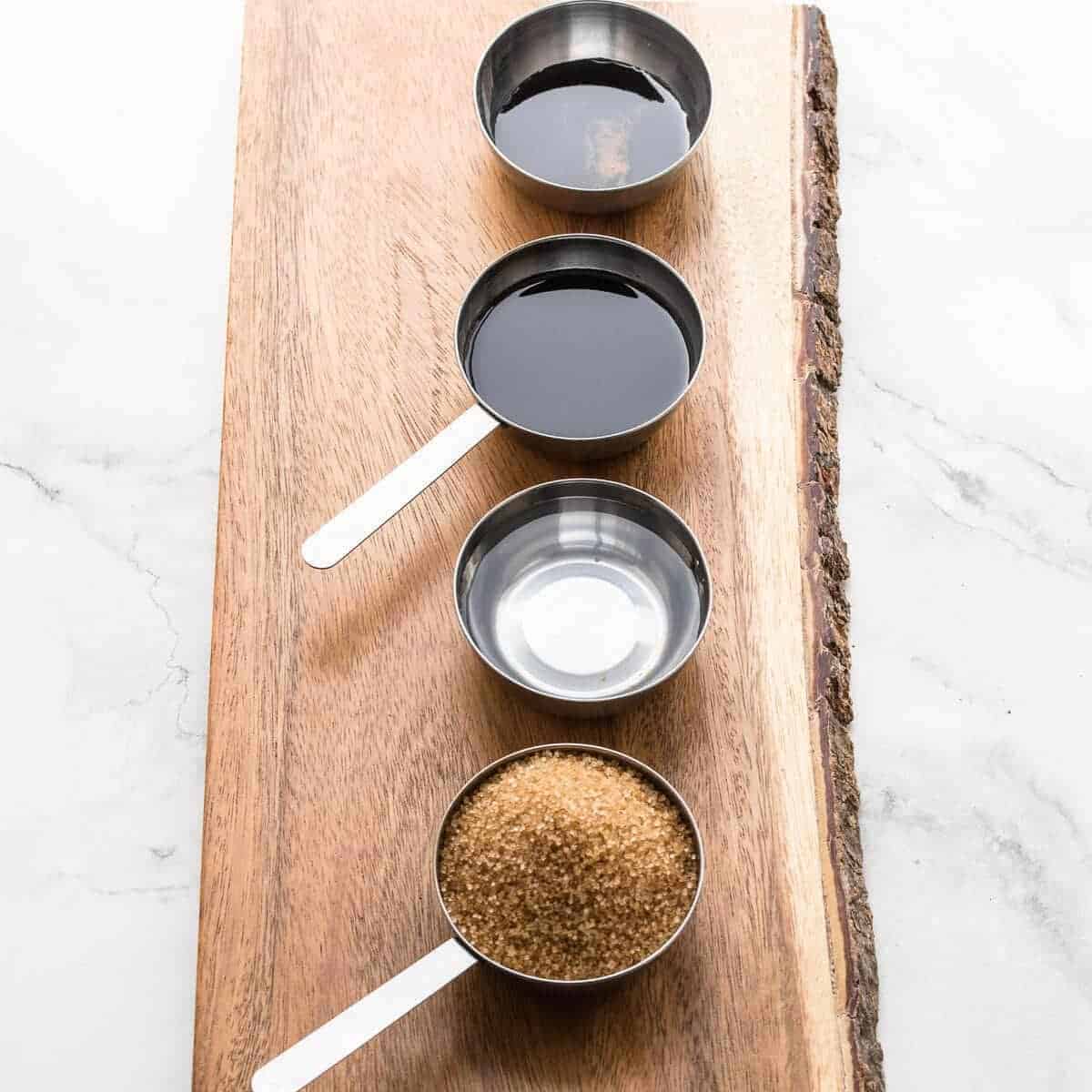
- Soy sauce - I used homemade soy sauce I made by growing koji on grains and pulses, and then fermented it for about a year. You don't have to do all that)) Simply use a good, naturally brewed, store-bought version of soy sauce. It will say it on the bottle. I know Kikkoman(affiliate link) has a good natural one. So, go with that.
- Molasses - I use molasses in my kecap manis recipe because I have a hard time finding proper palm sugar. Unless you live in Southeast Asia, you won't find the proper palm sugar at the proper price either. So, do what I did. The added pure molasses is a great substitute.
- Brown sugar - To boost the molasses notes and make the sauce a bit more nuanced, I use brown sugar. You can easily use regular white sugar instead. The molasses and caramel notes will just be more subtle that way.
Instructions
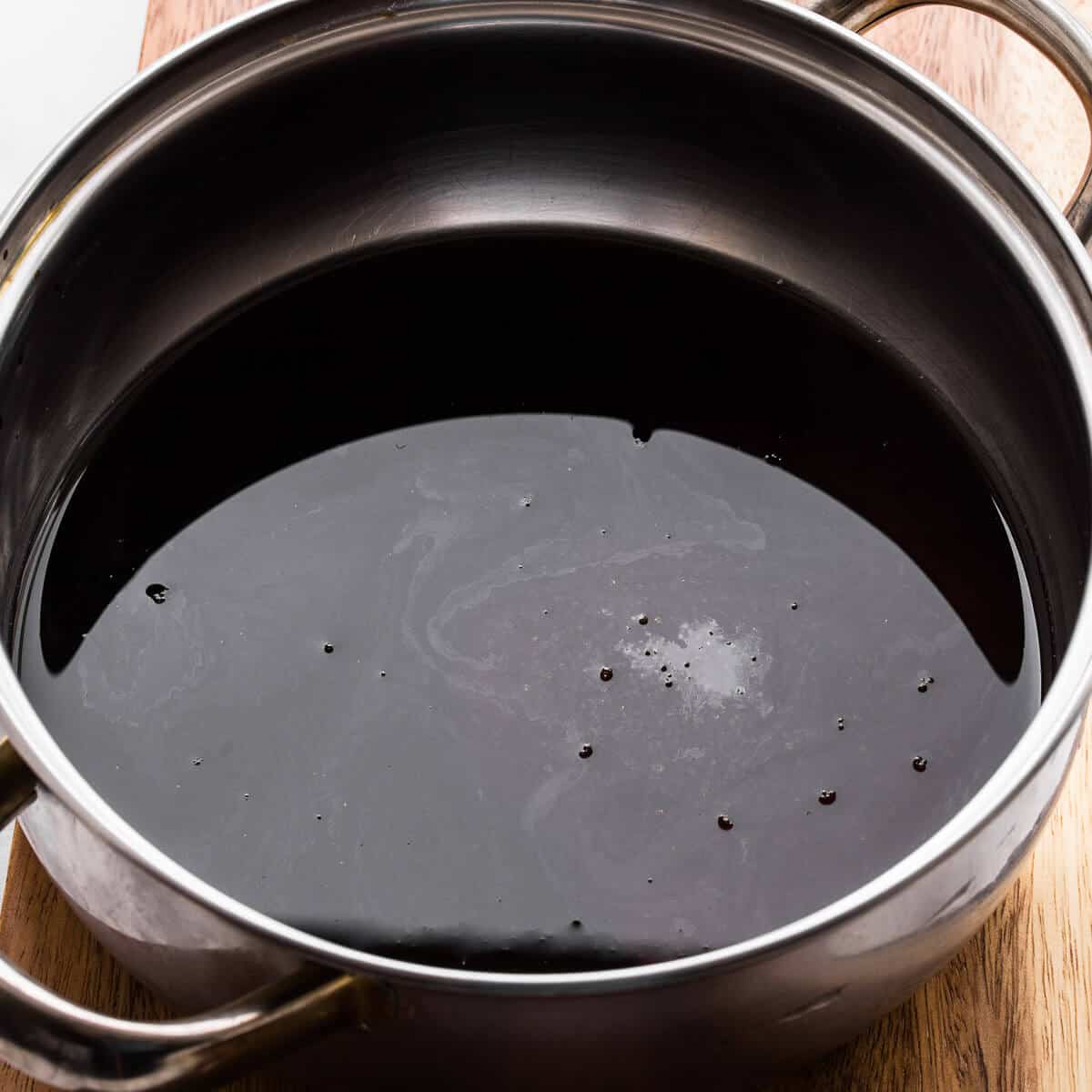
- Get all your ingredients in a saucepan. Give it a little get-to-know-each-other stir.
- Place the pan on the stove or induction and very slowly start simmering. Give it a gentle stir every minute until the total weight of the sauce has reduced to 220g. A reduction of 31% from its initial 320g combined starting weight. While the sauce is reducing, keep an eye on it so it does not boil over or cook too fast. Low and slow does the magic here.
- Once the correct weight is achieved, let the sauce cool down and then store it in airtight containers in the fridge.
How to use kecap manis
Use it in any recipe that specifically calls for it, or simply use it where you would normally have to add soy sauce and sugar separately. Below are a few more ideas.
- Stir fry - A finishing touch to any quick stir fry, or add when you make fried rice.
- BBQ - When barbecuing meats like pork belly or alternative steak cuts like bavette, brush them with some kecap manis and give them a few final turns so the sauce can caramelize a bit.
- Dipping sauce - With fresh vegetable crudités, a simple piece of sushi or sashimi, and great with roasted or steamed broccoli or bok choy.
- Glazing - Glaze seared salmon fillet and finish under the grill, or use this glaze instead of sweet miso in this baked eggplant dish.
- Curries or stews - Add a final touch of balance and umami to Asian dishes like this Filipino beef adobo, this Thai massaman curry, or this Indian coconut chicken curry.
Related recipes
If you like making your own version of classic condiments or sauces, then you will find the following recipes useful:
- Sweet miso glaze
- Salsa verde
- Lemon mayonnaise
- Teriyaki
- Classic Caesar dressing
- Chimichurri sauce
- Homemade sriracha

Useful equipment

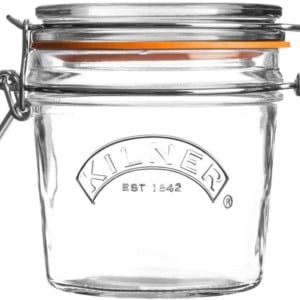
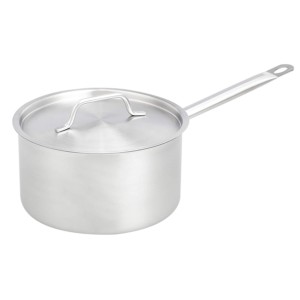
This site contains affiliate links. I may earn a tiny commission on qualifying purchases at no extra cost to you. By bookmarking these links you help support the upkeep of this site.
If you found this post helpful or have learned something, please comment, subscribe, and follow me on social media for more delicious recipes.
Recipe
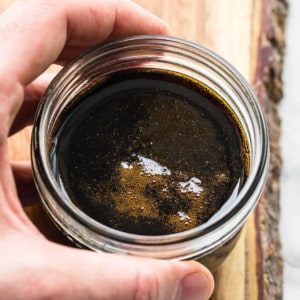
Homemade Kecap Manis Recipe (Indonesian Sweet Soy Sauce)
Ingredients
- 150 g (⅔ cups) brown sugar
- 100 g (3/7 cups) water
- 50 g (⅕ cups) soy sauce
- 20 g (1 tablespoon) molasses

Instructions
- Get all your ingredients in a sauce pan. Give it a little get-to-know-each-other stir.
- Place the pan on the stove or induction and very slowly start simmering. Give it a gentle stir every minute until the total weight of the sauce has reduced to 220g. A reduction of 31% from its initial 320g combined starting weight.
- While the sauce is reducing keep an eye on it so it does not boil over or cook too fast. Low and slow does the magic here.
- Once the correct weight is achieved, let the sauce cool down and then store in airtight containers in the fridge. You now have yourself the perfect substitute for real Indonesian kecap manis.
Notes
- You can use regular sugar if you don't have brown sugar but molasses is essential.
- Molasses and barley malt are not the same thing.
- Do not stir the sauce vigorously while reducing.
- Add a teaspoon of liquid glucose if you are worried about the sugar crystallizing.
- Store in the fridge sealed airtight. Will keep it for an indefinite amount of time because of the salt and sugar content.
- No need to freeze.
- Use as a glaze when grilling meat, vegetables, or fish.
- Add to stews, stir fry, curry, and many more dishes as a flavor enhancer.
Nutrition
This recipe, and 109 others.
Everything I actually cook, organized in one book, with the exclusives that never made the blog and an online edition that behaves with flour on your hands. No ads. $19.99, yours for life.
Get the cookbook →
Marianne says
Other recipes I have seen tend to include kaffir lime leaves, star anise, ginger, garlic and sometimes coriander seed. Do you prefer to keep it spice-free for some reason?
Charlé Visser says
The original Indonesian recipe has no aromatics at all. It's a straight forward recipe, and the end result is a very useful condiment that sits almost square in the middle of umami and sweet balance. It's unique to Indonesian cuisine and pairs well when then mixed into sambals made with freshly pounded or cooked ginger, chili, garlic and shrimp paste. You can have a play with those aromatics and see how it comes out. It will still be delicious, but down the line you risk muddling flavors if your base condiments are oversaturated. It's something that took me quite some time to learn. A Few well-balanced flavors wins most of the time over a complex mix of flavors. There are exceptions, like Mexican Mole with a gazillion ingredients, but then again Mole is almost a complete dish instead of a condiment.
Katie says
How long would it keep and do I need to store it in the fridge?
Charlé Visser says
It lasts for months and you can simply store in a cool dry place sealed airtight.
Gordon Barnett says
For the liquids, why not show the measurements in fluid ounces as well as grams? For the volume measurement in grams, why not show it in ounces?
Charlé Visser says
Grams is the future, been the past for many decades in the kitchen. All the other stuff.... not so much. Maybe a casual teaspoon here and there but that's it. All about accuracy and being easy to deal with.
Gavin says
Where I live this stuff is impossible to find. I love cooking with it as I lived in Indonesia for several years and really like the cuisine. Thanks for sharing this recipe! It tastes exactly the same as the real thing. Never knew it was this easy to make)))))
Charlé says
Glad to help Gavin! I live in Russia and had the same problem) Needed a kecap manis replacement fast and this ended up being exactly like the original Indonesian version.
Peter says
Live in Russia as well!
Have not come across Melasses though! What's the Russian for it?
Charlé Visser says
Сусла/susla. Used to make kvass and Borodinsky bread